
Are Old Fishing Lures Worth Anything? How to Spot a Valuable Vintage Lure in Grandpa's Tackle Box (Heddon, Creek Chub, Pflueger)
A 60-second tackle box check, dating clues by era, makers to look for, real auction prices from the $101,200 record down, how to spot a repaint, and where to sell.
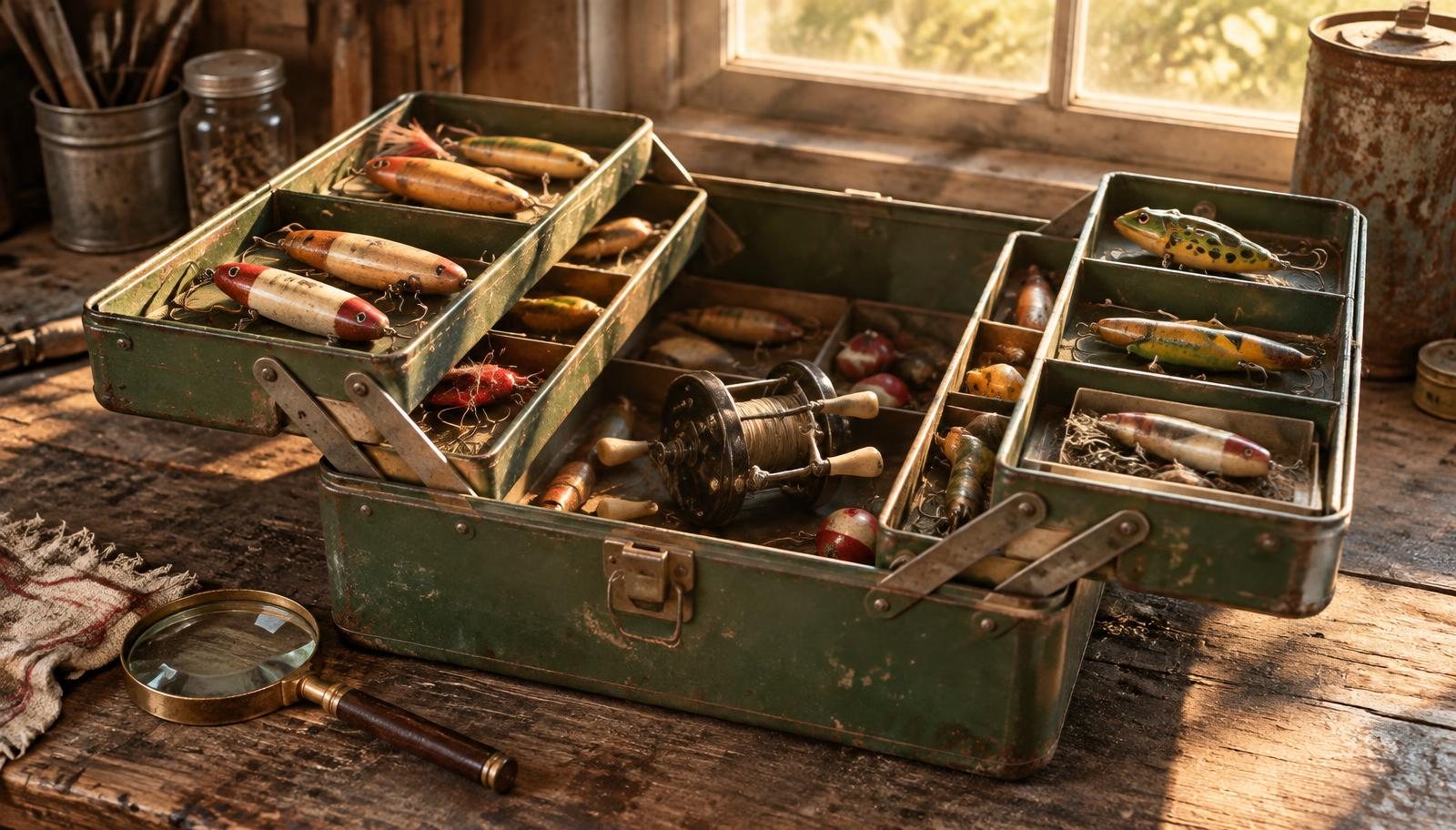
Most old fishing lures sell for a few dollars each. Early wooden lures from makers like Heddon, Creek Chub and Pflueger, especially ones with glass eyes, original paint and the original box, can sell for hundreds of dollars or more, and a few rare ones have sold for over $20,000. Check the body, eyes, hook hardware and maker marks before anyone prices the tackle box as one lot.
Quick summary
- Most lures are pocket money. A common Creek Chub Pikie "can be had for under $10 in decent used condition," one collector who writes lure value books told a fishing forum (Austin Bass Fishing forum, 2014, collector anecdote).
- The record is $101,200. An 1859 10-inch "Giant" Haskell Minnow sold at a Lang's auction in November 2003 (Bassmaster).
- Real tackle boxes still turn up big lures. A Pflueger Trory Minnow from about 1900, found in a Canton, Ohio tackle box, sold for $23,400 at Morphy's in May 2025 (MyChesCo).
- Five clues decide value: wood or plastic, glass or painted eyes, hook hardware, maker marks and the original box.
- Don't clean, repaint or split up the box until someone who knows lures has looked.
- Our own data: 85 of about 227,000 items listed on EstateSaleFinder mention lures and 24 mention tackle boxes (counted November 13, 2026).
Are old fishing lures worth money?
Some are, but most aren't. Fishing lures were made by the millions, and the ones that caught fish were made in the biggest numbers. As the same collector put it, "The stuff that actually caught lots of fish is usually the least valuable!" (Austin Bass Fishing forum).
The money is in early lures, roughly 1900 to the 1940s, made of wood, from known makers, in good original condition. Rare models, rare colors and lures still in their boxes sell best. Plastic lures from the 1950s on usually sell for a few dollars each, with some exceptions for rare colors.
Kevin Richards, writing for the Missouri Department of Conservation, found his first tackle box of antique lures at an auction and "was surprised to see that buyers were so interested in old fishing plugs, even the wooden Creek Chub Pikies and Lazy Ikes" (Missouri Department of Conservation). That's the real picture: plenty of interest, modest prices, and a few big surprises.
What makes a lure valuable?
Five things, roughly in this order:
- Maker. Heddon, Creek Chub, Pflueger (Enterprise Manufacturing), Shakespeare and South Bend are the names most collectors look for. Very early and small makers can be worth even more.
- Age. Wooden lures from the early 1900s are the core of the hobby.
- Model and color. A common model in a rare color can outsell a rare model in a common color.
- Condition. Original paint with little wear matters most. Repaints lose most of their collector value.
- The original box. A box with the right model number, and any paper insert, can add a lot. Morphy's top lot in October 2025 was described as "one of only three known survivors with an original factory box" (Morphy Auctions).
The 60-second tackle box check
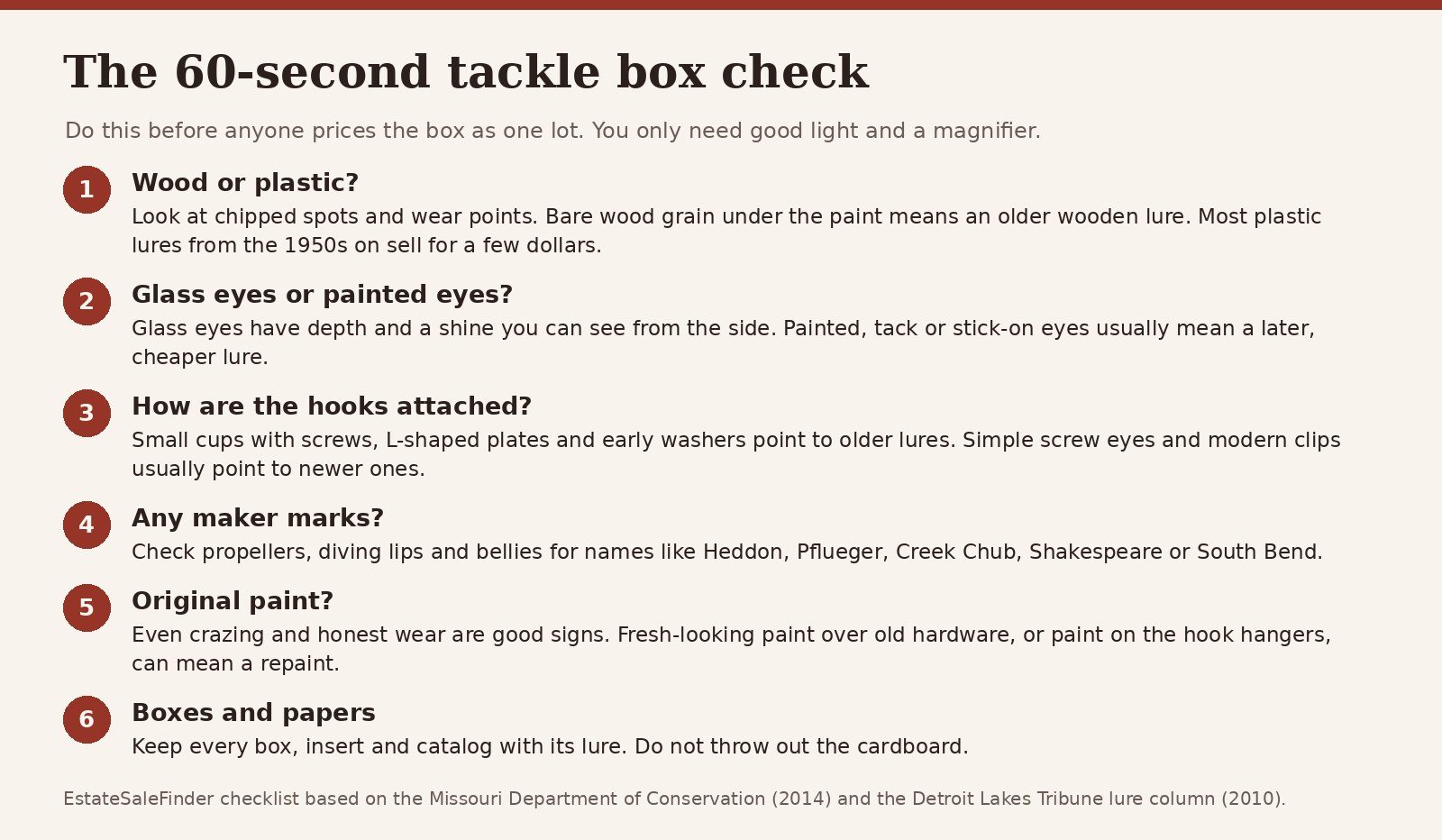
Open the box in good light, and take every tray out. Then go lure by lure:
- Wood or plastic? Look at chipped spots. Bare wood under the paint means a wooden lure. Plastic often looks slightly waxy and has no grain.
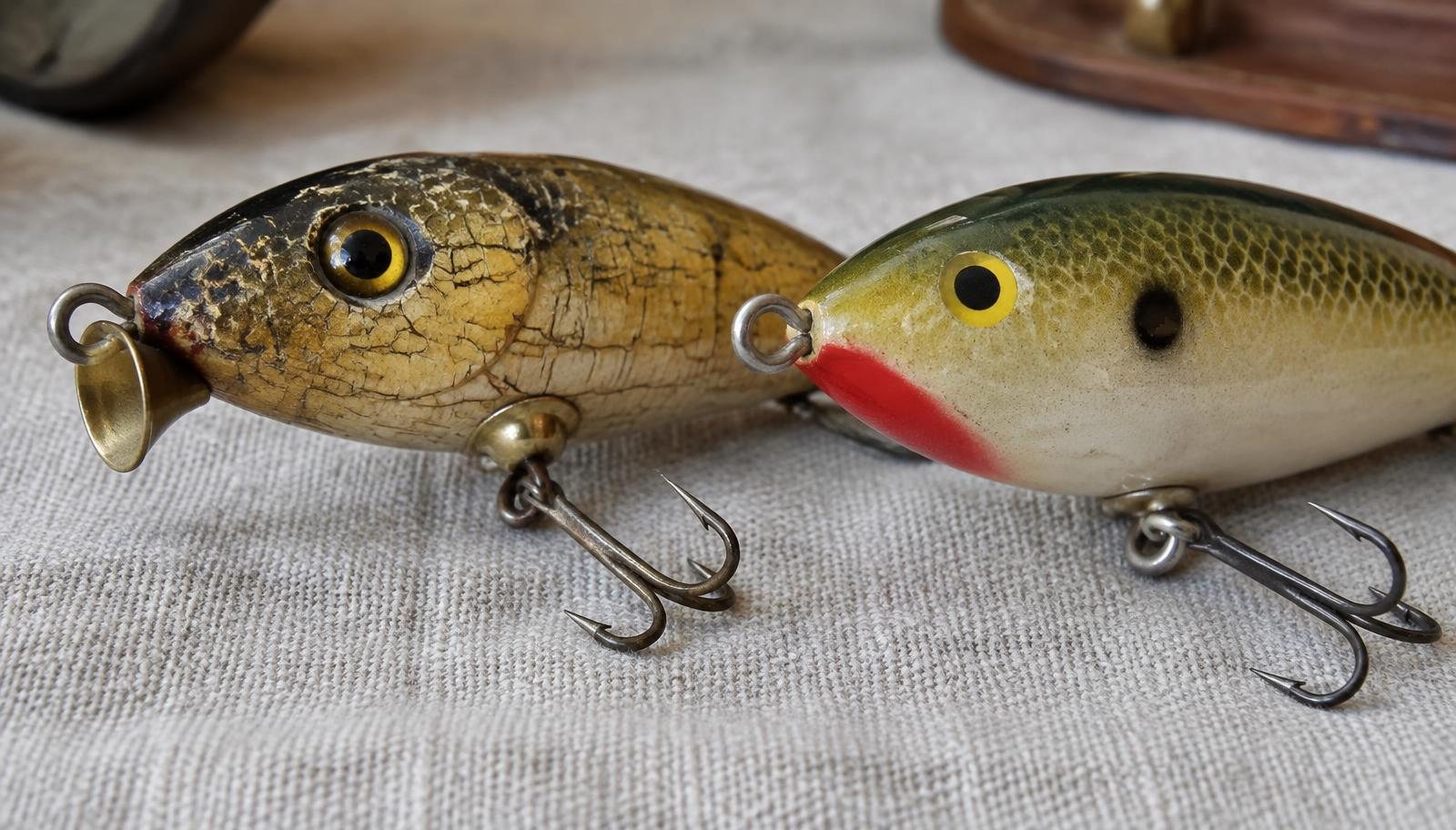
- Glass or painted eyes? Glass eyes have depth and catch light from the side. Painted eyes are flat.
- How are the hooks attached? Small cups with screws, L-shaped plates and early washers usually point to older lures. Simple screw eyes and modern hardware usually point to newer ones.
- Any marks? Check propellers, diving lips and the belly for a maker's name.
- Is the paint original? Even, fine cracking (crazing) and wear where the hooks swing are good signs.
- Is there a box? Keep every box, insert, catalog and price tag with its lure.
Put the wooden, glass-eyed and boxed lures in their own pile. That pile is where any real money is.
How can you tell how old a fishing lure is?
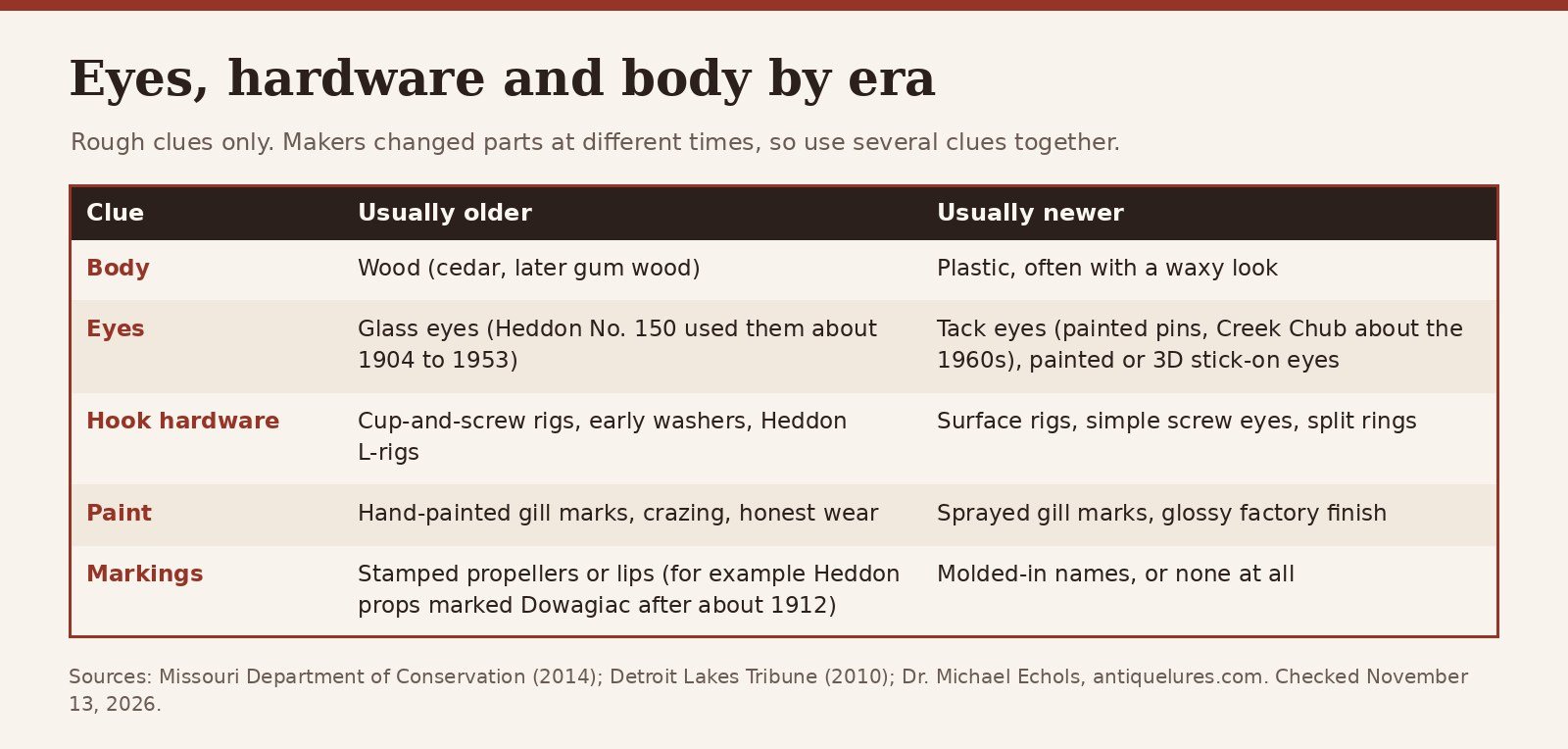
Use the eyes, hardware and body together, not one clue alone. The Missouri Department of Conservation notes that Heddon's Dowagiac Minnow No. 150 "was made with glass eyes from about 1904 through 1953," and that "the hook hangers and spinners used on these baits changed over the years and are therefore very helpful in dating individual lures" (Missouri Department of Conservation).
For Creek Chub, a 2010 newspaper column on the company notes that the earliest lures "almost always had glass eyes," that glass eyes were imported from Germany, and that around the 1960s the company switched to a painted "tack eye." The writer adds, "Remember this because that easily dates lures" (Detroit Lakes Tribune).
Collector Dr. Michael Echols notes that Heddon propellers stamped "Dowagiac" point to the period after about 1912, and that later Heddon lures were often made of gum wood instead of the earlier cedar (antiquelures.com).
Are glass-eye lures valuable?
Glass eyes are a good sign, not a guarantee. They usually mean an older wooden lure from a decent maker, but common glass-eyed lures in used condition still sell for modest prices. Rarity, color, condition and the box decide the rest.
Makers to look for
| Maker | Where | What to look for |
|---|---|---|
| Heddon | Dowagiac, Michigan | Wooden Dowagiac Minnows (No. 100, 150, 300), stamped props, glass eyes, early boxes |
| Creek Chub Bait Co. | Garrett, Indiana | Wooden Pikies and Wigglefish, glass eyes, picture boxes |
| Pflueger (Enterprise Mfg. Co.) | Akron, Ohio | Early wooden minnows like the Trory, Neverfail hardware |
| Shakespeare | Kalamazoo, Michigan | Early wooden minnows with distinctive spinners |
| South Bend | South Bend, Indiana | Wooden plugs with painted cup hardware |
| Small and very early makers | Many | Hand-made and pre-1900 lures, often the most valuable of all |
Models come from the Missouri Department of Conservation, Morphy Auctions and antiquelures.com, and towns are each maker's longtime home; this is a starting list, not a complete one. Unmarked lures aren't always worthless, but a known maker is the easiest way to start pricing.
Real prices, from the record down
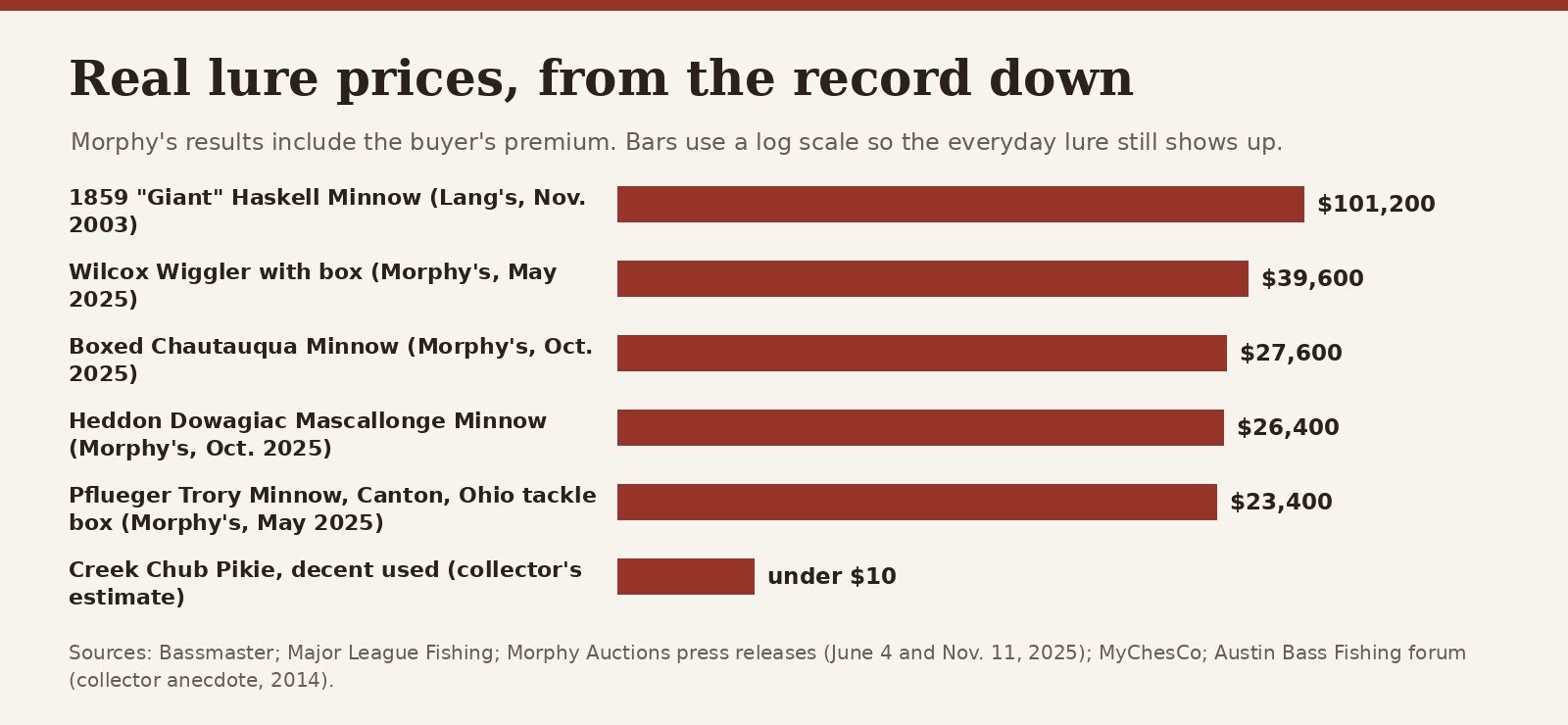
- $101,200: the 10-inch 1859 "Giant" Haskell Minnow, a hollow copper lure made by Ohio gunsmith Riley Haskell, sold at a Lang's auction on November 8, 2003 (Major League Fishing). Bassmaster calls it "the all-time record for a fishing lure sold through public auction" (Bassmaster).
- $2.65 million: the total for Morphy's three-part sale of the Wayne and Lori Edens collection, which ended in October 2025 (Morphy Auctions).
- $27,600: a boxed Anderson & Co. Chautauqua Weedless Trolling Hook Minnow, the top lot of the October 25, 2025 session, against a $10,000 to $15,000 estimate (same source).
- $26,400: a 7¾-inch Heddon Dowagiac Mascallonge Minnow in a special-order red and purple color (same source).
- $39,600: a brown-spotted Wilcox Wiggler with its rare box, the top lot of the May 17, 2025 session (Morphy Auctions).
- $23,400: the Pflueger Trory Minnow from about 1900 or 1901, found in a Canton, Ohio tackle box, at the same May 2025 sale, against a $6,000 to $12,000 estimate (MyChesCo).
- Under $10: a common Creek Chub Pikie in decent used condition, per a collector's forum post (Austin Bass Fishing forum). The same collector says "common old lures in perfect shape with the correct box can be purchased for $20."
Morphy's prices include the buyer's premium. Big auction results are the exceptions, not what a normal tackle box brings. To price your own lures, search sold listings for the exact maker, model and color, and note the date you checked.
Other tackle that sells
Lures get the headlines, but check the rest of the garage too:
- Reels. Older bait-casting and fly reels from known makers can sell well, especially in working condition.
- Bamboo fly rods. Hand-made split-bamboo rods are a collecting field of their own.
- Creels, nets and tackle boxes. Wicker creels and old wooden or metal tackle boxes sell to decorators and collectors.
- Fish decoys. Carved ice-fishing decoys are collected separately from lures.
- Paper. Old tackle catalogs, boxes and advertising signs often sell on their own.
For more garage finds, see our guide to estate sale garage and shed treasures.
Why not to clean or repaint lures
Collectors pay for original paint and original hardware. Scrubbing, polishing, touching up or repainting can remove most of a lure's collector value. Rust on hooks is normal; leave it.
If a lure is dirty, a soft dry brush is plenty. For more on this, see how to clean antiques without ruining them.
Also be careful handling a tackle box. It's full of sharp hooks, and old lures may have lead weights. Wear gloves and wash your hands afterward.
How to spot a repainted lure
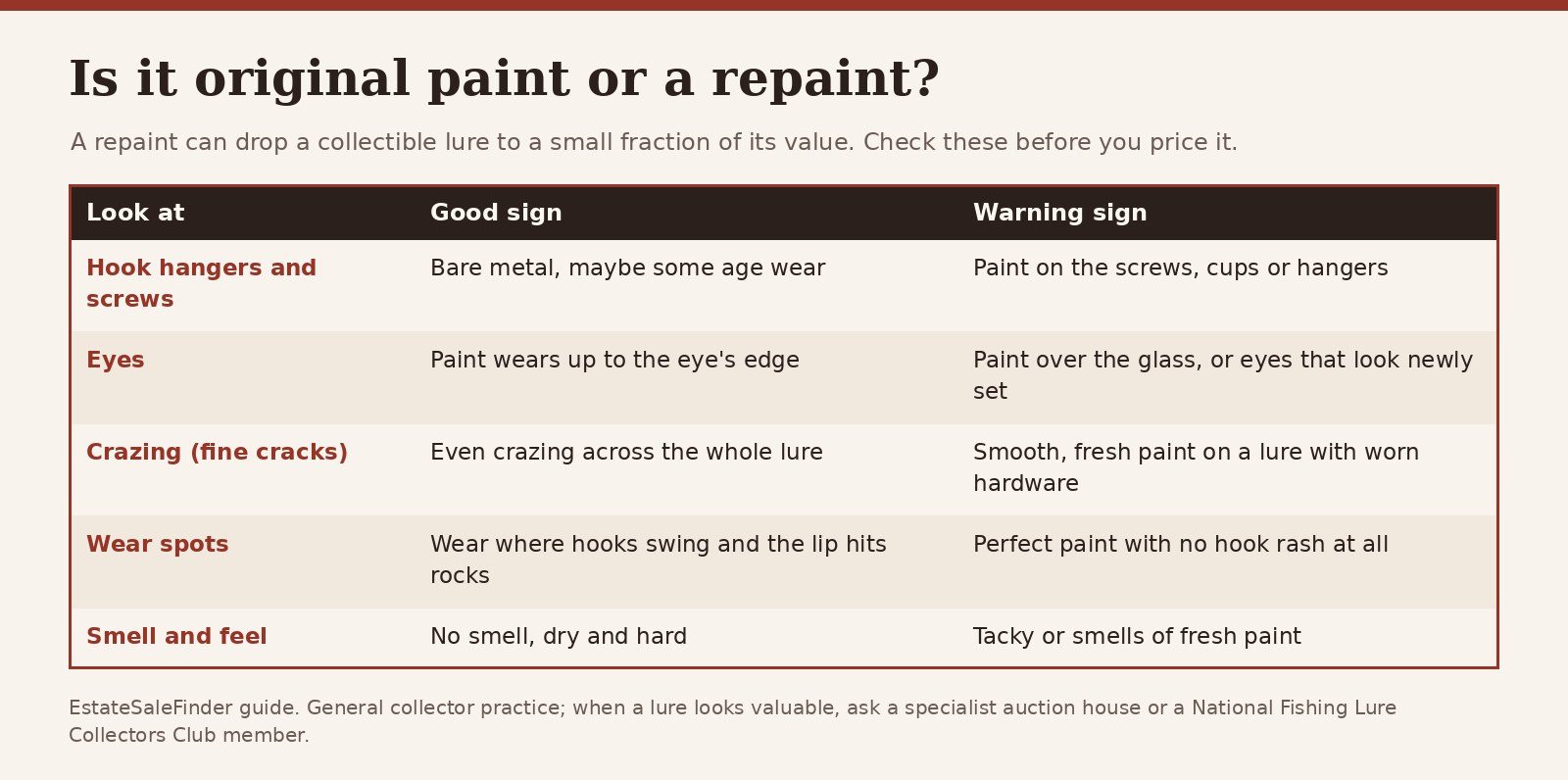
- Paint on the hardware. Factory paint went on before the hardware. Paint on screws, cups or hangers is a warning sign.
- Paint over the eyes. Original paint usually wears up to the edge of a glass eye, not over it.
- Too perfect. Old lures got hook rash, the small dents and scratches where swinging hooks hit the body. A lure with worn hooks and perfect paint deserves a second look.
- Uneven aging. Fresh-looking paint next to old, darkened hardware doesn't add up.
If a lure might be valuable, get a second opinion from a specialist auction house or a member of the National Fishing Lure Collectors Club.
Should I sell the tackle box as one lot?
Not before you sort it. Pull out the wooden, glass-eyed, marked and boxed lures, and price those one by one. The rest of the plastic lures, sinkers and bobbers can go as a box lot. Selling the whole box for one price is how a valuable lure ends up sold for $1.
Where to sell old fishing lures
| Option | Best for | Keep in mind |
|---|---|---|
| Estate sale | The whole garage, plus everyday lures and tackle | Ask the company to pull and price the best lures separately |
| Specialist auction house | Rare, early or boxed lures | Fees and a wait for payment, but the right buyers |
| eBay | Mid-value marked lures | Use sold listings to price, and pack hooks safely |
| Local collector or lure show | Quick sales of a whole collection | Get more than one offer |
Lure collectors are a small, knowledgeable crowd. A well-photographed listing that names the maker and model gets them in the door.
How estate sale companies price a tackle box
- Sort before you tag. Empty every tray. Separate wood from plastic, and glass eyes from painted ones.
- Tag the best lures singly. Name the maker, model and color if you know it. Keep each lure with its box.
- Look up sold prices for anything wooden, glass-eyed or boxed. EstateSaleFinder's Ai Appraiser can give a starting suggestion from a photo; treat it as a suggestion, and confirm with sold listings.
- Display carefully. Lures are small and easy to pocket. Keep the best ones in a case near checkout.
- Mention it in the listing. "Vintage wooden fishing lures" in the sale description and photos helps collectors find your sale.
Tips for shoppers, resellers and booth dealers
- Ask whether the garage has been gone through. Families often price the tackle box last.
- Bring a small flashlight and a magnifier to check eyes and hardware.
- Pay the asking price for a bargain lure; don't haggle a family down when you know it's worth more.
- Holiday tip: vintage lures in a shadow box make a good gift for a dad who fishes. See our vintage Christmas gifts from estate sales guide.
- Save "fishing lures" or "tackle box" to your wish list to get alerts when a sale near you lists them. None of our 273 shopper wish lists mention lures yet, so this is still an open field (counted November 13, 2026).
Find estate sales near you and check the photos for tackle boxes.
FAQ
Are old fishing lures worth money?
Most sell for a few dollars, but early wooden lures from Heddon, Creek Chub, Pflueger and other known makers, with glass eyes, original paint and the box, can sell for hundreds or more.
How can you tell how old a lure is?
Check the body (wood or plastic), the eyes (glass, tack or painted), the hook hardware and any maker marks together. Heddon's No. 150 used glass eyes from about 1904 to 1953, according to the Missouri Department of Conservation.
Are glass-eye lures valuable?
They're usually older and more collectible, but common glass-eyed lures still sell for modest prices. Rare models and colors in original condition bring the most.
What's the most expensive lure ever sold?
The 1859 "Giant" Haskell Minnow, which sold for $101,200 at a Lang's auction in November 2003.
Should I sell the tackle box as one lot?
No. Pull out the wooden, glass-eyed, marked and boxed lures first and price them separately. Sell the rest as a box lot.
Should I clean lures before selling?
No. Cleaning, polishing or repainting can remove most of a lure's collector value. At most, brush off loose dust.
Are old plastic lures worth money?
Usually only a few dollars each. Some rare colors and early plastic models are worth more, so check sold listings before you donate a box.
Related guides
Sources
- Bassmaster: The $100,000 lure (2014)
- Bassmaster: Collectible Lures (2007)
- Major League Fishing: Antique lure sells for world-record $101,200 (Nov. 18, 2003)
- Morphy Auctions: Final installment of the Edens collection, $2.65M series total (Oct. 25, 2025 sale)
- Morphy Auctions: Part II of the Edens collection (May 17, 2025 sale)
- MyChesCo: Rare Fishing Lures Reel in $863,000 at Morphy Auctions (June 2025)
- Missouri Department of Conservation: Hooked on Old Wooden Fishing Lures (Dec. 2014)
- Detroit Lakes Tribune: CCBC is best known for the Pikie (2010)
- Dr. Michael Echols: Heddon Lure Shapes and Details
- Austin Bass Fishing forum: Antique fishing lures (2014, collector anecdote)
- National Fishing Lure Collectors Club
Sources checked November 13, 2026. Photos are Ai-generated illustrations; charts are EstateSaleFinder diagrams built from the sources above. EstateSaleFinder item and wish list counts are from our own data on November 13, 2026. Auction results are past sales, not appraisals.
Keep exploring
Ready to start your own treasure hunt?
Discover estate sales near you and find incredible deals.
Explore Sales Near Me
About the author
Andy
Founder, EstateSaleFinder.net
Hi, I'm Andy — a retired commercial photographer turned developer with a five-year (and counting) obsession with estate sales. I started EstateSaleFinder.net because I knew there had to be an easier, smarter way to find and list estate sales. Now I get to chase treasure and build the tool I always wished existed.