
I Inherited a Coin Collection, Now What? How to Sort, Value and Sell Old Coins Without Getting Lowballed (2026)
Three don'ts, a 20-minute sort, a silver-content table, a dated melt-value formula, where to sell without getting lowballed, taxes on inherited coins and the last penny one year on. Free printable sort sheet.
If you inherited a coin collection, slow down before anyone makes an offer. Don't clean the coins, don't break up sets or take coins out of their holders, and don't sell to the first buyer. Spend 20 minutes sorting gold, silver dates, war nickels, proof sets and graded coins. Most old pocket change is worth face value or silver melt value; a few dates and graded coins are worth much more. Get two or three offers.
Quick summary
- Three don'ts: don't clean coins, don't split sets, don't sell to the first buyer. PCGS, a major coin grading service, puts it plainly: "DO NOT CLEAN YOUR COINS" (PCGS).
- Silver is the easy win. U.S. dimes, quarters and half dollars dated 1964 and earlier are 90% silver. Kennedy halves from 1965 to 1970 are 40%, and 1942 to 1945 "war" nickels are 35% (GovTrack, Coinage Act of 1965; PCGS CoinFacts).
- Melt value is a formula, not a fixed number. $1 face value of worn 90% coins holds about 0.715 troy ounces of silver. Multiply by the silver price on the day you sell (GoldPrice.com).
- Taxes: heirs generally start from the coins' value on the date of death, and gains on collectibles are taxed at up to 28% (IRS; IRS Topic 409).
- The penny is one year gone. The U.S. Mint struck its last circulating pennies on November 12, 2025 (AP News).
- Free download: an Inherited Coin Collection Sort Sheet, below.
I inherited a coin collection. Now what?
Start with three rules. They protect most of the value.
1. Don't clean the coins
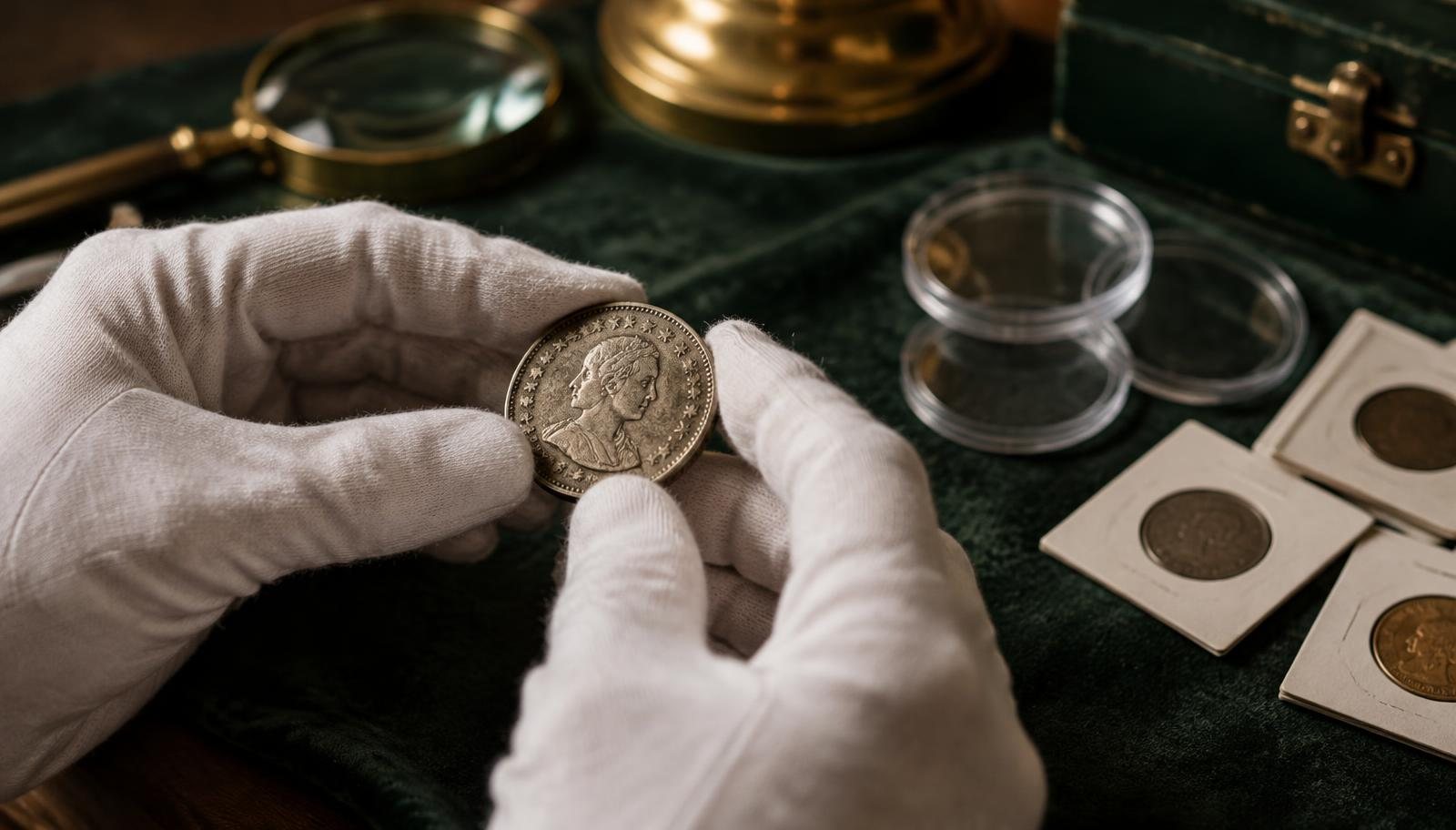
Cleaning scratches the surface and strips the original look that collectors pay for. A PCGS writer describes a friend who had been "cleaning and scrubbing at them for about an hour" and says, "The damage had been done." The article ends: "Don't clean your coins yourself. If you take anything from this read, let that be it" (PCGS). That includes wiping, polishing, dipping and soap.
2. Don't break up sets
Keep proof sets and mint sets in their original packaging, keep graded coins in their plastic slabs, and keep albums together. Taking coins out of holders can lower their value and loses the record of what they are.
3. Don't sell to the first buyer
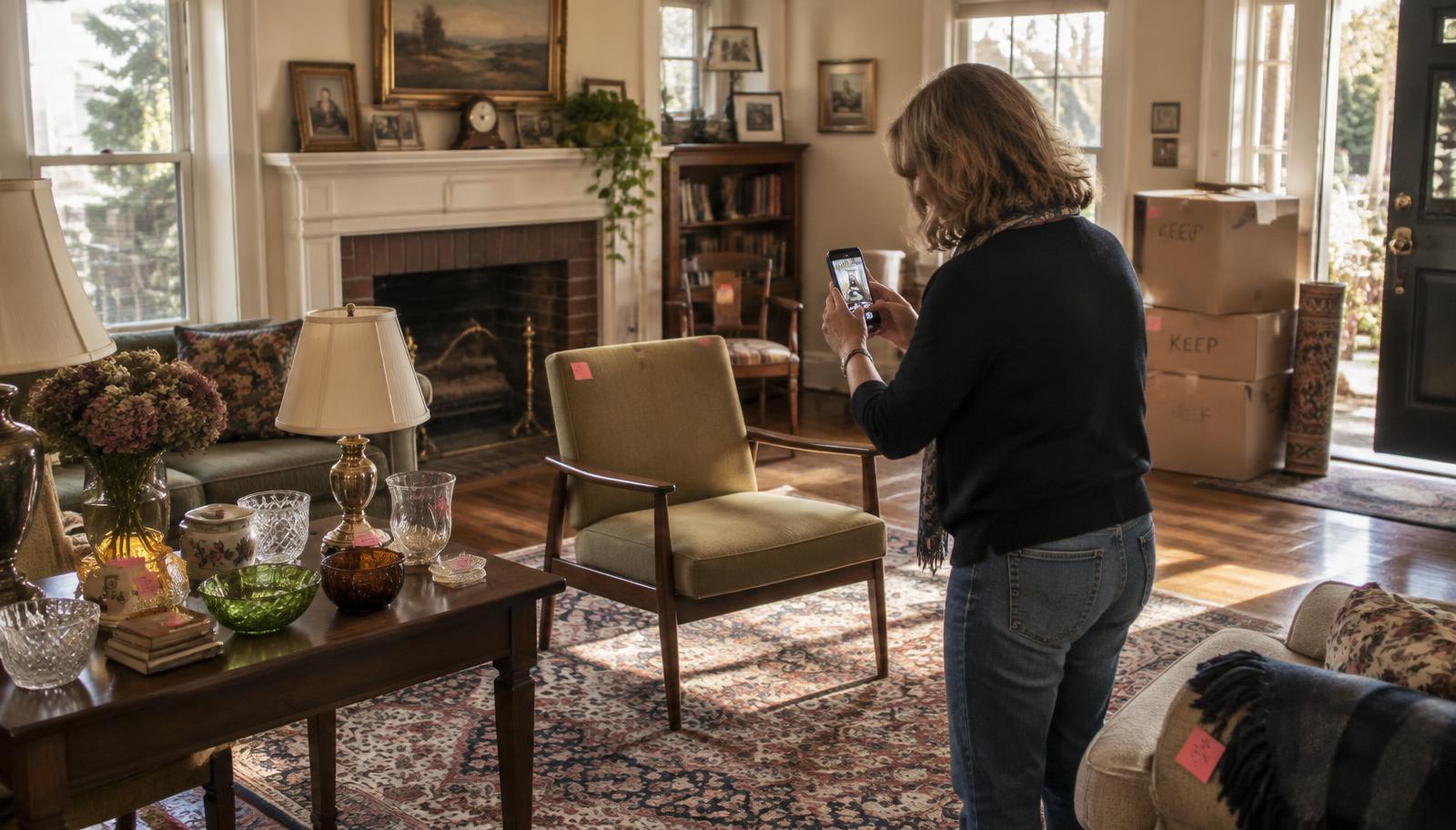
The first offer, especially from someone who came to you, is rarely the best one. Get two or three offers. Our guide to common estate sale scams covers the pressure tactics to watch for.
The 20-minute sort
You don't need to be an expert to sort a collection. You need a table, good light, small bags and a pen.
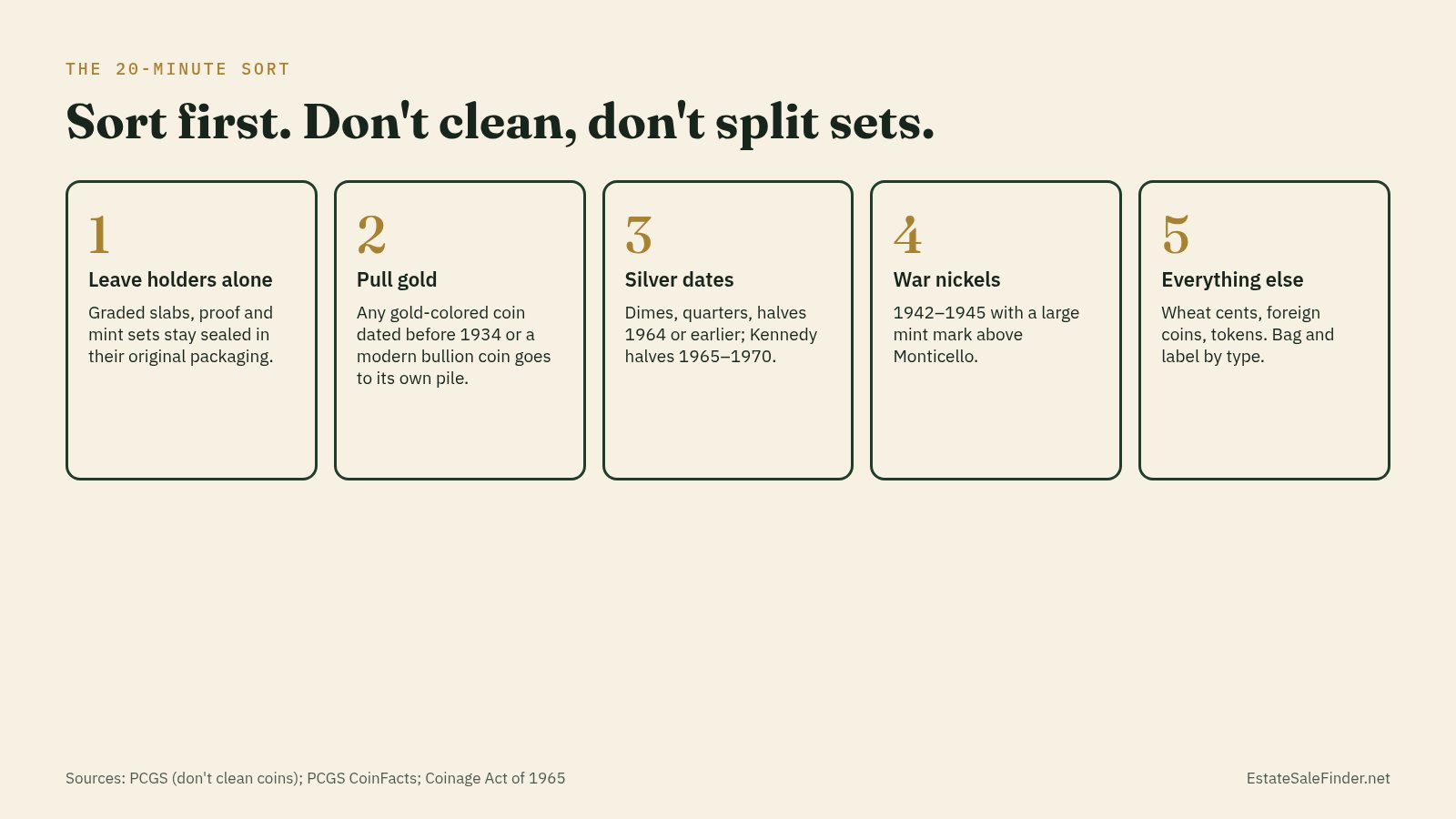
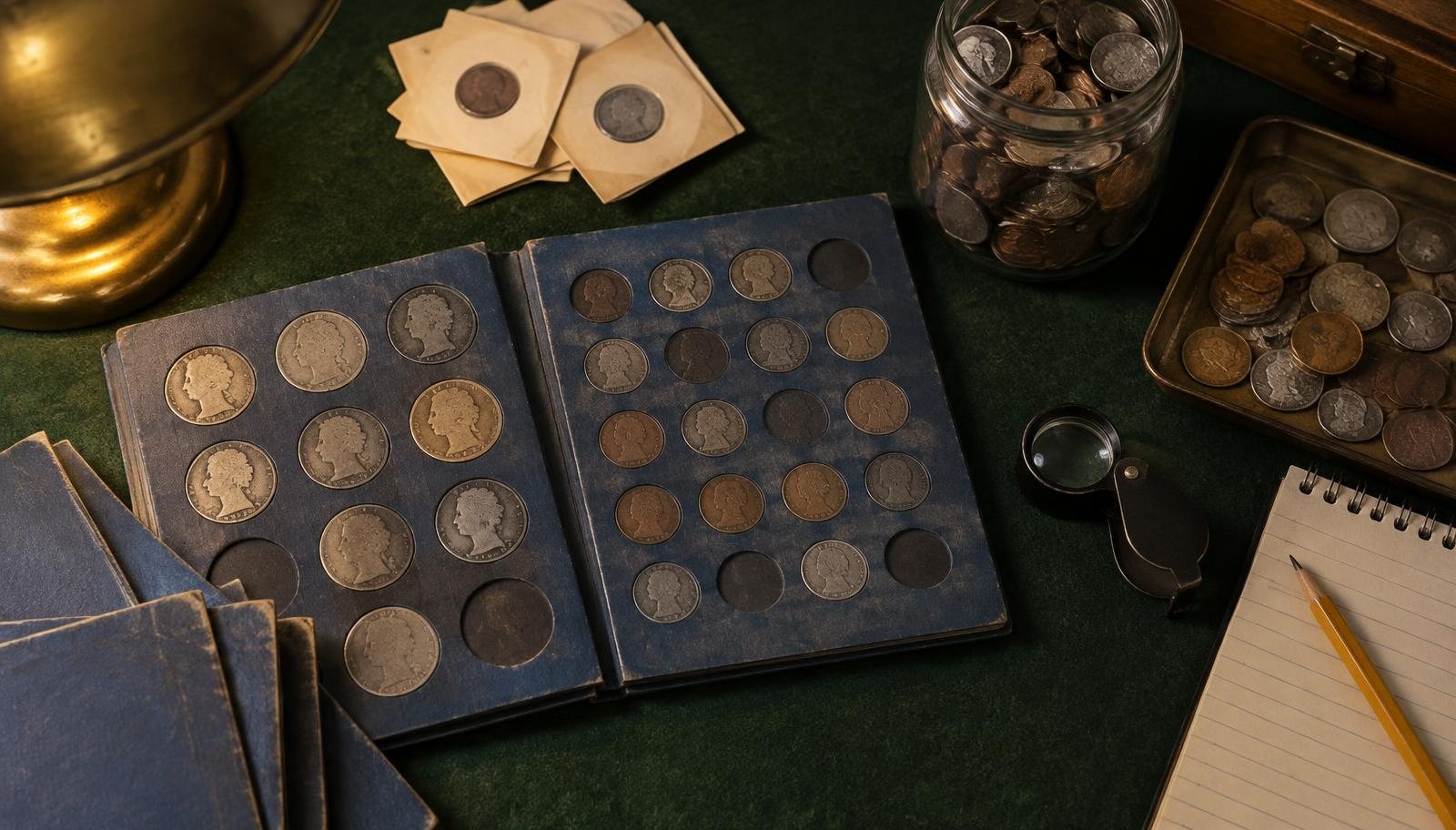
- Leave holders alone. Set aside graded slabs, proof sets and mint sets, still sealed.
- Pull out the gold. Any gold-colored coin dated before 1934, or a modern bullion coin, goes in its own pile. Modern brass "golden" dollars are not gold.
- Find the silver dates. Dimes, quarters and half dollars dated 1964 and earlier. Kennedy halves dated 1965 to 1970.
- Check the nickels. War nickels from 1942 to 1945 carry a large mint mark above the dome of Monticello on the back (PCGS CoinFacts).
- Bag everything else by type. Wheat cents, foreign coins, tokens and modern change. Label each bag with what's inside and a count.
Write the counts down. A buyer can't lowball a list as easily as a jar.
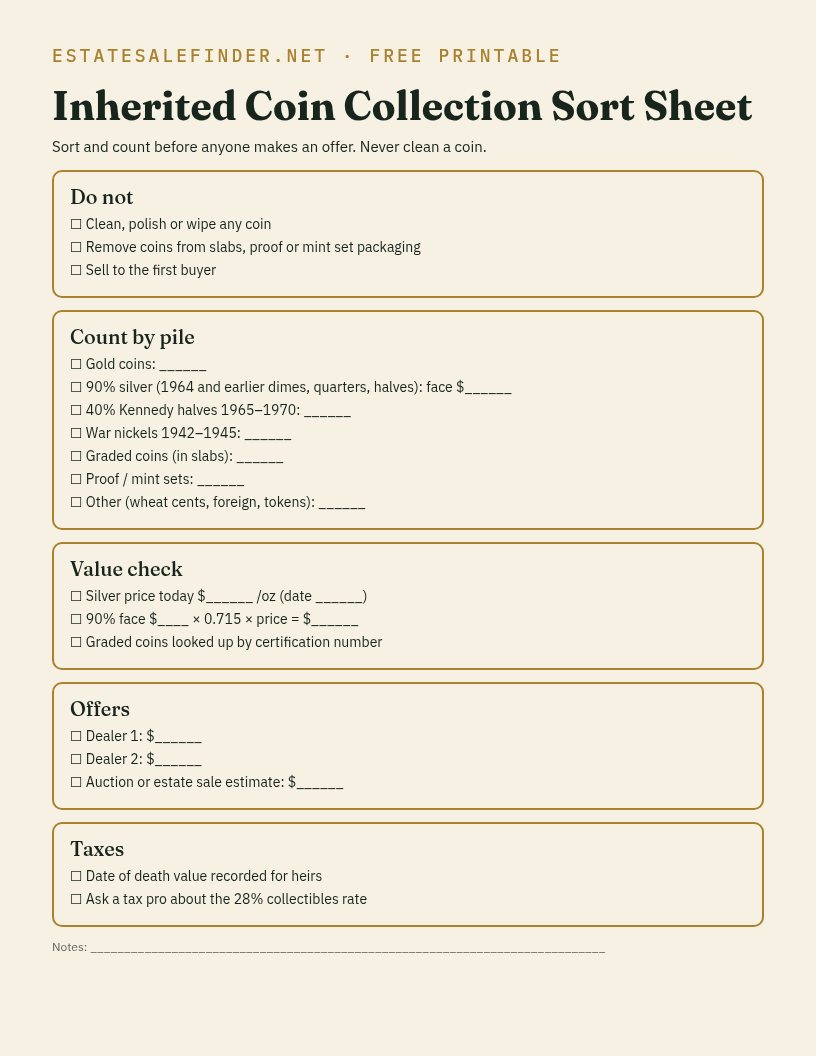
Free printable: Inherited Coin Collection Sort Sheet
A full 8.5 x 11 page with the three don'ts, a count for every pile, a silver melt formula, space for offers and a tax note.
Which coins are 90% silver?
The Coinage Act of 1965 "eliminated silver from the circulating United States dime ... and quarter dollar coins" and cut the half dollar from 90% to 40% silver. A 1970 law removed the rest (GovTrack; U.S. Mint). The U.S. Mint confirms that "in 1965, the Mint removed silver from the dime" and that "in 1971, the Mint removed silver from the half dollar" (U.S. Mint: dime; U.S. Mint: half dollar).
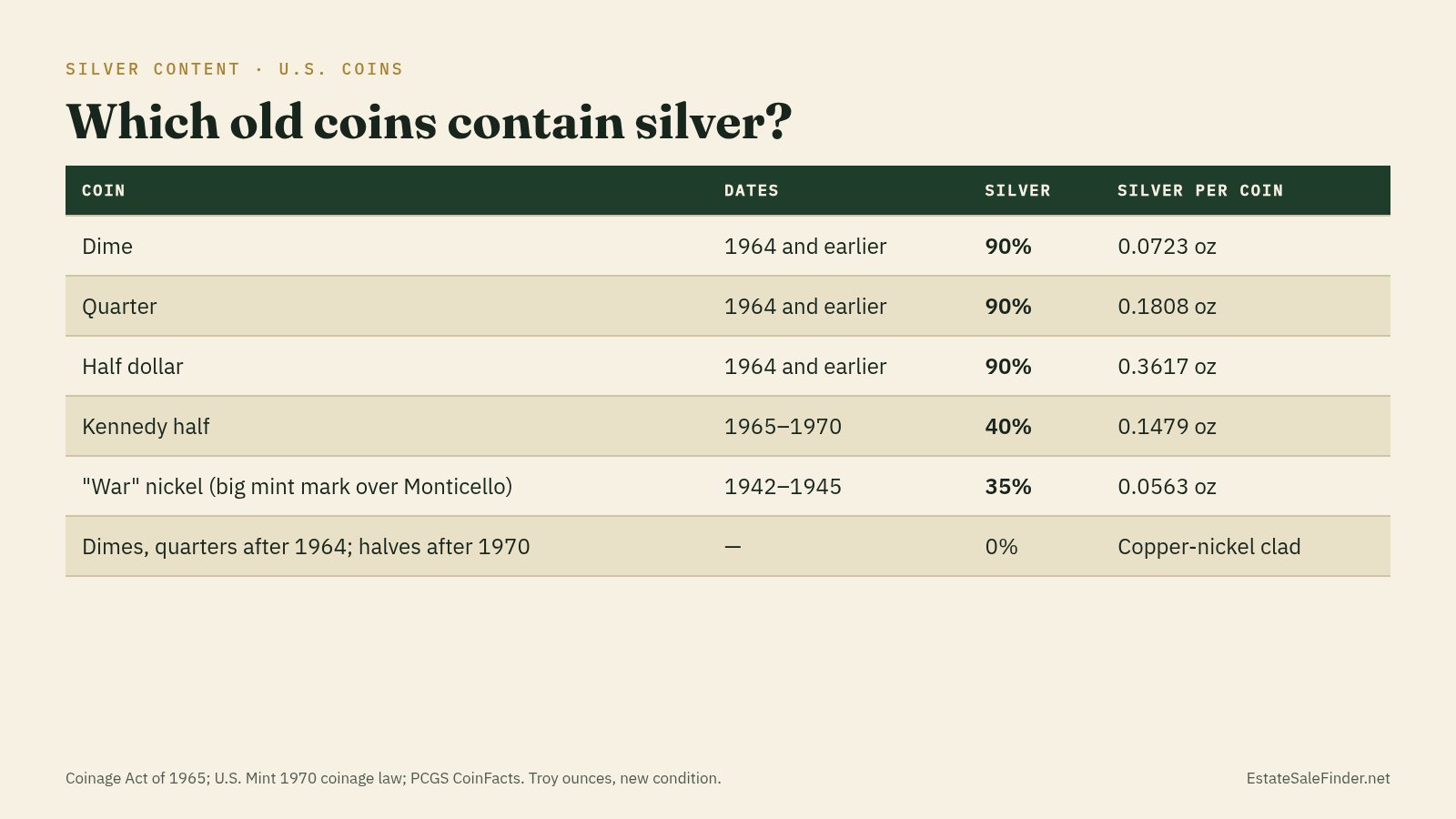
| Coin | Dates | Silver | Silver per coin (new) |
|---|---|---|---|
| Dime | 1964 and earlier | 90% | 0.0723 troy oz |
| Quarter | 1964 and earlier | 90% | 0.1808 troy oz |
| Half dollar | 1964 and earlier | 90% | 0.3617 troy oz |
| Kennedy half dollar | 1965 to 1970 | 40% | 0.1479 troy oz |
| War nickel (large mint mark over Monticello) | 1942 to 1945 | 35% | 0.0563 troy oz |
| Dimes and quarters after 1964; halves after 1970 | — | 0% | Copper-nickel clad |
Silver weights per coin are from GoldPrice.com's junk silver calculator, which uses U.S. Mint specifications. The war nickel alloy is 56% copper, 35% silver and 9% manganese (PCGS CoinFacts).
Melt value vs. collector value
Every coin has two possible values. Melt value is what its metal is worth. Collector value is what a collector will pay for that date, mint mark and condition. The higher one wins.
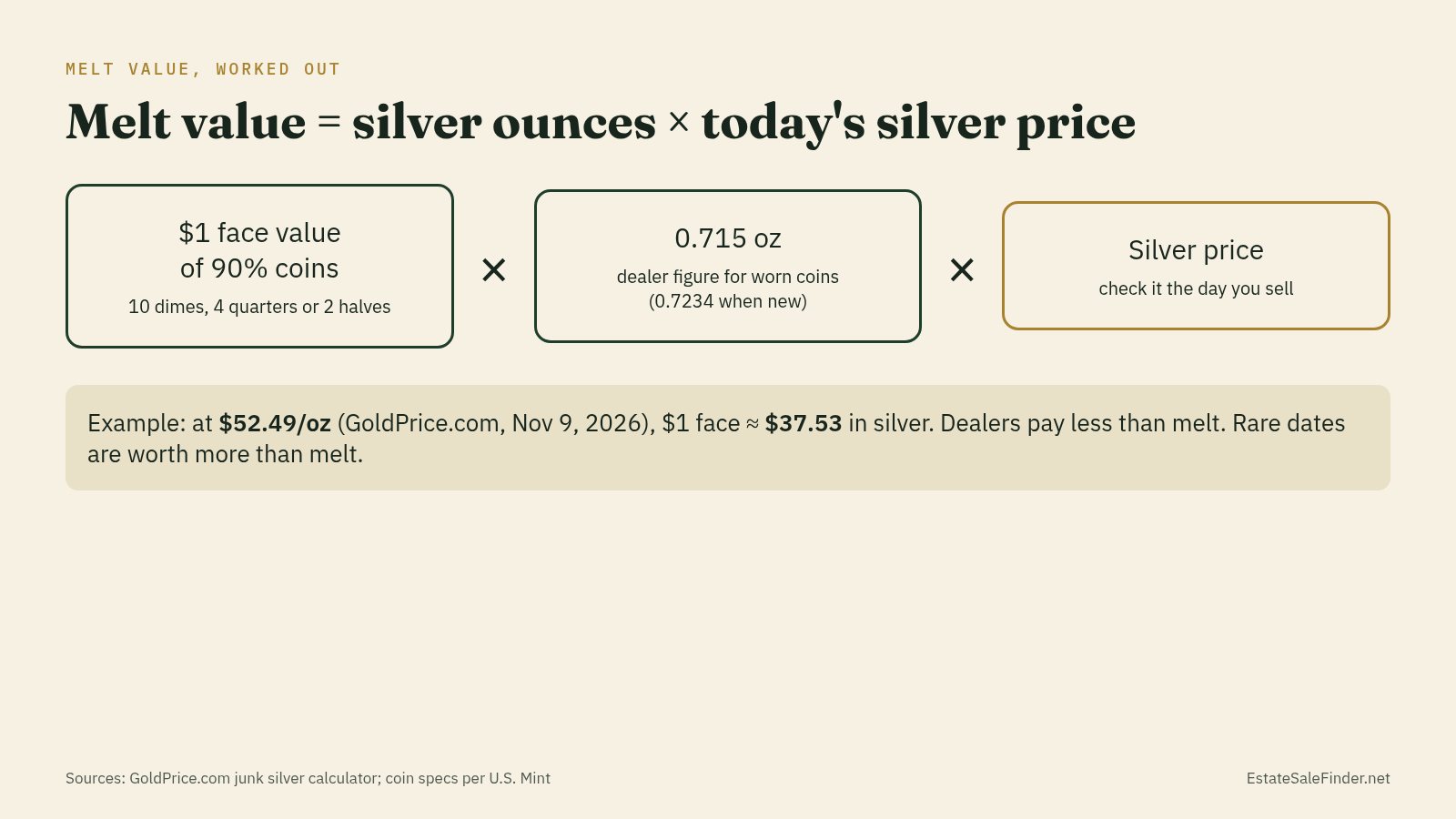
The formula
face value of 90% coins × 0.715 × today's silver price per troy ounce.
- New 90% coins hold 0.7234 troy ounces per $1 face value. Dealers use 0.715 to allow for wear (GoldPrice.com).
- Worked example: GoldPrice.com listed silver at $52.49 per troy ounce early on November 9, 2026, which made $1 face value of worn 90% coins worth about $37.53 in silver (GoldPrice.com). Recheck the price the day you sell. It moves every day.
- Dealers pay less than melt so they can make a margin. Ask what percentage of melt they're offering.
- Common dates sell near melt. PCGS notes that so many war nickels were made that melting them has had "negligible" effect on their value (PCGS CoinFacts).
For more on scrap value, see finding gold and silver melt value in costume jewelry bins and how to tell if gold is real.
How do I know if my coins are valuable?
Be honest with the family: most inherited coins are worth face value or melt value. The ones that can be worth more are:
- Graded coins. A coin in a sealed slab from PCGS or NGC has a certification number you can look up on the grader's website.
- Gold coins. Even common U.S. gold coins are worth at least their gold content.
- Key dates and mint marks. A few dates are scarce. A dealer or a price guide can tell you which.
- Proof and mint sets in original packaging. Many modern sets sell for little, but some don't.
- Uncirculated rolls and coins with original shine, which is exactly why you shouldn't clean them.
If a coin looks special, take clear photos of both sides and ask two dealers before anyone handles it further. Our Ai Appraiser can give a quick, suggested identification from a photo; confirm anything valuable with a coin dealer.
Where's the best place to sell an inherited coin collection?
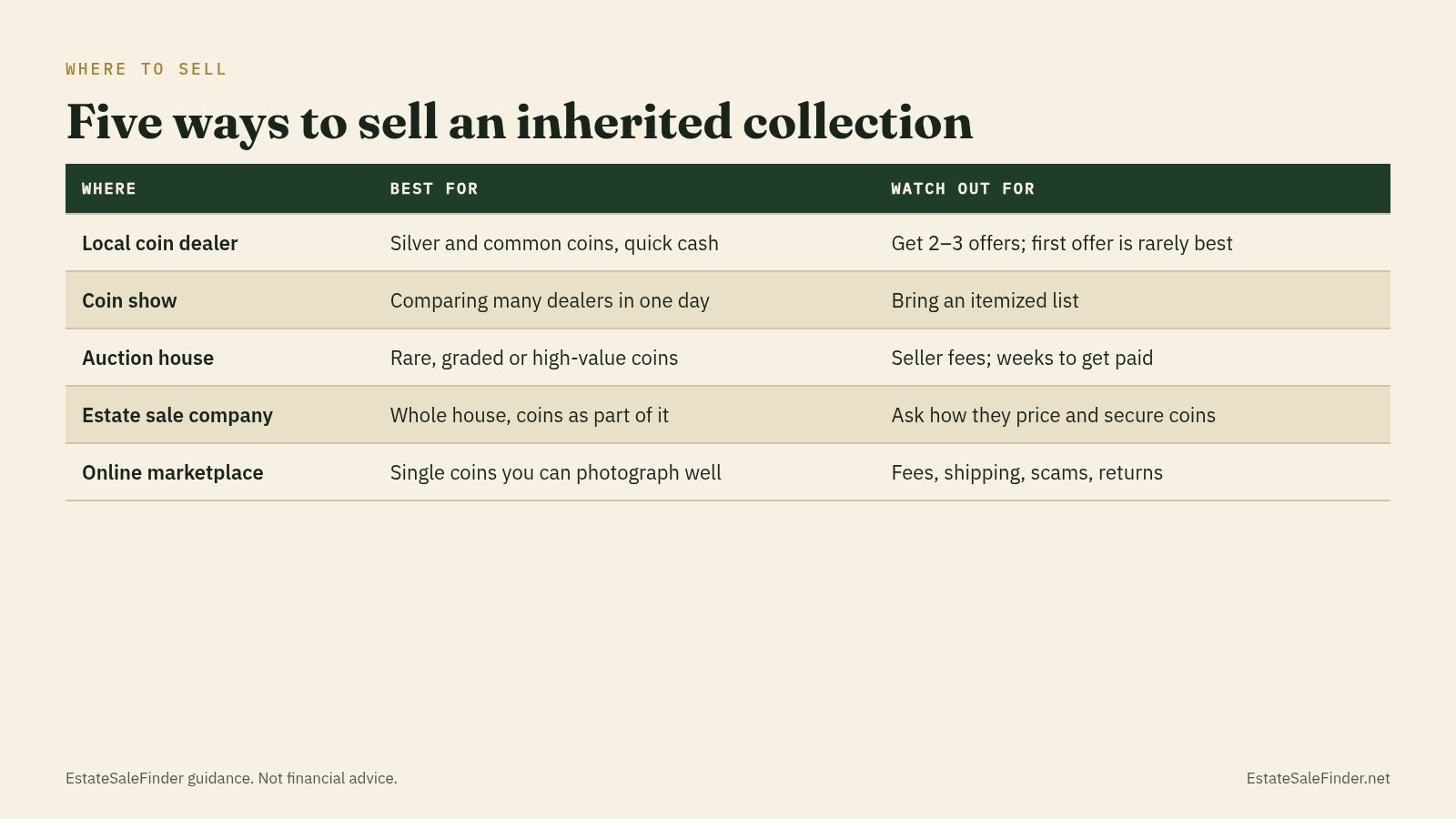
| Where | Best for | Watch out for |
|---|---|---|
| Local coin dealer | Silver and common coins, quick payment | Get 2 or 3 offers; the first is rarely best |
| Coin show | Comparing many dealers in one day | Bring your itemized list |
| Auction house | Rare, graded or high-value coins | Seller fees and weeks before you're paid |
| Estate sale company | A whole house, with coins as one part | Ask how they price and secure coins |
| Online marketplace | Single coins you can photograph well | Fees, shipping, returns and scams |
Whatever you choose, keep a written list of what you sold, to whom and for how much. You'll want it at tax time.
Selling coins at an estate sale
Coins can sell well at an estate sale, but they need care.
- Ask the company how it handles coins. Many keep them in a locked case near checkout or sell them by appointment.
- Ask how they're priced. Silver priced by melt, collectible coins priced by a dealer, or the whole lot sent to auction.
- Keep valuable coins out of the general sale until someone qualified has looked at them.
- Don't throw anything away first. Coins hide in drawers, coat pockets and jewelry boxes. Read what not to throw away before an estate sale.
To find a company near you, use hire an estate sale company.
The last penny, one year later
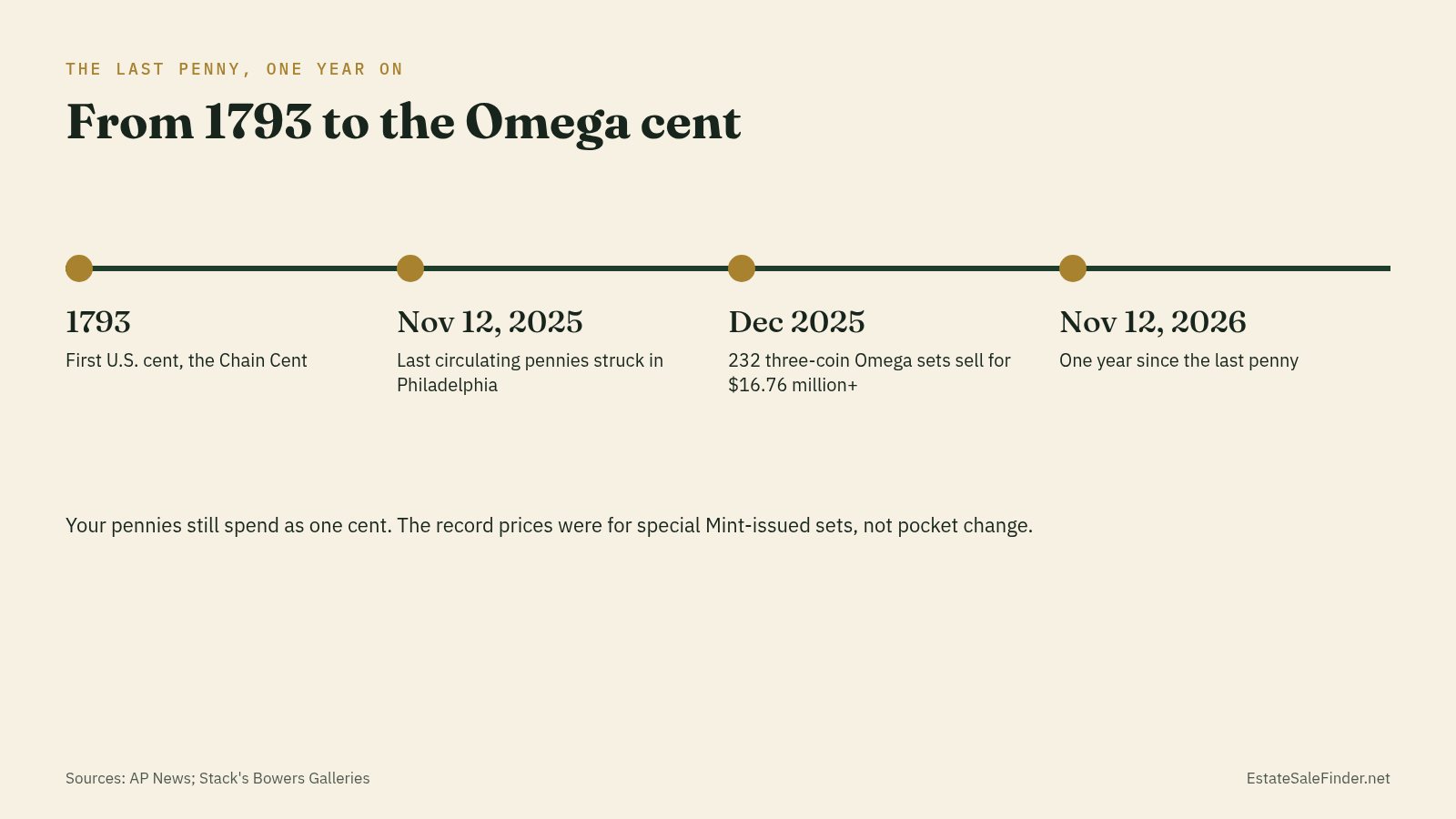
On Wednesday, November 12, 2025, the U.S. Mint in Philadelphia struck its last pennies for circulation. Each one cost nearly 4 cents to make. AP reported that billions "are still in circulation and will remain legal tender, but new ones will no longer be made" (AP News).
In December 2025, Stack's Bowers Galleries auctioned 232 three-coin "Omega" sets for the Mint for more than $16.76 million. Each set held a 2025 Philadelphia penny, a 2025-D Denver penny and a 24-karat gold penny, all with a small "Ω" privy mark. The final set sold for $800,000 (Stack's Bowers Galleries).
What it means for your jar of pennies
those record prices were for special Mint-issued sets, not pocket change. Ordinary pennies are still worth one cent, though older wheat cents and certain dates are still worth sorting.
Do I pay taxes on inherited coins?
Usually not just for inheriting them, but you may owe tax when you sell. The IRS says inherited property generally takes its fair market value "on the date of the decedent's death" as its starting point (basis) (IRS). If you sell for more than that, the gain is taxable, and "net capital gains from selling collectibles (such as coins or art) are taxed at a maximum 28% rate" (IRS Topic 409).
Write down what the collection was worth around the date of death, and keep your sale records. Ask a tax professional about your situation. Our guide Do you pay taxes on estate sale proceeds? explains the basics.
FAQ
How do I know if my coins are valuable?
Check for gold, silver dates (1964 and earlier dimes, quarters and halves), war nickels, graded coins in slabs, and proof or mint sets. Most other coins are worth face value. Get two dealer opinions on anything that looks special.
Which coins are 90% silver?
U.S. dimes, quarters and half dollars dated 1964 and earlier. Kennedy halves from 1965 to 1970 are 40% silver, and 1942 to 1945 war nickels with a large mint mark over Monticello are 35%.
Should I clean old coins?
No. Cleaning scratches the surface and lowers value. PCGS says plainly: don't clean your coins. Hold them by the edges and leave them as they are.
Where's the best place to sell inherited coins?
It depends on the coins. A local dealer or coin show is fine for silver and common coins. Rare or graded coins usually do better at auction. Get two or three offers either way.
Do I pay taxes on inherited coins?
Inheriting them usually isn't taxed, but selling can be. Your starting value is generally the coins' value on the date of death, and collectible gains are taxed at up to 28%. Ask a tax professional.
Are pennies valuable now that the Mint stopped making them?
Ordinary pennies are still worth one cent and remain legal tender. The $16.76 million auction was for special Omega sets the Mint issued, not everyday pennies. Some older wheat cents and rare dates are worth more.
Related guides
Sources
- PCGS: Come Clean About Cleaning Your Coins
- PCGS CoinFacts: Jefferson nickel, Type 2 silver alloy (1942–1945)
- GovTrack: Coinage Act of 1965 (S. 2080)
- U.S. Mint: The 1970 Coinage Law
- U.S. Mint: Dime
- U.S. Mint: Half dollar
- GoldPrice.com: Junk silver calculator
- IRS: Gifts and inheritances
- IRS Topic 409: Capital gains and losses
- AP News: US Mint presses final pennies
- Stack's Bowers Galleries: Last Omega pennies sell for over $16.76 million
Also in the garage
Sources checked November 9, 2026. Illustrations are Ai-generated and do not show real coin designs; charts are EstateSaleFinder diagrams built from the sources above. This guide is general information, not tax, legal or investment advice.
Keep exploring
Ready to start your own treasure hunt?
Discover estate sales near you and find incredible deals.
Explore Sales Near Me
About the author
Andy
Founder, EstateSaleFinder.net
Hi, I'm Andy — a retired commercial photographer turned developer with a five-year (and counting) obsession with estate sales. I started EstateSaleFinder.net because I knew there had to be an easier, smarter way to find and list estate sales. Now I get to chase treasure and build the tool I always wished existed.