

Estate Sale vs. Buyout: Which Pays More? A Side-by-Side Calculator, When a Buyout Wins, and How to Get 3 Fair Offers
A sale usually nets more, but it's closer than you think after commission, cleanout and holding costs. The formula, a fill-in calculator, and how to compare 3 offers.
An estate sale usually puts more money in the family's pocket than a buyout, but the gap is smaller than most people think. After a typical 40% commission, a cleanout for the leftovers, and weeks of keeping the house up, a fair buyout can come within 10–20% of the sale's net. A buyout tends to win when you have a closing date in under three weeks, a small or hoarded estate, or heirs who live far away. Get three written offers before you decide.
Quick summary
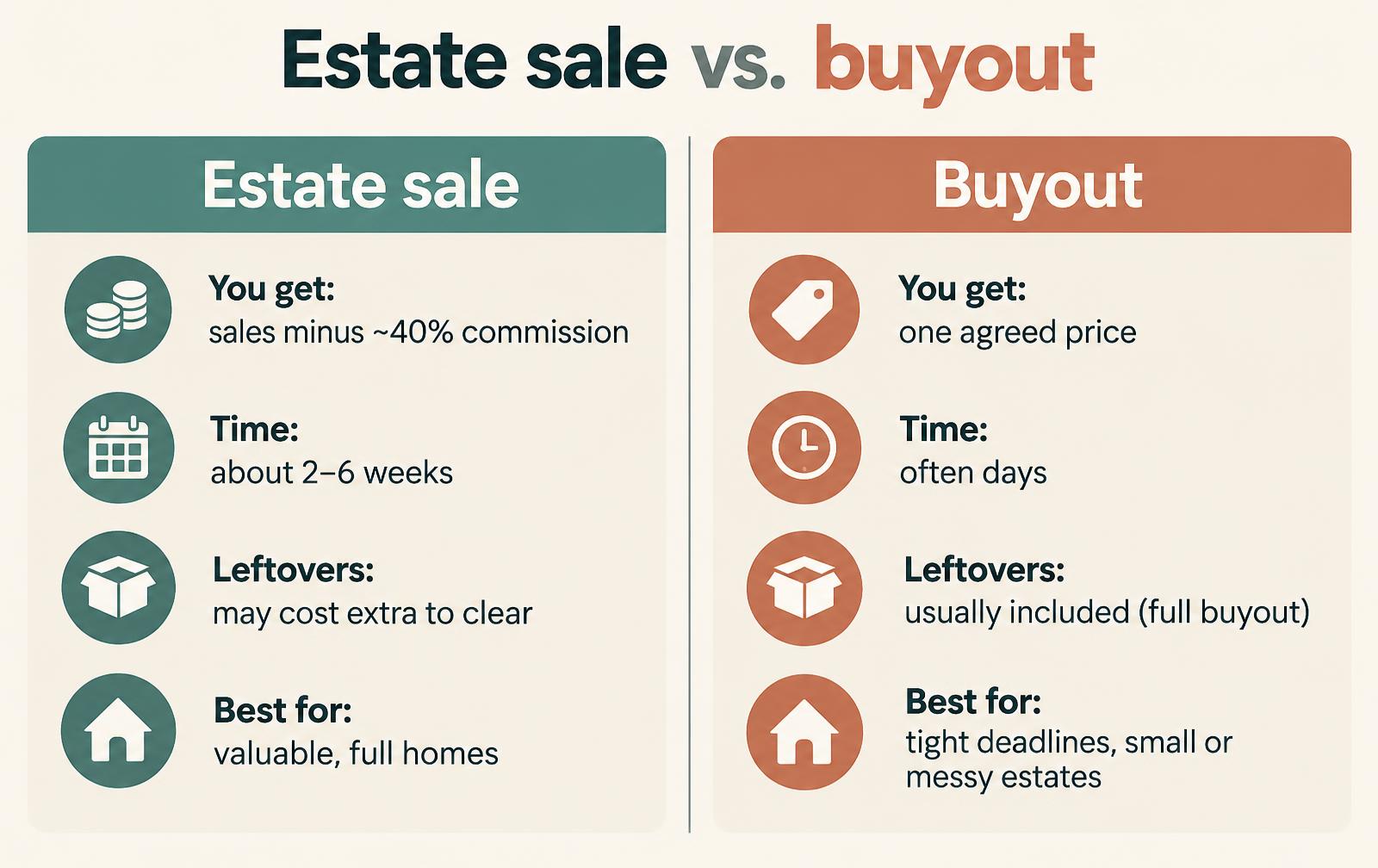
- Estate sale: a company sells items one by one in the home and keeps a commission, about 40% on average (EstateSales.NET). You get the rest, usually a few weeks later.
- Buyout: a company or dealer pays one agreed price for everything (full buyout) or for some items (partial buyout), and takes it away.
- Usually pays more: the estate sale, when there are enough sellable items.
- Usually faster and simpler: the buyout.
- The math that matters: compare net money, after commission, cleanout and the cost of holding the house, not the headline numbers.
What is an estate buyout?
An estate buyout is when a company, dealer or liquidator makes one cash offer for the contents of a home and removes them, instead of running a sale and taking a commission.
- Full buyout: they buy everything and leave the house empty, often "broom clean." You get one check and you're done.
- Partial buyout: they buy only the items they want, such as furniture, tools, jewelry or collectibles. You're left with everything else.
Many estate sale companies do buyouts alongside sales. 69% of companies in EstateSales.NET's 2024 survey of 774 businesses offer clear-outs (EstateSales.NET). Buyouts are advertised far less often. Of 3,199 estate sale company profiles on EstateSaleFinder with a written description, 80 (about 2.5%) mention buyouts and 324 (about 10%) mention cleanouts or clear-outs, as of November 3, 2026. Plenty of companies do buyouts without saying so, so ask.
Estate sale vs. buyout: side by side
| Estate sale | Full buyout | Partial buyout | |
|---|---|---|---|
| How you're paid | Sales minus commission | One agreed price | One price for chosen items |
| Typical company share | About 40% of gross sales | Built into their offer | Built into their offer |
| Time to finish | Usually a few weeks, from contract to payout | Often days | Often days |
| Leftovers | Your problem unless the contract covers them | Usually included | Your problem |
| Work for the family | Medium: remove keepsakes, give access | Low | Medium |
| Price risk | Sales could come in high or low | None once signed | None for bought items |
| Best for | Full homes with good furniture, collectibles, tools | Tight deadlines, small or messy estates | Selling a few strong pieces fast |
The 40% figure is EstateSales.NET's national average commission from its 2024 survey (EstateSales.NET). Local rates vary. See how much estate sale companies charge.
How much is a buyout worth compared to an estate sale?
There's no published national average for buyout offers, and anyone who quotes one is guessing. A buyer has to resell everything, pay staff, store and haul it, and dispose of what doesn't sell. One Reddit commenter put it plainly: you'll receive less "because there's a lot of work for the liquidators including storage, advertising and possible disposal costs" (r/estatesales, June 2025, anecdote).
A real example, shared as an anecdote: one Reddit user said an estate sale company estimated the outbuildings and yard items on a hoarded property at about $35,000–$40,000 and offered a $20,000 buyout to haul everything away (r/ChildofHoarder, May 2023, anecdote). That's roughly half the company's own estimate. But an estimate isn't money in the bank, and a sale of that property would have carried commission, cleanout and months of work.
So the real question isn't "which number is bigger?" It's "which leaves more money after everything?"
The net-proceeds formula
Use this to compare any sale quote against any buyout offer.
Net from an estate sale = expected gross sales − commission − fees in the contract (labor, advertising, trash, minimums) − cleanout of leftovers − holding costs while you wait
Net from a buyout = the offer − any fees in the buyout agreement − holding costs for the (shorter) time it takes − cleanout of anything left, if it's a partial buyout
Holding costs are what you pay to keep the house while it waits: mortgage, property taxes, insurance, utilities, HOA dues, lawn care. For an empty house that's waiting to close, every extra week counts.
Worked example
These numbers are for illustration only.
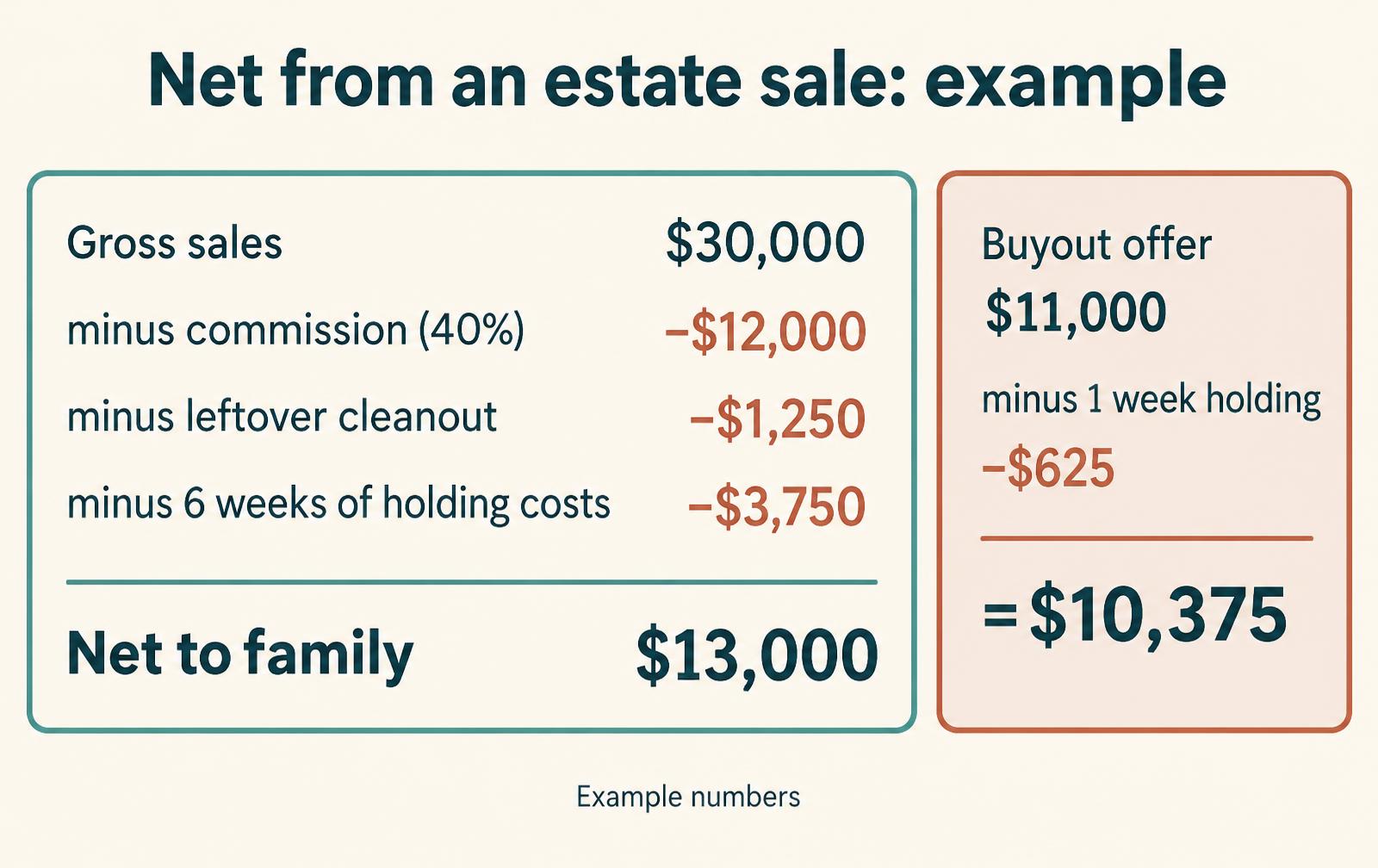
- Expected gross sales: $30,000
- Commission at 40%: −$12,000
- Leftover cleanout: −$1,250 (the national average cleanout cost, according to Angi, with most people paying $275–$4,000) (Angi)
- Holding costs at $2,500 a month for 6 weeks: −$3,750
- Net from the sale: $13,000
Now compare a full buyout offer of $11,000 that closes in one week, with one week of holding costs (about $625):
- Net from the buyout: $10,375
The sale wins by about $2,600, or 20%. That's real money, but it's not the "sale pays three times as much" that people often assume.
Now shrink the estate
Same house costs, but the contents would only gross $15,000 at a sale:
- $15,000 − $6,000 commission − $1,250 cleanout − $3,750 holding = $4,000 net
- A $4,500 buyout − $625 holding = $3,875 net
Now they're nearly equal, and the buyout is done five weeks sooner. Many companies also have a sales minimum or a minimum fee, which can push a small sale's net even lower. Read the estate sale contract checklist for where minimums hide.
Fill-in calculator
Copy this onto paper or a spreadsheet:
| Line | Estate sale | Buyout |
|---|---|---|
| A. Expected gross / offer | $______ | $______ |
| B. Commission (A × rate) | −$______ | n/a |
| C. Contract fees | −$______ | −$______ |
| D. Cleanout of leftovers | −$______ | −$______ (partial only) |
| E. Weeks until done | ______ | ______ |
| F. Holding cost per week | $______ | $______ |
| G. Holding cost (E × F) | −$______ | −$______ |
| Net (A − B − C − D − G) | $______ | $______ |
Where to get each number:
- A (sale): ask the company for a written range, not a single hopeful figure.
- B and C: from the sale contract.
- D: a written cleanout quote, or "included" in writing.
- F: add up a month of mortgage, taxes, insurance, utilities and upkeep, then divide by about 4.3.
When a buyout wins
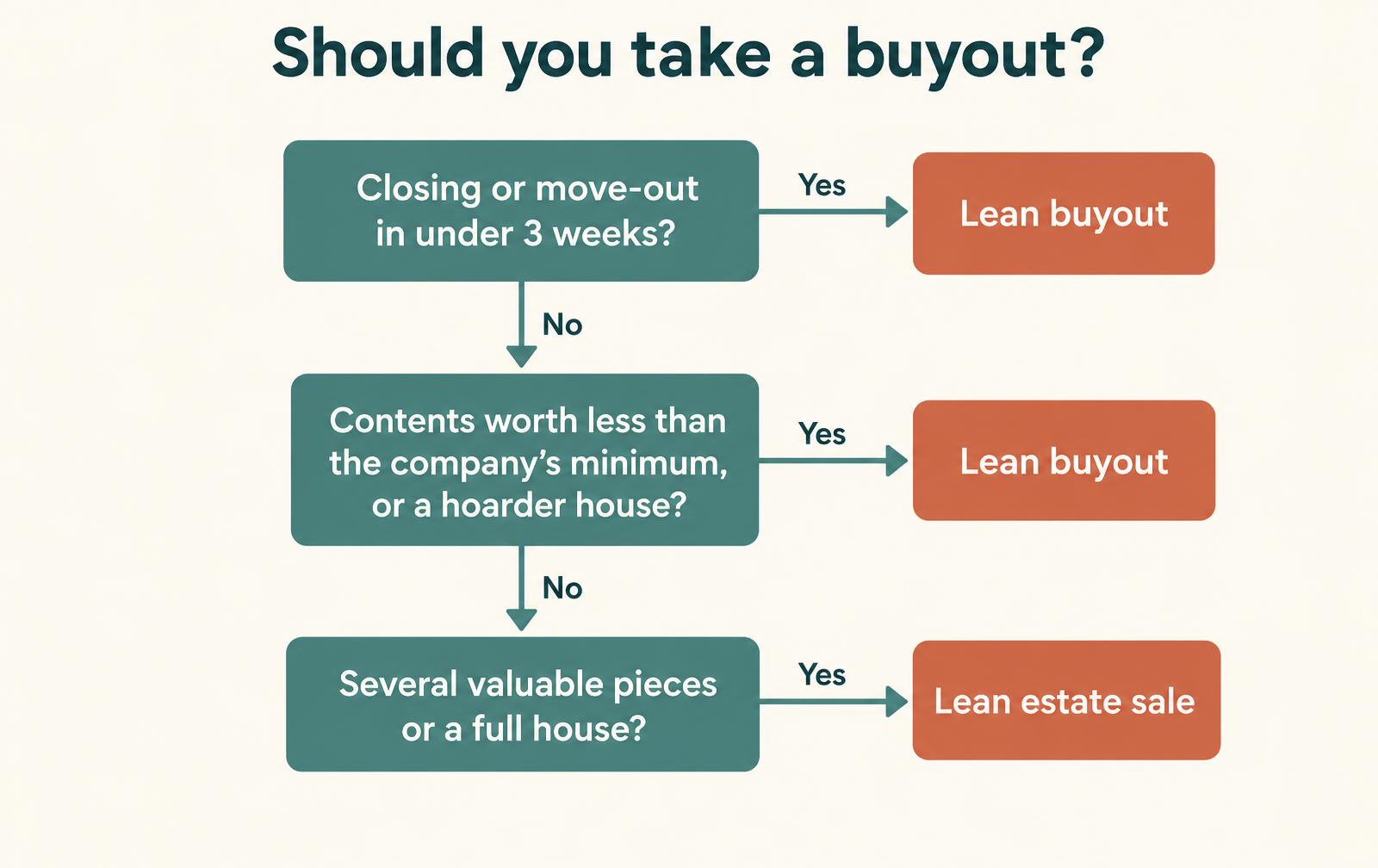
- A tight closing date. If the house closes in two weeks, many companies can't book, stage, advertise and run a sale in time. A buyout can be done in days.
- A small estate. If the contents won't meet a company's minimum, the sale may not happen at all, or a minimum fee eats the proceeds. See what to do if your estate sale is "too small".
- A hoarder house. Sorting, cleaning and safety work can cost more than the items bring. A full buyout or a cleanout may be the only realistic option. Our hoarder house estate sale guide covers this.
- Heirs who live out of state. If nobody can be there to clear keepsakes, meet the company and check on the house, one check and an empty house is worth a lot. See managing an estate sale from out of state.
- Family conflict. One fixed price is easier to split than weeks of sales reports.
- Mostly everyday items. Ordinary furniture, kitchenware and clothing sell for little at a sale. The gap between sale and buyout is smaller.
When an estate sale wins
- A full house with good furniture, tools, collectibles, jewelry or art.
- Brand-name or in-demand pieces, like mid-century furniture, quality tools, Pyrex, vintage holiday decor or firearms handled properly.
- Time on your side, so a few extra weeks of holding costs don't hurt much.
- A strong local buyer base. Busy markets with lots of estate sale shoppers push prices up.
If you're not sure, read is an estate sale worth it? and estate sale vs. auction vs. cleanout.
The partial-buyout warning
A partial buyout sounds like the best of both: sell the good stuff now, deal with the rest later. But be careful.
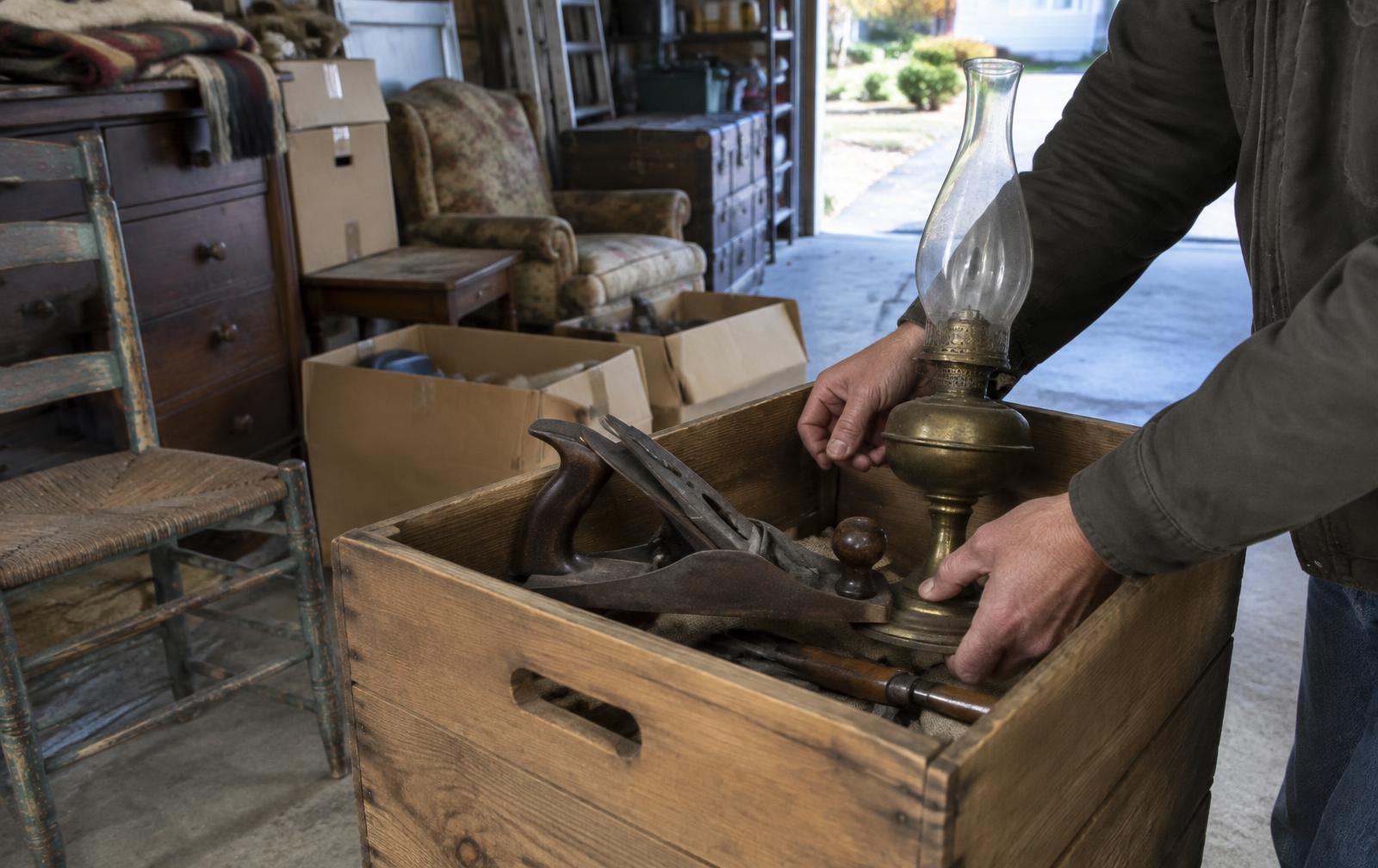
- The best items are what make a sale worth running. Once they're gone, what's left may be too thin for any company to take on, and you could be stuck paying for a cleanout.
- You don't see what each item went for. A lump sum for "the tools and the dining set" makes it hard to tell if one piece was worth more than the whole offer.
- Some people in the business dislike it. One estate sale owner on Reddit wrote that liquidators who buy out what's left at the end of their own sales "should be banished from running any estate sale ever again" (r/estatesales, June 2026, anecdote). That's about end-of-sale buyouts by the same company, but it shows why you want the deal in writing and at arm's length.
If you take a partial buyout
get the item list and price in writing, get a second opinion on anything you think is valuable, and line up what happens to the rest before you sign.
How to get 3 fair buyout offers
A Reddit commenter's advice on buyouts sums it up: "Get 3-4 different offers. Best to have a signed agreement on the clean out however" (r/estatesales, June 2025, anecdote).
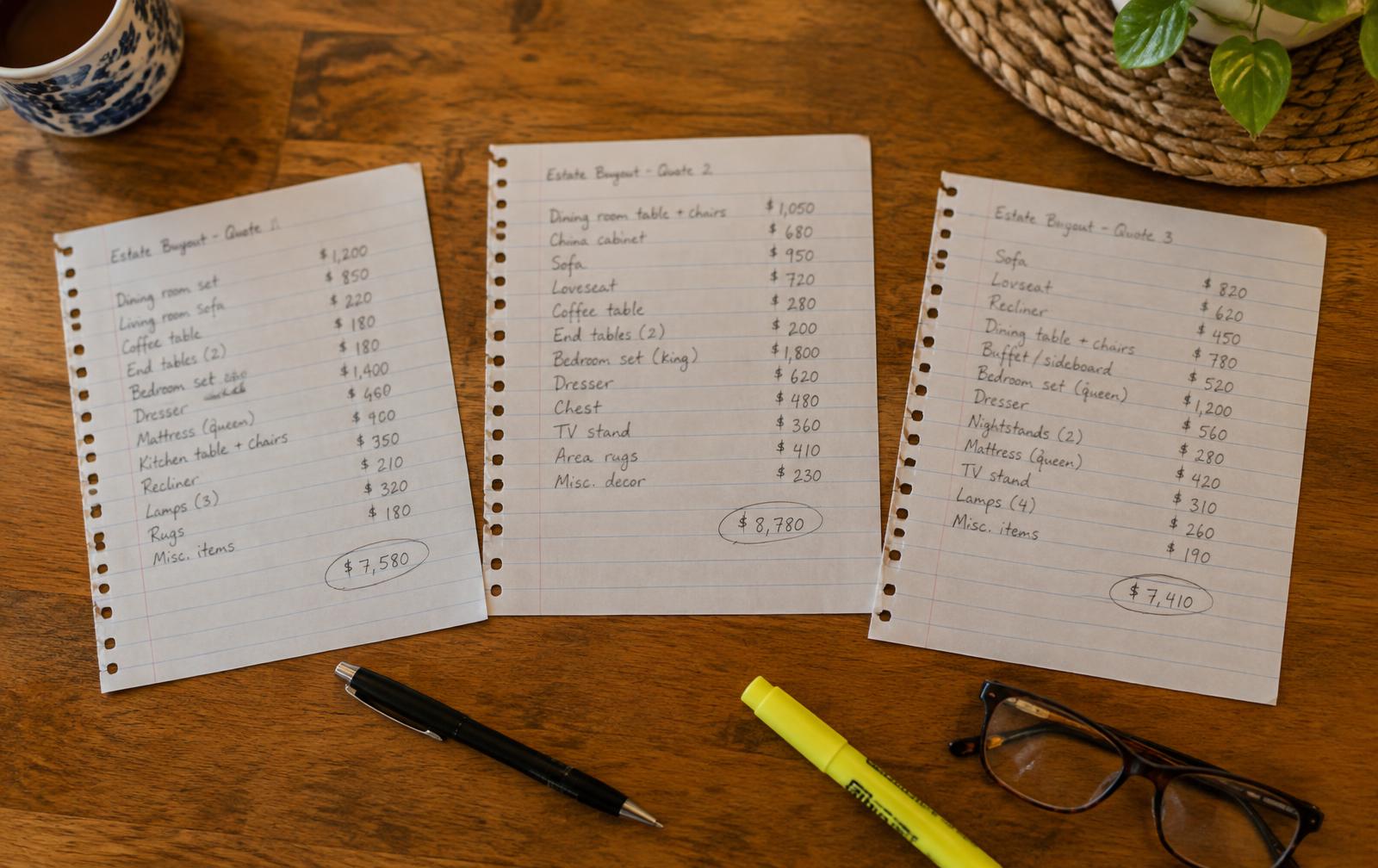
1. Pull out keepsakes first. Photos, papers, jewelry, firearms and anything the family wants. Once a buyout is signed, it's all theirs. 2. Photograph every room and any items you think are valuable, including makers' marks and labels. 3. Get a rough value on standout pieces. EstateSaleFinder's Ai appraiser can give a suggested range from photos, as a starting point, not a final price. 4. Contact at least three companies. Find estate sale companies near you and ask each for both a sale estimate and a buyout offer. 5. Ask the same questions every time:
- Is this a full or partial buyout? Which items exactly?
- Is the house left empty, or broom clean? Who handles trash and donations?
- When do you pay, and how? (Get paid before or when they remove items, never weeks later.)
- Are you insured if you damage the house while removing things?
- Can you put it all in writing?
Before signing either kind of agreement, read our estate sale contract checklist.
Mixed options
You don't always have to choose one.
- Sale, then buyout of leftovers. Run the sale, then take a buyout or cleanout for what's left. Agree on the leftover plan in the contract, before the sale.
- Consign the best, buy out the rest. Send a few high-value items to auction and take a buyout on the everyday contents. 27% of companies in the EstateSales.NET survey offer consignment to auctions (EstateSales.NET).
- Online auction. For mid-size estates, an online auction can be a middle ground. See should you have an estate sale or online auction?
- Sell the house with furniture in it. Sometimes the buyer of the house wants some of the contents. See selling a house with the furniture still in it.
For realtors and senior move managers: the agent's take
- Ask about the closing date first. If it's under three weeks, line up buyout and cleanout quotes right away, even if the family hopes for a sale.
- Show families the net math. Families often hear "40% commission" and "buyout" and assume the buyout is a rip-off. Netting out holding costs and cleanout gives them a fair comparison.
- Keep a short list of companies that do sales, buyouts and cleanouts, so you can get three quotes in a day.
- Put the empty-house date in writing. The agreement should match the listing or closing timeline.
More in our realtor's guide to estate sales and senior move manager vs. estate sale company.
If you're weighing a winter sale against waiting, see the best time of year for an estate sale.
FAQ
Is an estate buyout worth it?
It can be, when time, distance or the condition of the home matter more than getting every last dollar. Compare the buyout's net against the sale's net after commission, cleanout and holding costs. The gap is often smaller than it first looks.
How much do estate buyout companies pay?
There's no reliable national average. Offers depend on what can be resold, how much work removal takes, and what has to be thrown away. In one Reddit anecdote, a company offered $20,000 on contents it estimated at $35,000–$40,000. Get three written offers to see your local range.
What's the difference between a buyout and a cleanout?
In a buyout, the company pays you for the contents. In a cleanout, you pay the company to remove them. Angi puts the average estate cleanout at $1,250, with most people paying $275–$4,000.
What is a partial estate buyout?
The buyer purchases only the items they choose and leaves the rest. It's fast cash for the best pieces, but it can leave you with contents that are too thin for a sale and still need clearing.
Does an estate sale or a buyout pay more?
An estate sale usually pays more for a full house with good items and time to run the sale. A buyout can come out close, or ahead, for small estates, hoarder houses or tight closing dates.
How long does an estate buyout take?
Often a few days from the walkthrough to an empty house, depending on the company's schedule and the size of the home. An estate sale usually takes a few weeks from contract to payout.
Can I get a buyout after my estate sale?
Yes. Many companies will buy out or clear what's left after a sale. Agree on the price or fee in your contract before the sale starts.
Should I remove anything before a buyout?
Yes. Take out keepsakes, photos, documents, jewelry, firearms and anything the family wants before anyone signs. After a full buyout, everything left in the house belongs to the buyer.
Sources
- EstateSales.NET: 2024 Estate Sale Industry Insights Report (774 businesses)
- Angi: How Much Do Estate Cleanout Services Cost?
- r/ChildofHoarder: "Should I do a buy-out?" (May 2023, anecdote)
- r/estatesales: "Estate buyout" (June 2025, anecdote)
- r/estatesales: "Wheeling and dealing" (June 2026, anecdote)
- EstateSaleFinder company directory, checked November 3, 2026
Sources checked November 3, 2026. Example numbers are for illustration, not a quote. General information, not legal or financial advice.
Keep exploring
Ready to start your own treasure hunt?
Discover estate sales near you and find incredible deals.
Explore Sales Near Me
About the author
Andy
Founder, EstateSaleFinder.net
Hi, I'm Andy — a retired commercial photographer turned developer with a five-year (and counting) obsession with estate sales. I started EstateSaleFinder.net because I knew there had to be an easier, smarter way to find and list estate sales. Now I get to chase treasure and build the tool I always wished existed.