
Fake Watches and Jewelry at Estate Sales: How to Check Rolex, Cartier, Gold and Diamonds Before You Buy
Three questions buyers confuse: is the brand genuine, is the metal what it claims, and what is the stone? A safe estate-sale check for Rolex, Cartier, gold and diamonds, a table of what each test actually proves, and a free printable check sheet.
To tell if a watch or piece of jewelry is fake, split it into three separate questions: Is the brand genuine? Is the metal what the stamp claims? What is the stone? Each needs a different expert. A serial number, a 14K stamp or a passing diamond-tester beep can all be faked or misread, and lab-grown diamonds are real diamonds, so no home test settles it. At the sale, look, photograph and ask questions. Leave scratching, acid and opening watches to a watchmaker, jeweler or gemologist.
Quick summary
- Three questions, three experts. Brand: a watchmaker or the brand's service network. Metal: a jeweler with non-destructive testing. Stone: a gemologist or gem lab.
- Jewelry and watches are the most-faked goods by value. U.S. Customs and Border Protection says jewelry and watches were the top two counterfeit commodities by MSRP for three straight years. In fiscal 2024, seized fake jewelry was valued at $1,654,738,737 and fake watches at $1,442,665,050 if genuine (CBP FY2024 report, PDF).
- A stamp is a claim, not proof. Federal law requires a maker's trademark alongside a gold quality mark, so a lone "14K" with no maker's mark is a reason to look closer (15 U.S.C. 297).
- Lab-grown is not fake. GIA: "Synthetic diamonds are real diamonds," and you can't spot one with a loupe; only lab testing tells them apart (GIA).
- Missing papers don't mean fake, and papers don't mean real.
- Free download: a full-page printable check sheet, below.
The three questions buyers confuse
| Question | Example | Who can answer it |
|---|---|---|
| Is the brand genuine? | Is this really a Rolex or a Cartier? | Watchmaker, brand service center, or the brand's certified pre-owned program |
| Is the metal what it claims? | Is this "14K" chain solid gold, gold filled or plated? | Jeweler with XRF (X-ray fluorescence) or a refiner's assay |
| What is the stone? | Natural diamond, lab-grown diamond, moissanite, cubic zirconia or glass? | Graduate gemologist or a gem lab report |
A genuine Rolex can have a replaced bracelet. A real gold ring can hold a cubic zirconia. A fake watch can have a solid gold case. Answer each question on its own.
The safe estate-sale check (no damage)
Never scratch, file, acid-test or open anything you haven't bought. You'd be damaging someone else's property, and a case opened with the wrong tool can let dust and moisture into a movement.
- Photograph everything. Dial, case back, between the lugs, clasp, any stamp, any report number. You'll need these for an expert later.
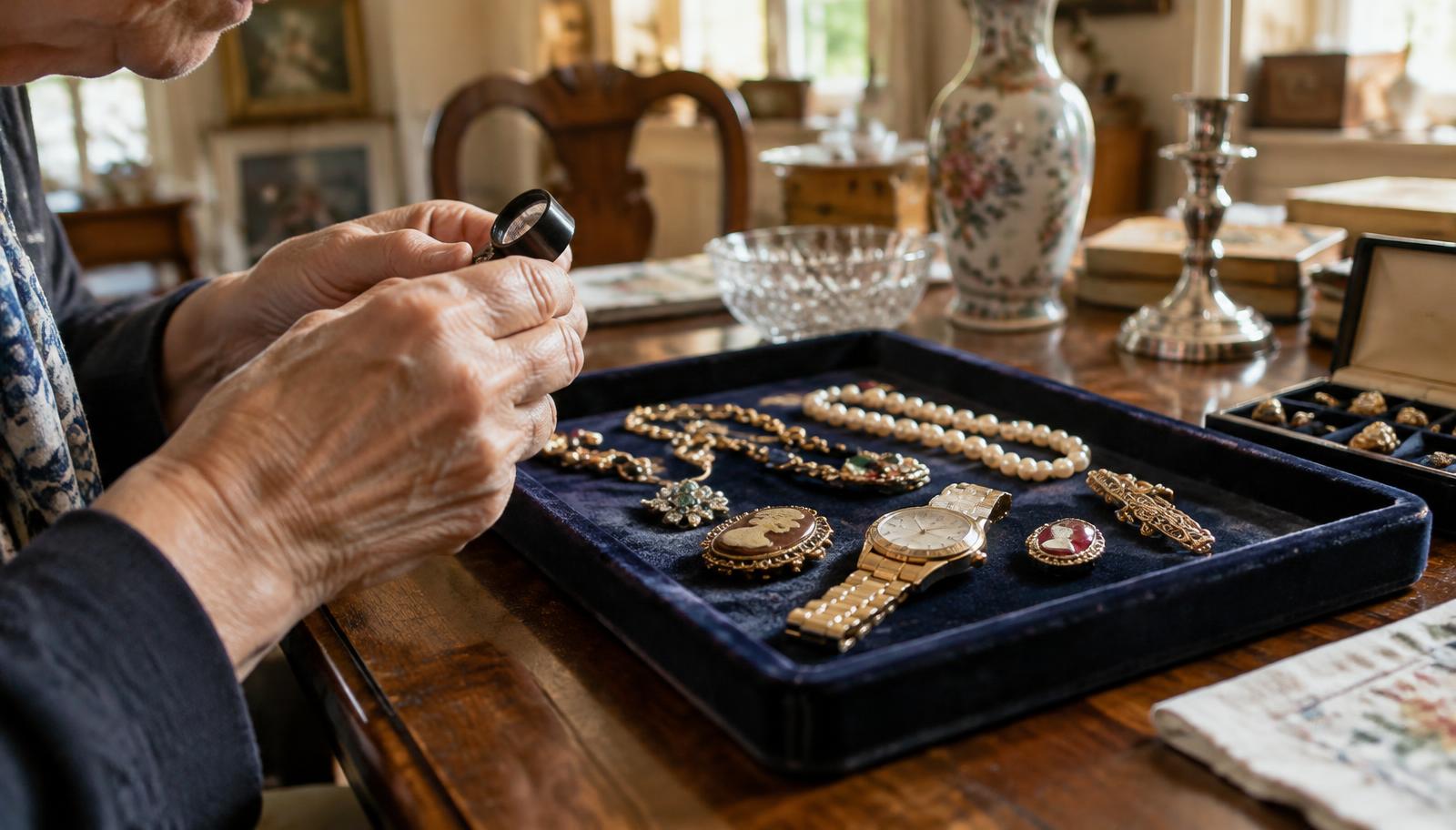
- Use a loupe (10x). Look at dial printing, stamp edges and stones. Fuzzy, uneven or crooked printing is a warning sign.
- Feel the weight. Solid gold and solid steel cases feel dense. Hollow, tinny pieces are a warning sign, not proof.
- Check wear spots. Clasps, high links and ring shanks show plating loss first.
- Read every mark. Write down karat stamps, maker's marks, serial or reference numbers.
- Ask the questions at the end of this guide, and get the seller's description in writing if the price is high.
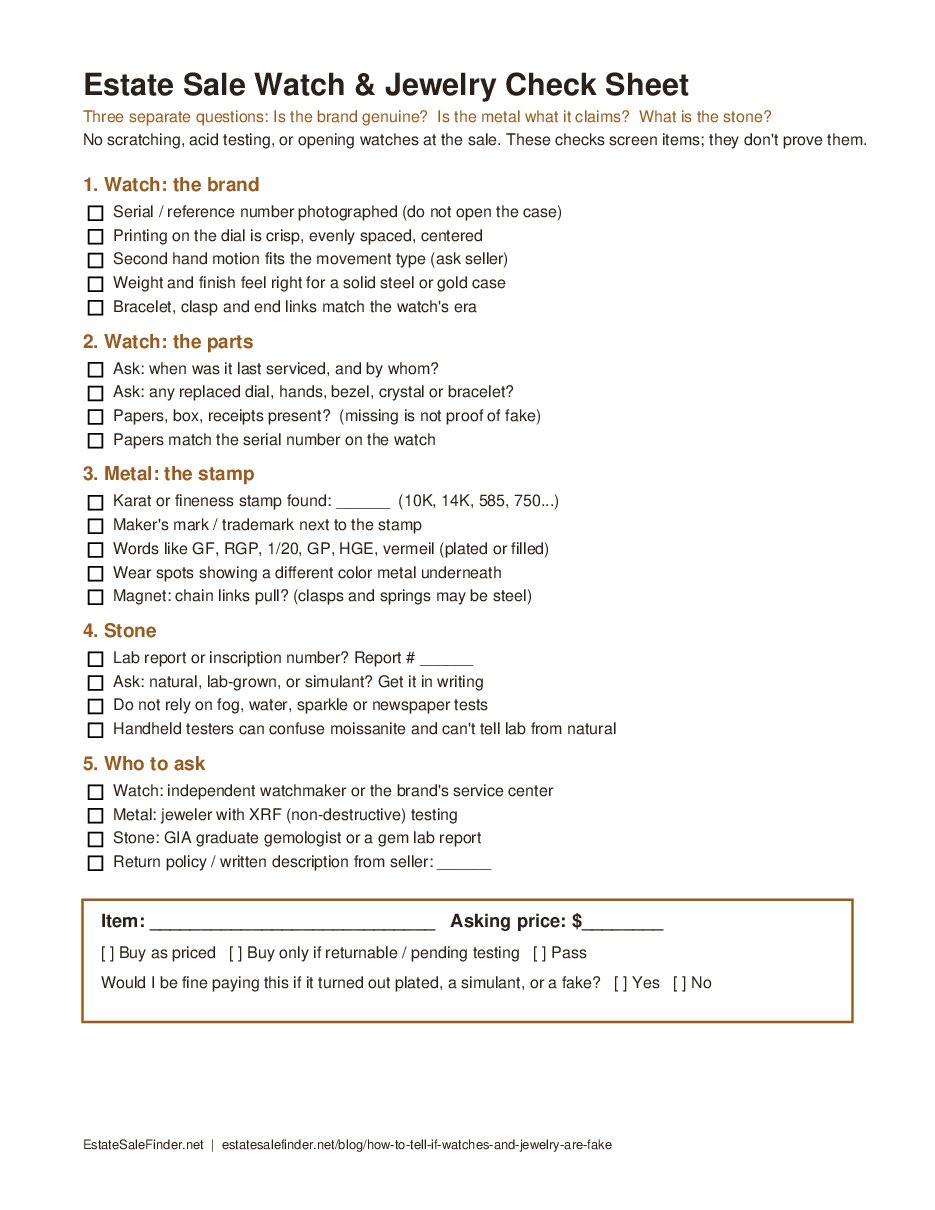
Free printable: Estate Sale Watch & Jewelry Check Sheet
A full 8.5 x 11 page with the brand, metal and stone checks, blanks for stamps and report numbers, and a buy/pass box.
What each test actually proves
Most quick tests can rule something out. Very few can rule something in.
| Test or clue | What it can tell you | What it cannot prove |
|---|---|---|
| Serial or reference number | Whether the format and location fit the model and era | That the watch is genuine; counterfeiters copy real serials |
| Box and papers | That the paperwork exists and whether its serial matches the watch | Authenticity; papers are faked and get separated from watches |
| Dial printing under a loupe | Crude or uneven printing is a strong warning sign | That a crisp dial is original; dials get refinished and replaced |
| Weight | Very light pieces are suspicious | Gold content; plated or filled pieces can be heavy |
| Karat stamp (10K, 14K, 585, 750) | What the maker claimed | That the metal matches; stamps are forged |
| Maker's mark next to the stamp | Who is responsible for the claim (required by federal law) | Authenticity on its own; marks can be copied |
| Magnet | Strong pull on the links means not solid gold | That it's gold; many base metals and plated items aren't magnetic either |
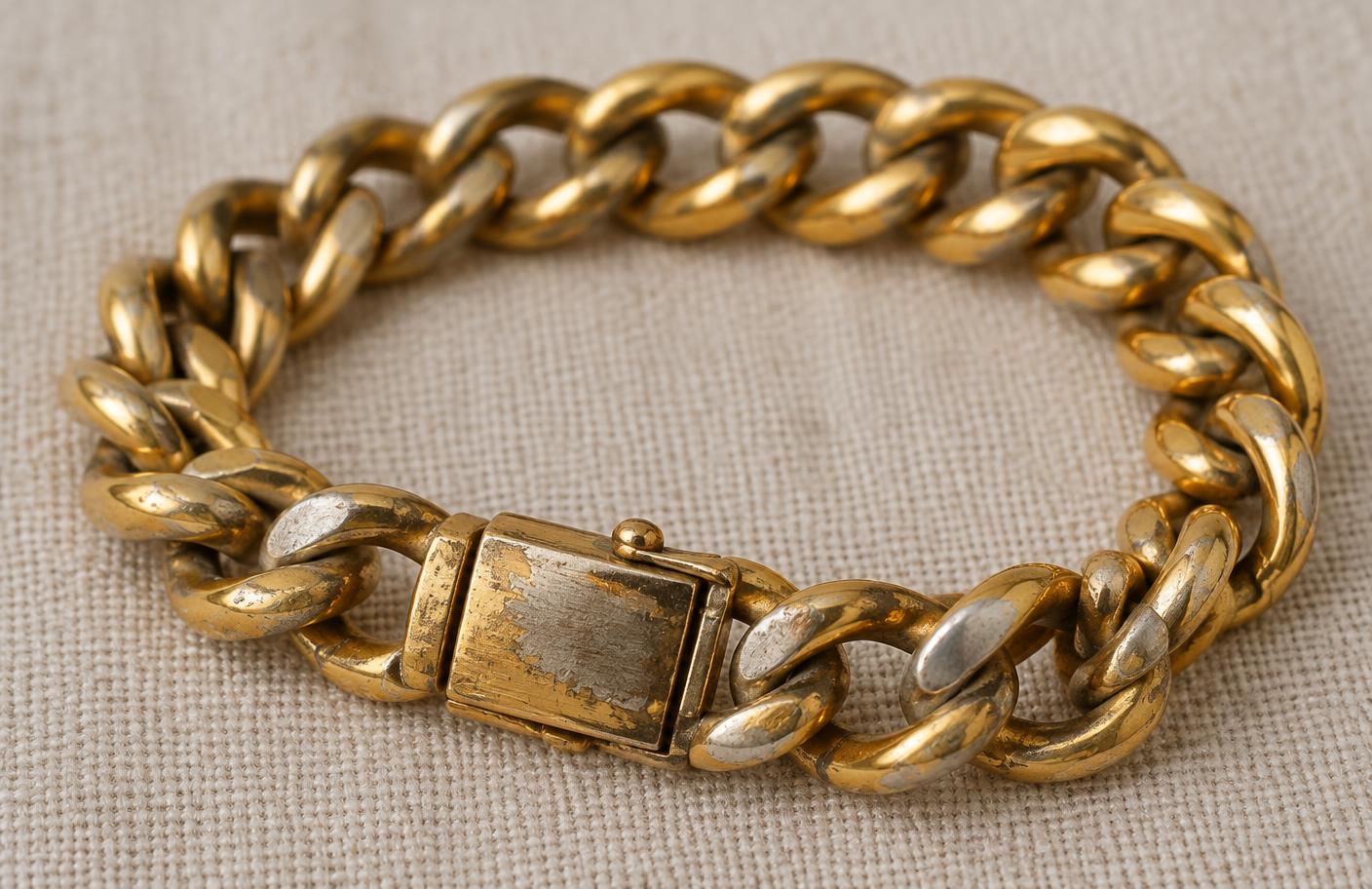
| Plating wear | Different-colored metal showing through means plated or filled | That unworn pieces are solid |
| Handheld diamond tester | A "diamond" reading rules out cubic zirconia and glass | Natural vs lab-grown; some testers can confuse moissanite |
| Fog, water or newspaper test | Nothing reliable | Anything; GIA calls these myths |
| XRF by a jeweler | The surface metal composition, without damage | What's under a thick plating layer or inside a hollow piece |
| Gem lab report (checked online) | Identity of the stone in the report | That the stone in front of you is that stone, unless an inscription matches |
Watches: Rolex, Cartier and copied serial numbers
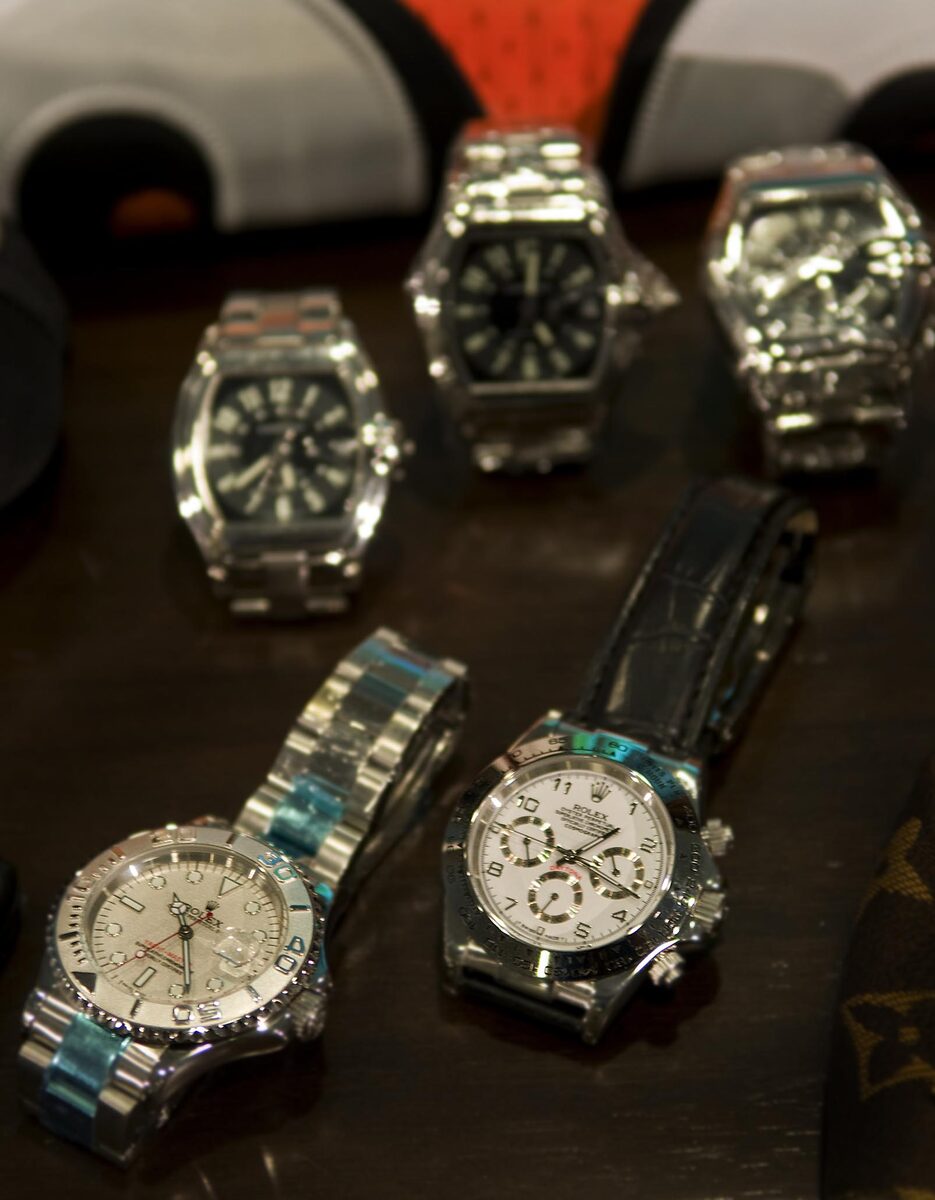
How to tell if a Rolex is real (what you can check without opening it)
Rolex's own answer is simple: buy from an Official Rolex Jeweler, who can verify every part (Rolex FAQ). For used watches, Rolex runs a Certified Pre-Owned program for watches at least two years old, sold through participating Official Jewelers (Rolex CPO). Neither helps at a Saturday estate sale, so here is what you can check:
- Where the serial number is. Older Rolex watches have the serial engraved on the case at 6 o'clock, between the lugs (under the bracelet). Around 2005, Rolex began also engraving it on the rehaut, the inner ring between dial and crystal. From about 2008, it appears on the rehaut only (Bernard Watch, Watch Doctor).
- Whether it can be dated. Around 2009 to 2010 (sources differ), Rolex switched to random serials that can't be decoded to a year (The Watch Prestige).
- Whether it all fits. The serial era, model reference, dial, bezel and bracelet should all belong together. A watch with a random serial and a 1970s-style bracelet, or an old serial and a modern dial, needs explaining.
Real serials are copied. Counterfeiters photograph genuine watches and engrave the same number on hundreds of fakes, so a "real" serial only tells you the format fits.
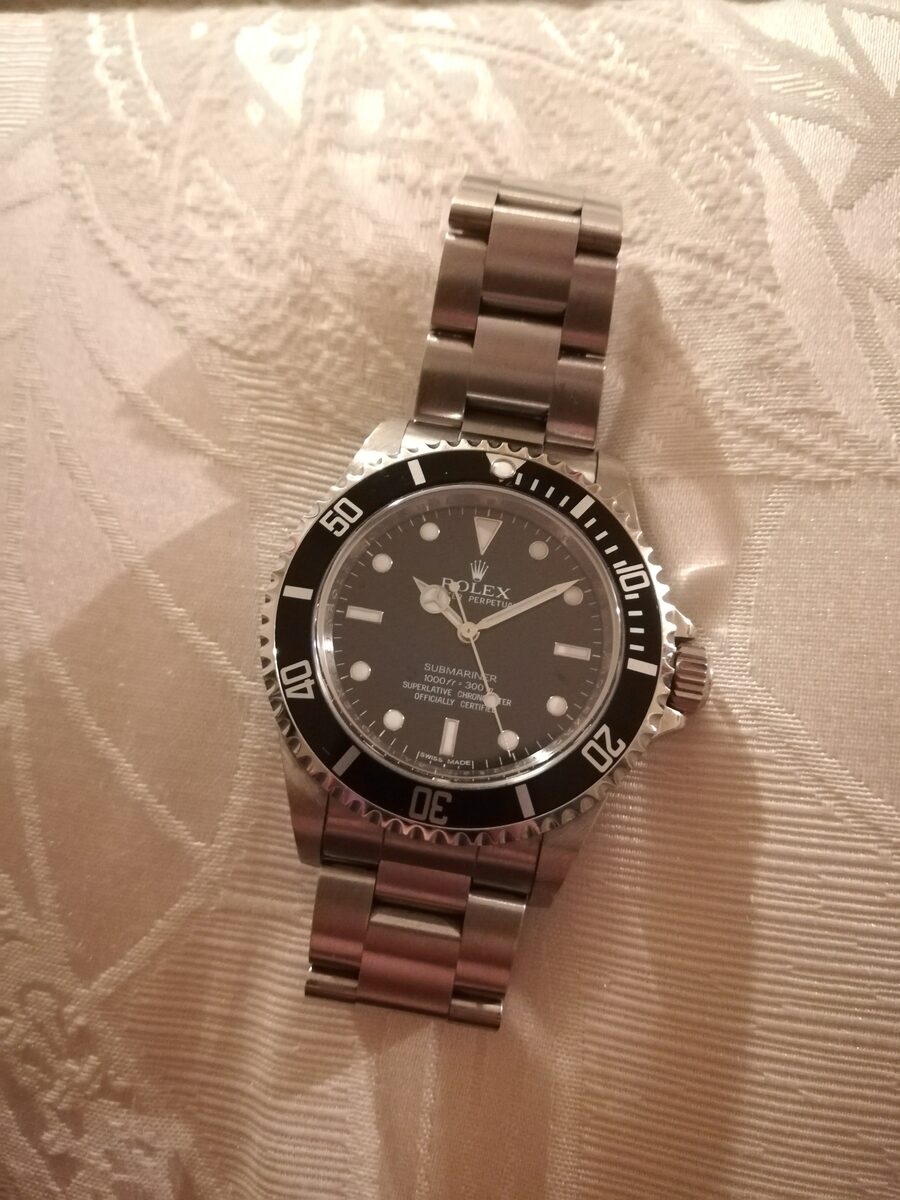
How to tell if a Cartier watch is fake
The same rules apply to Cartier: check that the printing is crisp, the case back markings are cleanly engraved, the model and serial format fit together, and the strap or bracelet belongs to the model. Cartier models like the Tank and Santos have been made for decades in many sizes and movement types (quartz and mechanical), so "this one looks different" isn't proof of anything. The only reliable answer is a watchmaker who opens the case, or the brand's own service network.
Replacement and aftermarket parts
Authentic watches often have non-original parts. Watches get serviced every several years, and parts wear out:
- Service parts are genuine replacements installed by the brand or a watchmaker. Usually fine, sometimes lower value for collectors of vintage pieces.
- Aftermarket parts (dials, bezels, crystals, bracelets, even diamond-set bezels) are made by someone else. They can sharply cut value and resale options.
- "Frankenwatches" combine parts from different watches, or real parts with fake ones.
A genuine case with an aftermarket dial isn't fake, but it isn't what you'd be paying for, either.
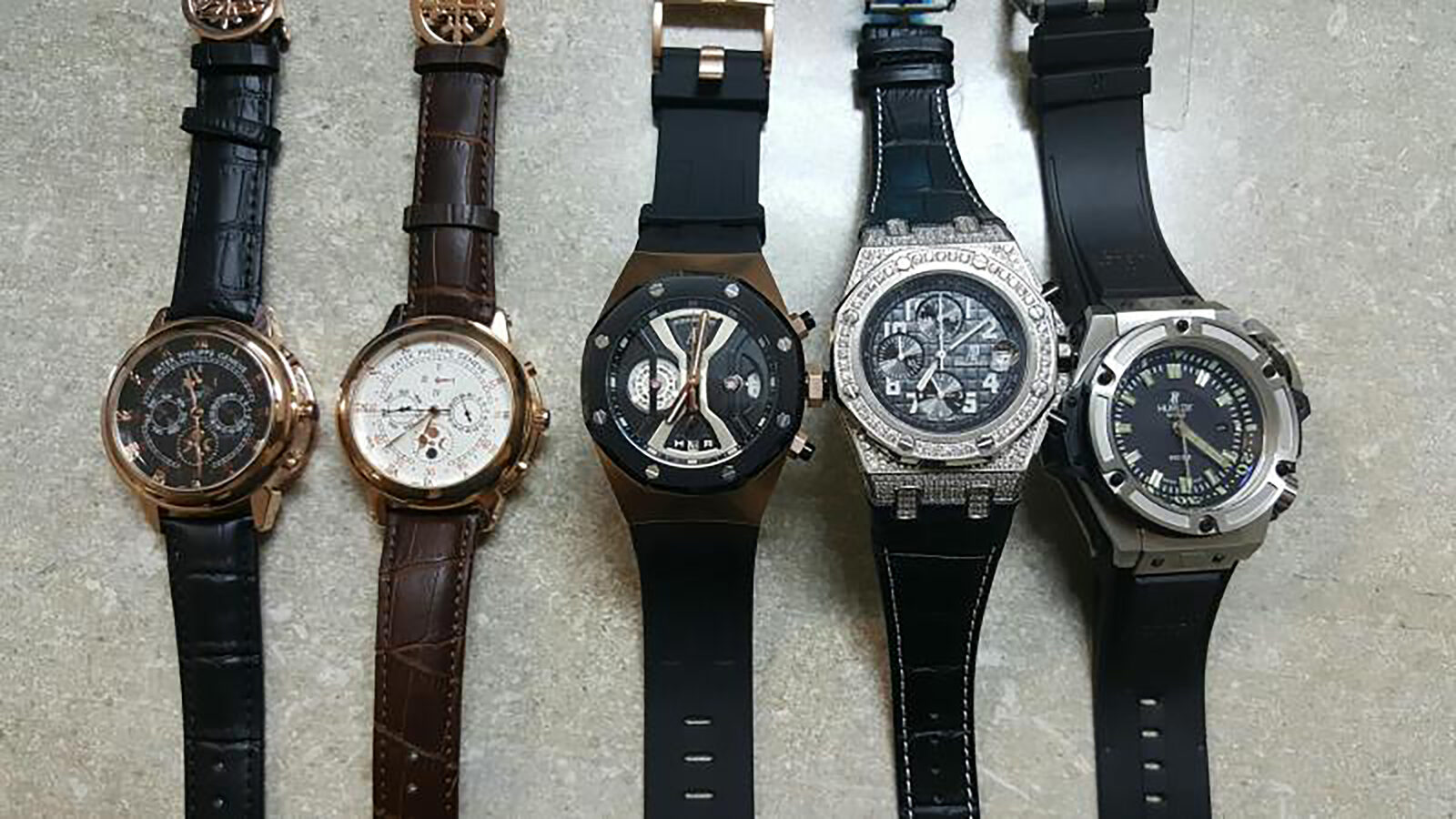
Why missing papers don't automatically mean fake
Boxes go in the attic, papers get lost in moves, and many watches bought decades ago never had much paperwork at all. At an estate sale, missing papers are normal. They usually affect resale value more than they suggest a fake. The reverse is also true: counterfeit warranty cards and boxes are sold on their own, so a full set isn't proof.
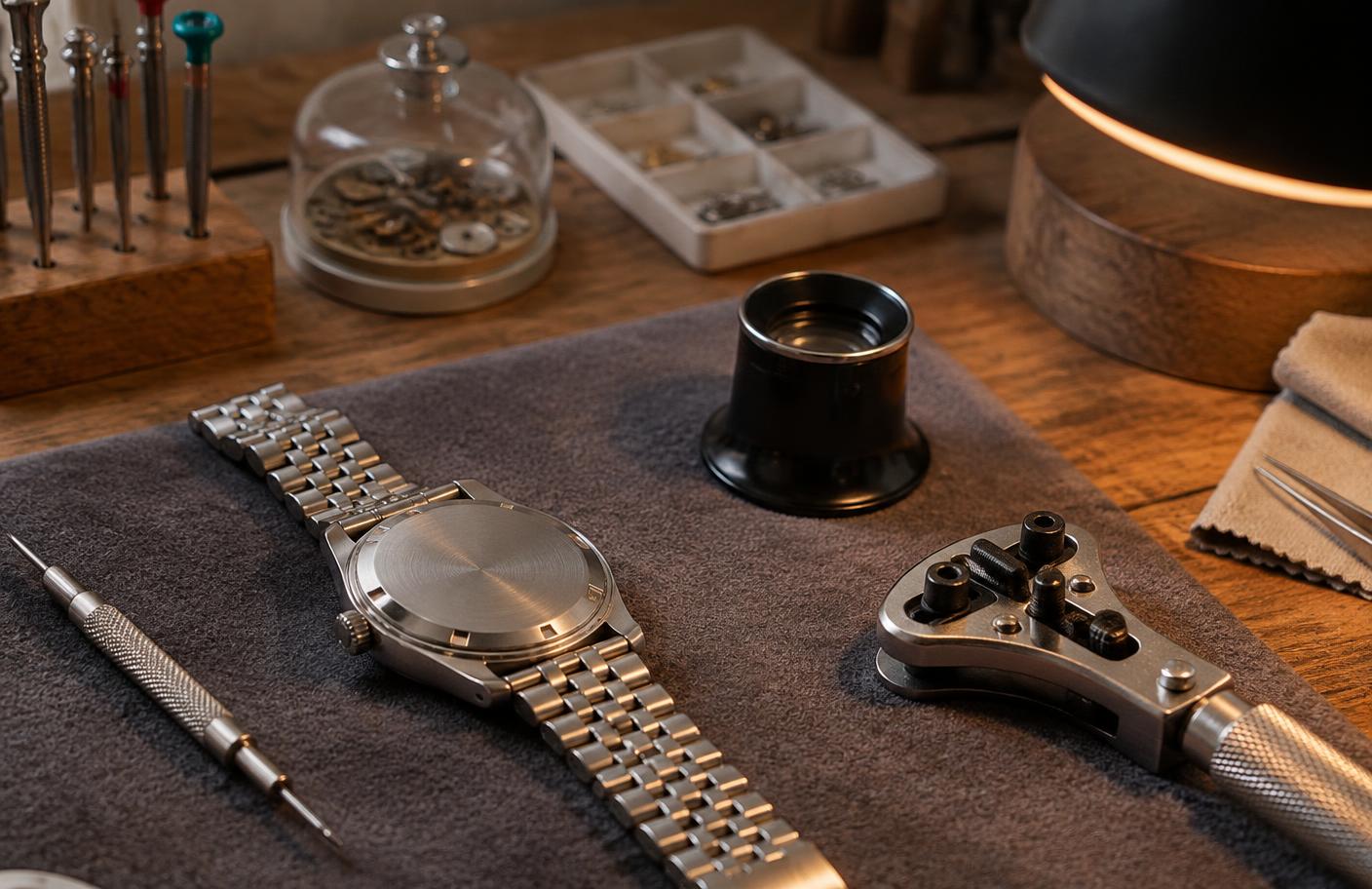
Metal: forged stamps, solid gold, plated, filled and vermeil
If you want the full home-test breakdown for gold, see our guide on how to tell if gold is real, and for silver, our sterling silver hallmarks guide. This section covers what the words and stamps legally mean.
Is a 14K stamp proof?
No. A karat stamp is the maker's claim. Under the National Gold and Silver Stamping Act, anyone who stamps a gold quality mark must also apply a trademark registered (or applied for) with the U.S. Patent and Trademark Office, or their name (15 U.S.C. 297). A clean karat stamp next to a recognizable maker's mark is a good sign. A karat stamp alone, on a cheap-feeling piece, is a reason for testing. Many imported and older pieces use fineness numbers instead: 417 (10K), 585 (14K), 750 (18K).
Solid gold vs. gold filled vs. plated vs. vermeil
The FTC's Jewelry Guides set what these words mean in the U.S. (16 CFR Part 23):
| Term (common marks) | What it means under FTC guidance | What to expect |
|---|---|---|
| Solid karat gold (10K, 14K, 18K) | Gold alloy all the way through | Same color at wear spots |
| Gold filled (GF, 1/20 12K GF) | Gold alloy of at least 10K bonded by a mechanical process; "gold filled" requires the gold layer to be at least 1/20 of the metal's weight | Thick layer; holds up for years but can wear through |
| Rolled gold plate (RGP, 1/40) | Same bonding, thinner layer (at least 1/40 of the weight) | Wears through sooner |
| Gold electroplate (GP, GEP, HGE) | Gold of at least 10K applied electrolytically, at least 0.175 microns thick | Thin; wears quickly at clasps and edges |
| Vermeil | Sterling silver coated with gold of at least 10K, at least 2.5 microns thick | Silver shows at wear spots |
The FTC guides also say it's deceptive to call something gold plated or vermeil if the gold sits on a nickel layer without disclosure.
Does a magnet test work?
Only one way. Gold isn't magnetic, so links that jump to a strong magnet aren't solid gold. But a chain that ignores the magnet could still be brass, copper or plated silver. And watch out for the clasp: spring rings and many clasps contain steel springs, so a clasp that grabs the magnet doesn't make the whole chain fake. Test the links, not the clasp.
Stones: natural diamonds, lab-grown diamonds and look-alikes
Is a lab-grown diamond fake?
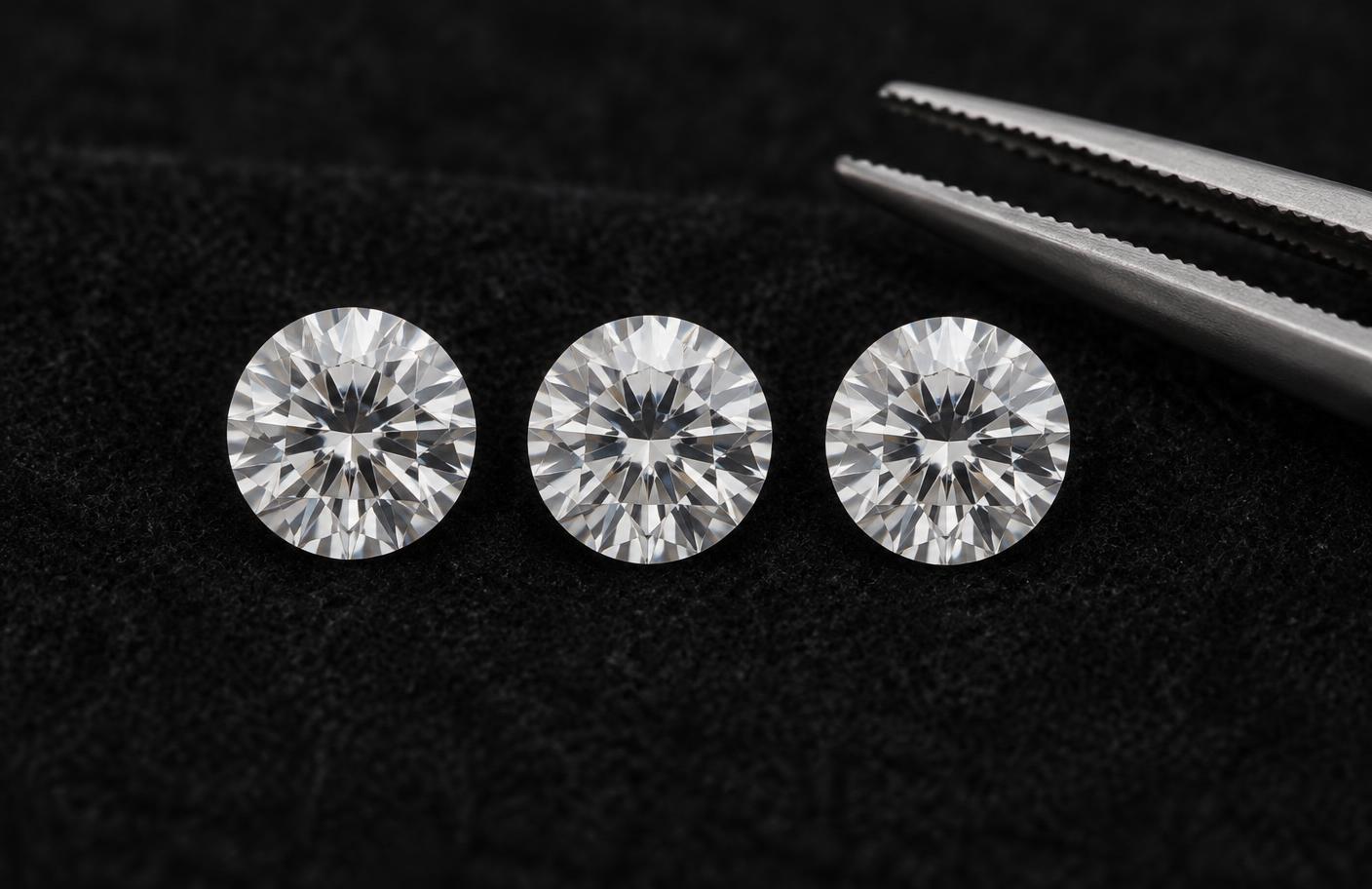
No. A lab-grown diamond is a real diamond. The FTC defines a diamond as "a mineral consisting essentially of pure carbon crystallized in the isometric system," with hardness 10 and a refractive index of 2.42, and does not require it to be mined (16 CFR 23.12). Sellers must disclose it with words like "laboratory-grown" or "laboratory-created." GIA puts it plainly: "Synthetic diamonds are real diamonds," and "the only way to tell is by laboratory testing" (GIA).
What matters for you is price. Natural and lab-grown diamonds of similar size and quality sell for very different amounts, so an undisclosed lab-grown stone priced as natural is the real risk.
Simulants are the actual fakes
A simulant only looks like a diamond. GIA lists cubic zirconia (CZ), synthetic moissanite, YAG, GGG, synthetic rutile, colorless synthetic spinel and colorless synthetic sapphire among diamond imitations (GIA). Some old pieces use glass ("paste").
Why home tests aren't conclusive
- Fog test: GIA says it "cannot be replicated with consistent results" and natural and synthetic diamonds react the same way.
- Sparkle and newspaper tests: GIA says they are misleading for the inexperienced and should never be used as definitive tests.
- Handheld testers: GIA notes they are commonly used to separate diamond from simulants like CZ and moissanite, but "as diamond growing technology advances the technology used in those devices becomes more limited" (GIA, Gems & Gemology, 2024). Lab-grown and natural diamonds read the same on a thermal tester.
If a stone has a GIA report, you can look up the number on GIA Report Check. Many reported diamonds have the number laser-inscribed on the girdle, which a jeweler can match.
When to use a watchmaker, jeweler or gemologist
| You need to know | Who to see | What they do |
|---|---|---|
| Is the watch genuine, and are parts original? | Independent watchmaker or the brand's service center | Open the case, check the movement, compare parts |
| Is this solid gold, and what karat? | Jeweler or refiner with XRF | Non-destructive metal reading (acid testing only with your permission) |
| What is this stone? | Graduate gemologist or a gem lab (GIA, others) | Identify natural, lab-grown or simulant; issue a report |
| What is it worth for insurance or an estate? | Qualified independent appraiser | A written appraisal for a stated purpose |
Ask for a quote first; fees vary widely by shop and item. A rule of thumb: get it checked before you pay if you'd be upset losing the money; buy "pending testing" with a return agreement if the seller allows it.
Questions to ask the seller
- Where did this come from? Was it bought new, and from where?
- Has it ever been serviced, repaired or resized? By whom?
- Are any parts replaced: dial, hands, bezel, crystal, bracelet, clasp?
- Is there a receipt, warranty card, appraisal or gem report?
- Is the stone described as natural, lab-grown or a simulant?
- Can I take it to a jeweler or watchmaker before the sale ends, or return it if it tests differently than described?
Most estate sale companies price jewelry in good faith from what they can see. A seller who says "we don't know" is being honest. Price your offer for the risk.
FAQ
Is a 14K stamp proof that jewelry is real gold?
No. It's the maker's claim, and stamps are forged. Look for a maker's trademark next to it (required by federal law) and have a jeweler test anything valuable, ideally with XRF.
Does a magnet test work on gold?
Only to rule things out. If the links stick, it isn't solid gold. If they don't, it could still be another non-magnetic metal or plated. Test links, not the clasp.
Can paperwork authenticate a Rolex?
No. Papers show the watch was sold with paperwork, and the serial on the papers should match the watch, but warranty cards and boxes are counterfeited too. Rolex says authenticity is guaranteed through its Official Rolex Jewelers.
Is a lab-grown diamond fake?
No. It's a real diamond with the same chemistry and properties as a mined one; GIA and the FTC both treat it as a diamond. It must be disclosed, and it is usually priced well below a natural diamond.
Can an authentic watch have non-original parts?
Yes. Service replacements are common, and aftermarket dials, bezels and bracelets show up often. The watch is still genuine, but its value and collectibility can change.
Does a missing box or papers mean a watch is fake?
No. Most estate-sale watches have lost their box and papers. It usually lowers resale value; it isn't proof of a fake.
Can I acid test or scratch jewelry at an estate sale?
No. Don't damage items you haven't bought. Photograph them, ask questions, and test after purchase or with the seller's permission.
Related guides
- How to Tell If Gold Is Real
- Sterling Silver Identification and Hallmarks
- Finding Gold and Silver in Costume Jewelry Bins
- How to Tell If a Designer Purse Is Fake
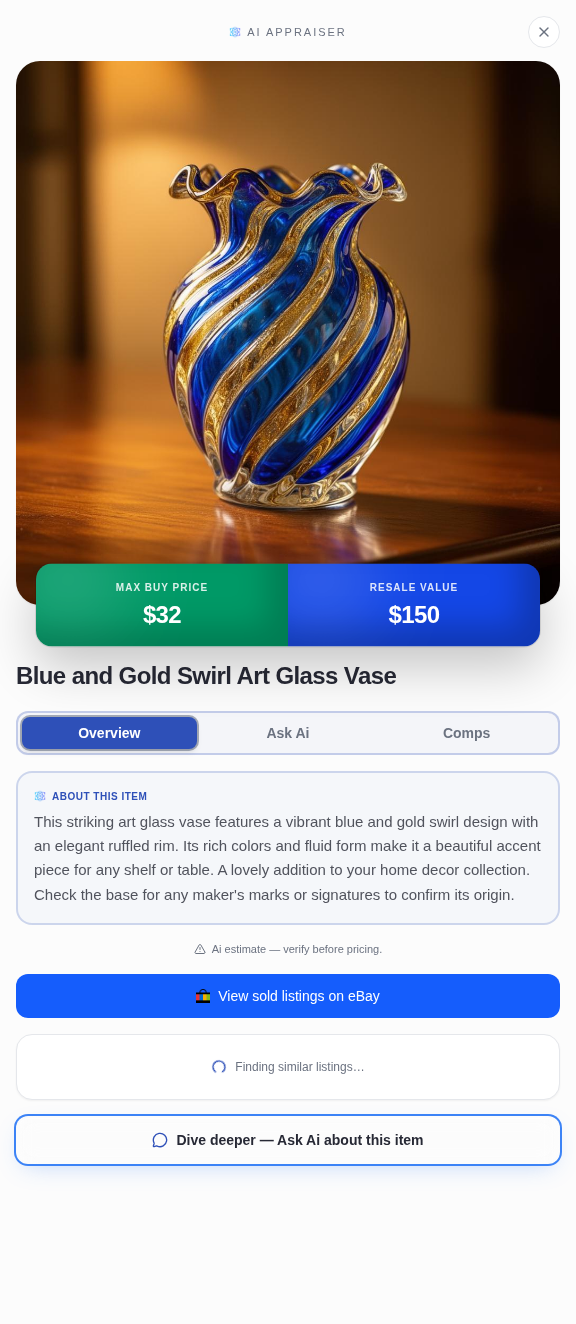
- Try the Ai Appraiser for a quick, suggested identification of an item from a photo, then confirm with an expert.
- Browse estate sales near you
Sources
- U.S. Customs and Border Protection: FY2024 IPR Seizure Statistics (PDF)
- FTC Guides for the Jewelry, Precious Metals, and Pewter Industries, 16 CFR Part 23 (eCFR)
- FTC: FTC Approves Final Revisions to Jewelry Guides (2018)
- 15 U.S.C. 297, National Gold and Silver Stamping Act (Cornell LII)
- GIA 4Cs: How to Tell If a Diamond Is Real
- GIA Gems & Gemology: Laboratory-Grown Diamonds, An Update on Identification (Summer 2024)
- GIA Report Check
- Rolex: Frequently Asked Questions
- Rolex: Certified Pre-Owned
- Bernard Watch: Rolex Serial Numbers
- Watch Doctor: Rolex Production Dates and Serial Numbers
- The Watch Prestige: Rolex Serial Number Reference Guide
Sources checked November 9, 2026. Real photos are credited with their licenses; illustrations are Ai-generated and show no real brand. This guide helps you screen items; it isn't authentication or an appraisal.
Keep exploring
Ready to start your own treasure hunt?
Discover estate sales near you and find incredible deals.
Explore Sales Near Me
About the author
Andy
Founder, EstateSaleFinder.net
Hi, I'm Andy — a retired commercial photographer turned developer with a five-year (and counting) obsession with estate sales. I started EstateSaleFinder.net because I knew there had to be an easier, smarter way to find and list estate sales. Now I get to chase treasure and build the tool I always wished existed.