The Radium Girls & the Clocks That Glow: The Story Behind Every “Glow-in-the-Dark” Dial
That old luminous watch in the dresser drawer stopped glowing years ago. It's still radioactive — and the reason it exists is one of the most heartbreaking chapters in American labor history. Here's the full story of the Radium Girls, how to identify a radium dial at an estate sale, what those watches and gauges are actually worth, and the short, sensible safety rules for owning one.
Quick answer
Luminous watch, clock and instrument dials made from about 1917 through the 1960s were hand-painted with radium-226, which has a 1,600-year half-life — so they are still radioactive today even though the glow died decades ago (the zinc-sulfide phosphor burns out in a few decades, not the radium). The EPA states that antiques containing radioactive material are usually not a health risk when they are intact and in good condition; the rule is never to open, sand, repair or repaint a luminous dial. Most radium-dial watches at estate sales are $20–$150 items, with original-lume examples of desirable vintage models bringing far more. And they exist at all because of the Radium Girls — young women who were poisoned painting these dials, and who changed American labor law from their deathbeds.
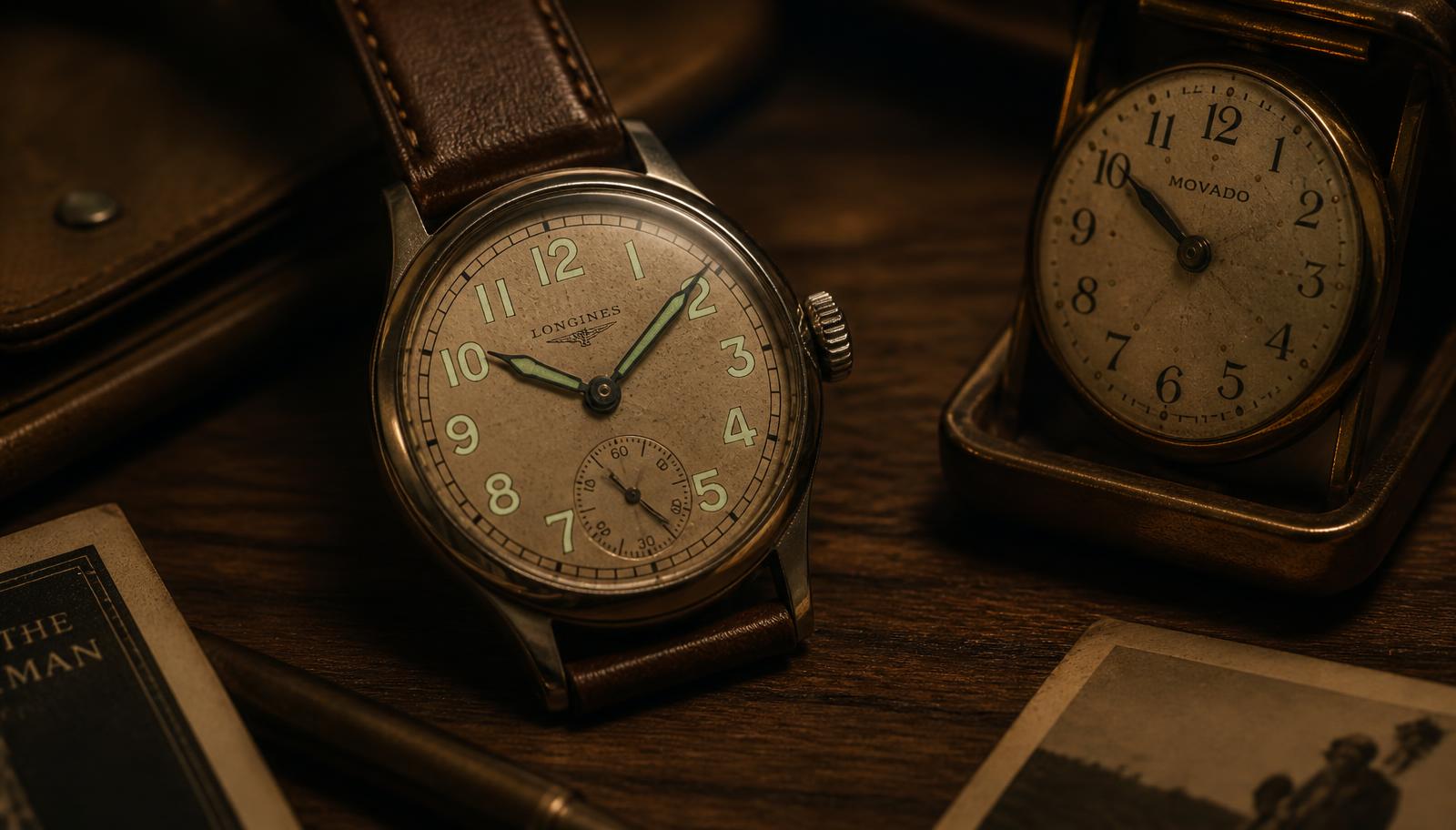
Every estate sale has one. Tucked in a drawer, sitting on a nightstand, wrapped in a sock in a cigar box: a watch with luminous hands, a travel clock with a glowing dial, an old aircraft gauge that reads in the dark without ever touching a battery.
If it's the right age, it's painted with radium.
That's a sentence most people don't expect to read about an item they can buy for twenty bucks on a Saturday morning. Stay with us — by the end of this you'll know exactly what that dial is, why it's still radioactive a century later, what it's worth, whether it's safe to own, and why a group of young women who painted these dials by hand changed workplace law forever.
The short version: the glow in those old dials was paid for in human lives. The women who painted them — the Radium Girls — fought, from their deathbeds, a battle that made every workplace safer and taught scientists how radiation actually behaves inside the human body.
Part I: When radium was a miracle
Radium was discovered in 1898 by Marie and Pierre Curie, and the world lost its mind over it. Here was an element that glowed in the dark — glowed on its own, no matches, no flame, no bulb. In an era of gas lamps and oil light, it seemed like magic.
Within two decades, radium was everywhere. In face creams. In toothpaste. In chocolate, water tonics, "revigorators," and bath salts. Advertisements promised glowing complexions. A wealthy man could buy radium-infused drinking water with a straight face — and thousands did, one of whom, the Pittsburgh industrialist Eben Byers, drank it by the case for years. He died in 1932 and was buried in a lead-lined coffin. The Oak Ridge Associated Universities museum of radiation artifacts keeps a genuinely unsettling collection of that era's "health" products.
And in factories across the United States, radium was being mixed into a paint sold as Undark and hand-painted onto the dials of watches, clocks and military instruments: radium-226 blended with a zinc-sulfide phosphor, glowing bright in the dark.
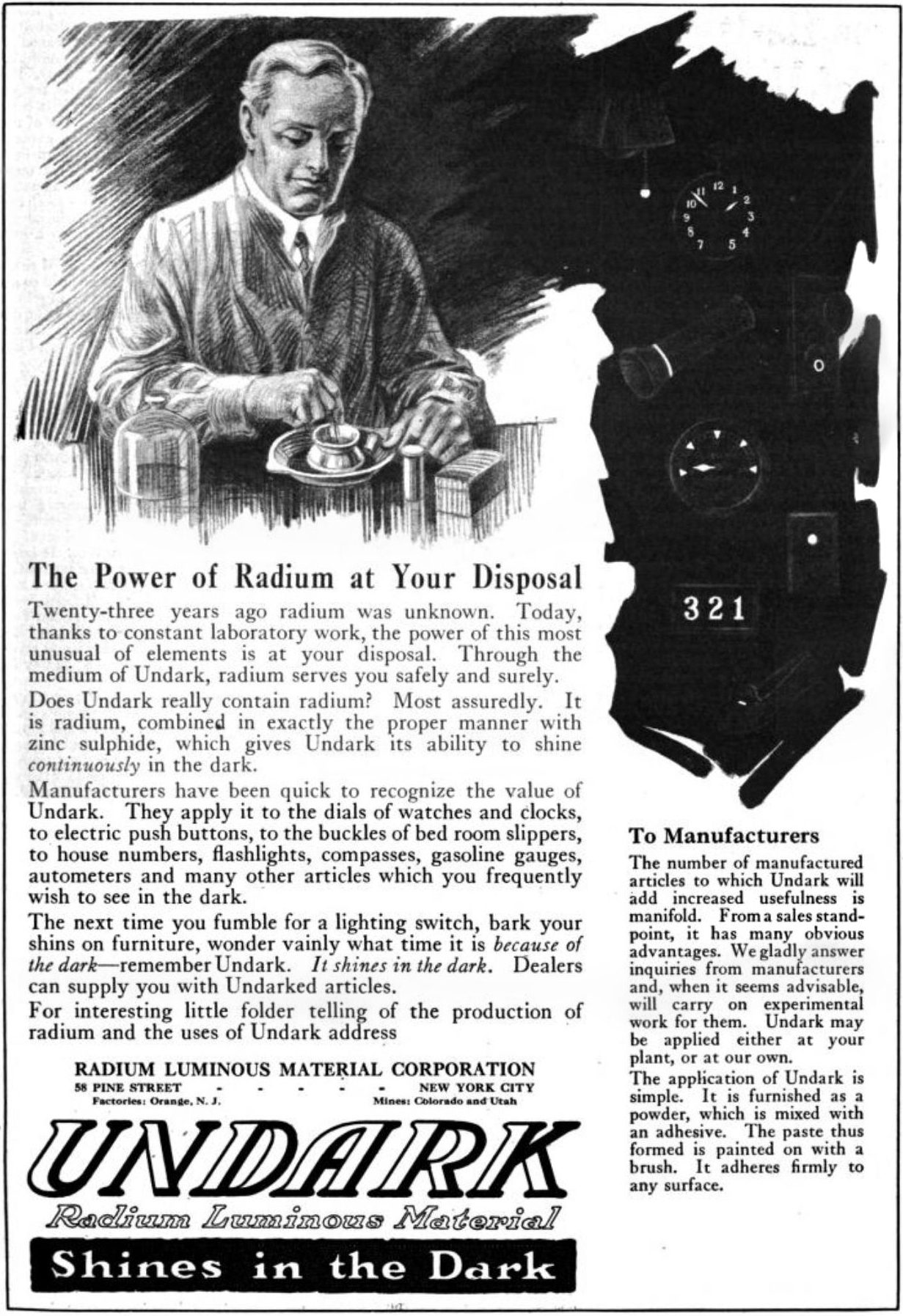
For the young women hired to paint those dials, it was considered a great job. It paid well — better than teaching, better than domestic work, better than most women's wages anywhere in America during and after World War I. The work was clean, the studios were bright, and for a woman with steady hands it was a step up in the world. According to the Missouri Law Review's history of the litigation, more than 800 women worked at the United States Radium Corporation's Orange, New Jersey plant between 1917 and 1923 alone.
They had no idea what they were being handed.
Part II: The lip-pointing technique
Here's the detail that makes the whole story turn your stomach: to keep their camel-hair brushes needle-fine for the tiny numerals on a watch face, the dial painters pressed the brush to their lips. Every single time.
Lip-pointing, they called it. Dip, point, paint. Dip, point, paint. Eight hours a day, five days a week — swallowing microscopic amounts of radium paint with every stroke, day in and day out.

They were called the "ghost girls." When they left work, the radium dust in their hair and on their clothes made them glow faintly in the dark. They painted their teeth with it as a party trick, dazzling the boys with a smoker's-blue smile. Some used it as nail polish.
Radium, once inside the body, behaves like calcium. The body can't tell the difference. So the radium they swallowed went straight into their bones — where it stayed, irradiating their own marrow, for the rest of their lives.
The first to die was Amelia "Mollie" Maggia, who began painting dials at the Orange plant around 1917. Her 1922 death certificate listed syphilis. Doctors politely agreed. Nobody wanted to say the factory's miracle paint could be a killer.
By the time Mollie died, her jaw had been removed. The condition eventually had a name — radium jaw, recognized by a dentist who spotted the pattern in the mid-1920s. Teeth loosened and fell out. The jawbone rotted and fragmented. Sores opened that never healed. Anemia wasted the body. Bones broke spontaneously: one woman broke her leg stepping off a bus, another her hip bending over.
By 1924, dozens of dial painters at the Orange plant were ill and a growing number were dead. All the while, the company insisted the paint was perfectly safe.
Part III: The Five Doomed Women
It took Grace Fryer — a former dial painter with failing bones and a body that wouldn't heal — two years to find a lawyer willing to sue the United States Radium Corporation.

She found one. In 1927 she and four other former painters — Katherine Schaub, Albina Larice, Edna Hussman and Quinta McDonald — took the company to court. The newspapers called them the "Five Doomed Women." They were doomed, and they knew it. All five were failing by the time the case began; none could raise an arm high enough to take the oath.
By then the truth had a name and a measurement. Dr. Harrison Martland, the Essex County medical examiner in Newark, had measured radioactivity in the bodies of living and dead dial painters and proved where the poison came from — work the physicist Robley Evans later turned into the first real occupational radiation standards, a story NIST tells in detail. The company's response was to deny everything, to push the syphilis smear, and to bury the findings of an investigator it had paid for itself when his conclusion came back as radium poisoning.
The case settled in June 1928, days before trial: $10,000 each, a $600 annuity for life, and medical expenses — the terms are in the settlement agreement preserved in the National Archives' records of the radium dial painters, donated after the paper files themselves were found to be radioactive. USRC never admitted liability. It wasn't justice, and it was too late: every one of the five was dead within a few years.
But it worked. The hearings, the headlines, the dying women in the courtroom — the public was horrified, and radiation was finally understood as an internal, cumulative poison rather than a tonic.
Then it happened again. In Ottawa, Illinois, a second generation of dial painters at Radium Dial Company went to court in the 1930s, led by Catherine Donohue, who testified from a bed carried into the hearing room in 1938 and died weeks after her final victory. Her case, upheld all the way to the U.S. Supreme Court's refusal to hear the company's appeal, made radiation disease compensable under Illinois occupational-disease law — the direct ancestor of the workplace protections we have now. The Smithsonian and Britannica both keep good, sober accounts if you want to go deeper, and Kate Moore's book The Radium Girls is the definitive popular history.
Dial painting continued — with safer techniques, dosimetry and no lip-pointing — and radium stayed on watch dials until the 1960s, lingering on military and aviation instruments into the 1970s.
Part IV: What that means for the watch in the drawer
Now the part you can use this weekend.
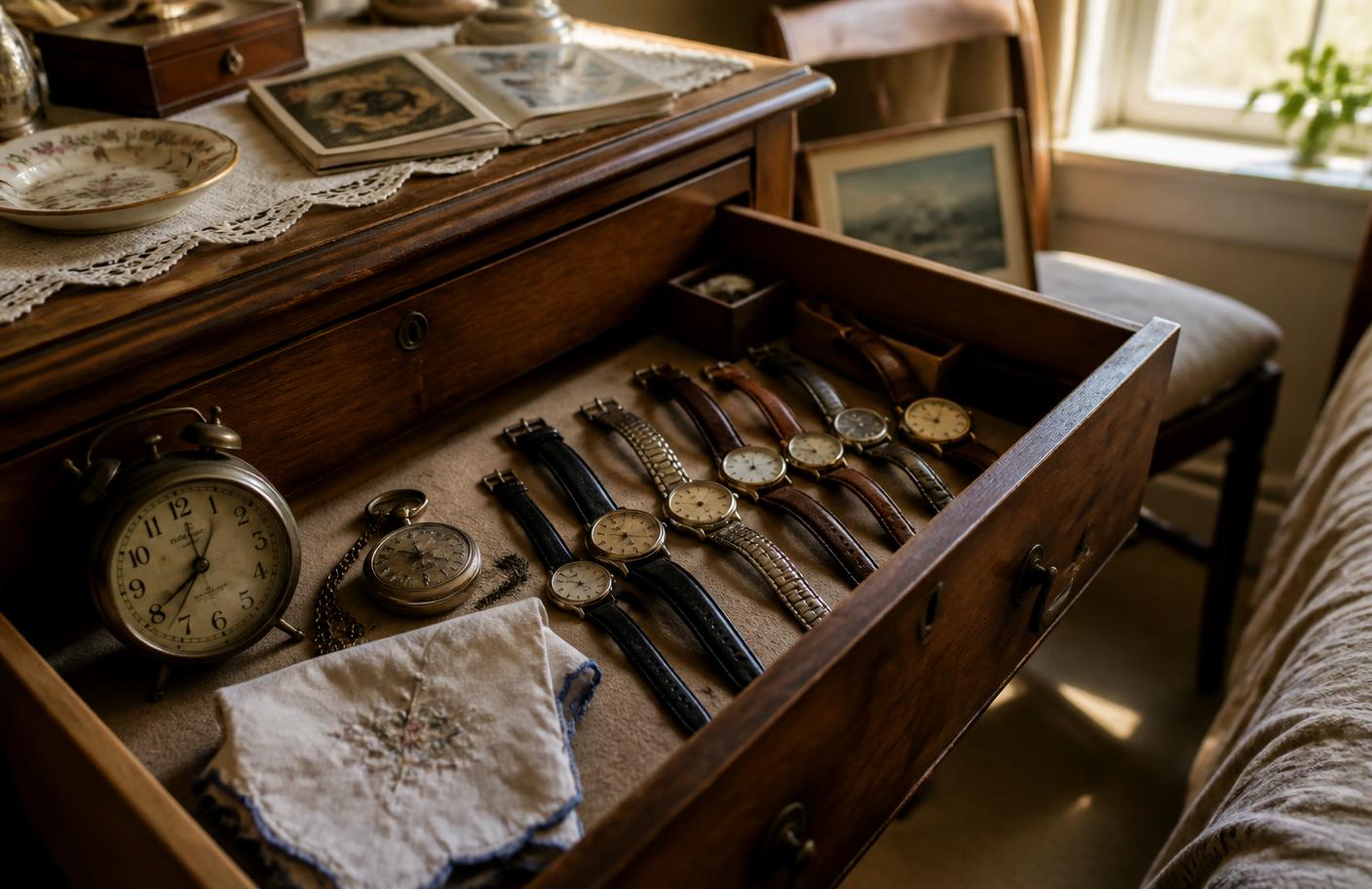
How to identify a radium dial in 30 seconds
| Clue | What it tells you |
|---|---|
| Glows with no battery | Radioluminescent lume: radium (pre-1960s) or tritium (1960s–1990s) |
| Age: roughly 1917–1960s | Radium era. Instruments and aircraft gauges run later, into the 1970s |
| Dial marked "T SWISS T", "T<25", or "H3" | Tritium, not radium — much lower activity, and it stopped glowing on its own |
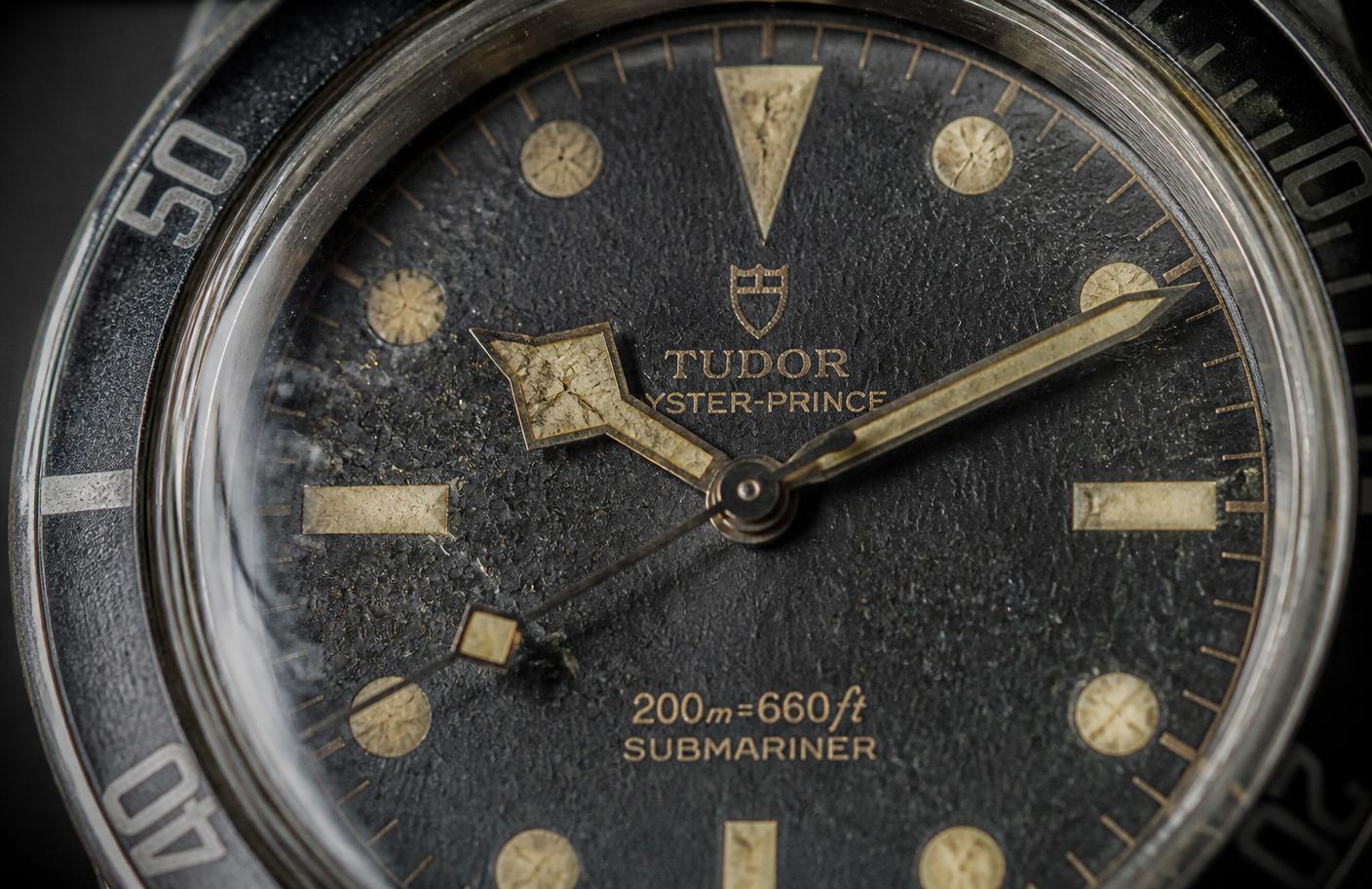
| Cream, mustard or crumbling lume plots | Classic aged radium paint; original, unrestored dials look chalky and cracked |
| Geiger counter clicks hard at 1 inch | Radium. Tritium barely registers on a hand-held detector |
| Radium mark on a military dial | Some WWII-era instruments are literally stamped with a radium or "RA" warning |
The EPA's own Radioactivity in Antiques page puts it plainly: clocks, watches and dials that glow in the dark without a battery may contain radium or tritium, and the radiation "will often register on a hand-held Geiger counter."
The glow stopped, the radioactivity didn't
Radium-226's half-life is about 1,600 years. The reason a 1938 dial doesn't glow anymore isn't that the radium wore out — it's that the zinc-sulfide phosphor, the part that converts radiation into visible light, degrades within a few decades. The radioactivity is still there, reading plainly on a detector, and will be for the next thousand years. The Health Physics Society answers this exact question for vintage wristwatch collectors.
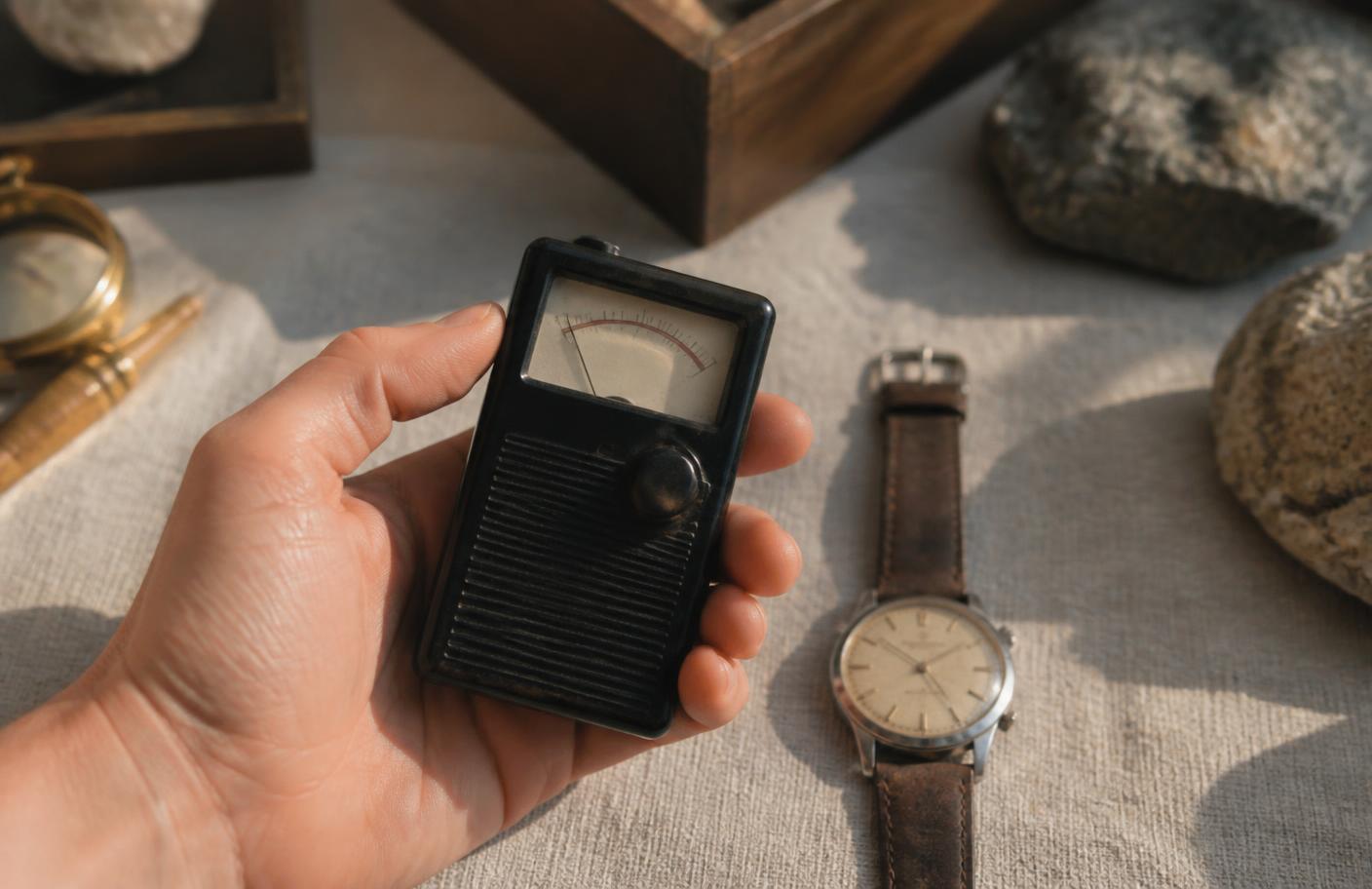
That's why the Geiger counter has become a normal tool in the vintage-watch world, right alongside the loupe and the UV light: if it's a real radium dial, the counter lights up. No exceptions. Refinished dials sold as "original radium" are a known scam, and the counter catches them in seconds.
What a radium dial is actually worth
Honest numbers, because the radium itself isn't the value:
| Item | Typical estate-sale range | What moves the price |
|---|---|---|
| Common radium-dial dress watch, unbranded or lower-tier | $20–$75 | Working movement, clean case, original hands |
| Named mid-century brand, running, original dial | $150–$600+ | Brand, model, condition, box and papers |
| Military-issue watch (WWII/Korea era) | $200–$1,500+ | Issue markings, case back engraving, provenance |
| Radium travel clock or bedside alarm | $20–$60 | Design appeal more than mechanics |
| Aircraft or ship's instrument gauge | $25–$150 | Aircraft type, data plate, display quality |
What radium adds isn't material value, it's authenticity. Untouched, factory-original dials are the ones nobody refinished — and collectors of desirable vintage models pay premiums specifically for that. A relumed dial on the same watch is worth a fraction of an original. If you find a name-brand vintage piece with its original luminous dial and hands and a detector confirms radium, you're holding the version knowledgeable buyers actually chase.
Check it before you pay. Snap a photo of the dial and the case back and run it through our Ai Appraiser — you'll get an identification plus a market range from real comparable sales in about a minute, free, no account needed. Treat the number as a well-informed suggestion, not a formal appraisal, and confirm against recent completed sales for your exact reference. If you want the fundamentals first, our guide to how appraisal actually works and the field notes on spotting valuable items both pair well with this one.
Part V: The safety rules, short and sensible
Deep breath: owning, collecting and selling intact radium dials is legal and, handled sanely, low-risk. The EPA says antiques containing radioactive material are usually not a health risk when they're in good condition. You are not going to become a Radium Girl by buying a $30 clock. What you must not do is become an amateur radium technician.
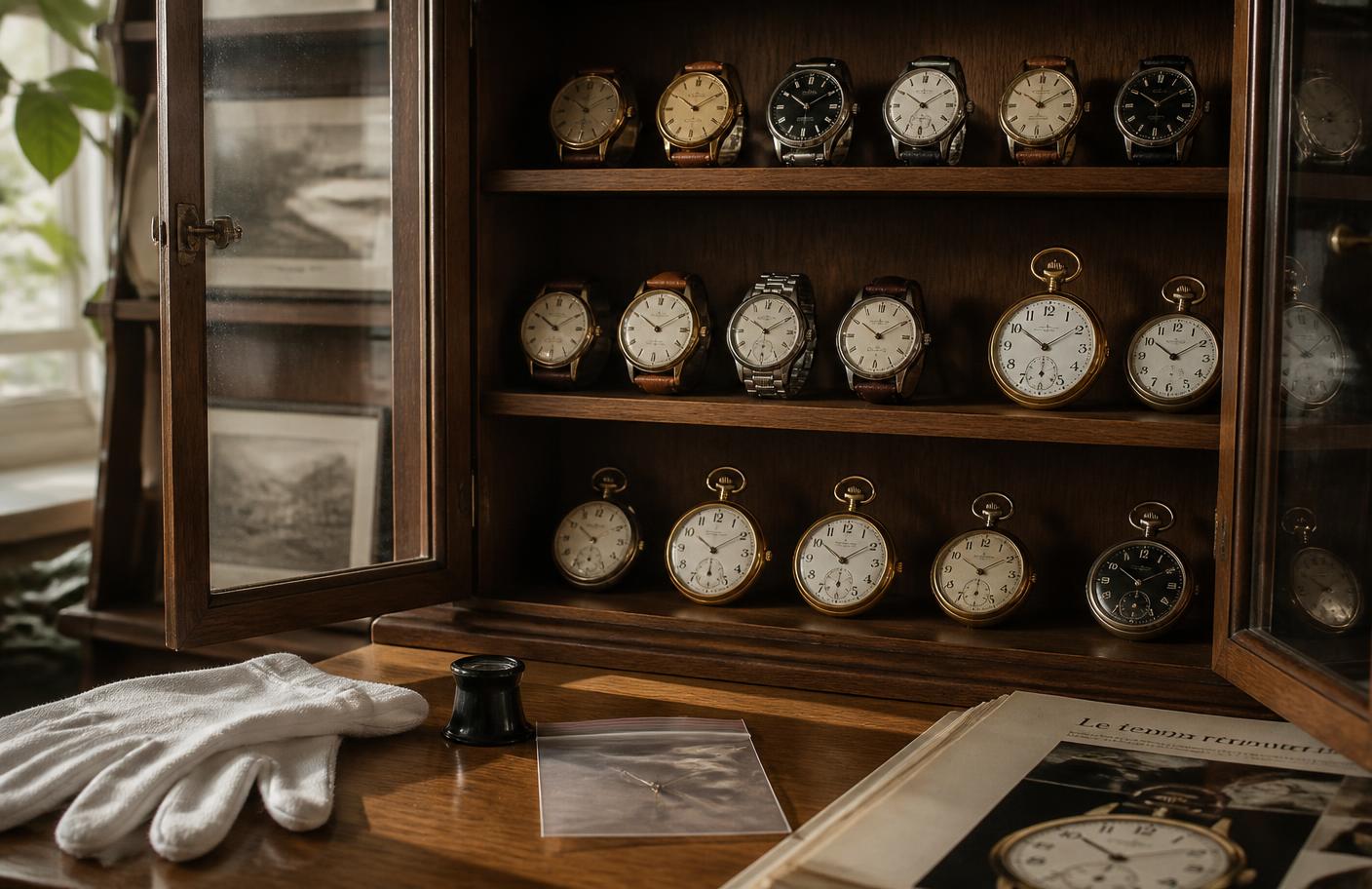
- Don't take the dial apart. Paint chips and dust are the entire hazard — never touch, inhale or ingest them. An intact dial under its crystal is a sealed curiosity.
- Don't polish, sand, repair or "refresh" luminous paint. That's how the dust gets out. Leave relume work to specialists who are set up for it.
- If it's cracked or flaking, bag it. Put the piece in a sealed plastic bag and call your state radiation control program — the Conference of Radiation Control Program Directors lists every state office — for disposal guidance. Don't put it in household trash.
- Ventilate storage. Radium decays into radon gas. One watch on a shelf is a non-issue; dozens of radium pieces sealed in an airtight safe or drawer for years is a bad idea. Open shelving, a cabinet that breathes, or a room with normal air exchange handles it.
- Don't wear it around the clock, romantic as that is, and don't keep one on a nightstand inches from your head all night. A day out is different from 24/7 contact.
- Wash your hands after handling, keep loose dials away from children and pets, and give them the mild respect you'd give an old mercury thermometer.
For the regulatory detail — possession, timepieces, gauges and disposal — the NRC's FAQs on radium-226 is the plain-language source. That's genuinely it. Buy it, admire it, shelf it, sell it, hand it down. Just don't sand the history.
Part VI: Why estate sales are where this story survives
Here's what nobody says about finds like these: estate sales are one of the last places the old world still shows up intact and unedited. The luminous dial on a bomber's altimeter. The watch in the nightstand of a man who served in Korea. The atomic-age travel clock still in its leather case. These are surviving artifacts of the era that made us — the era when a glowing wristwatch was magic, nobody knew the cost, and the women who paid it changed the law for everyone who came after.
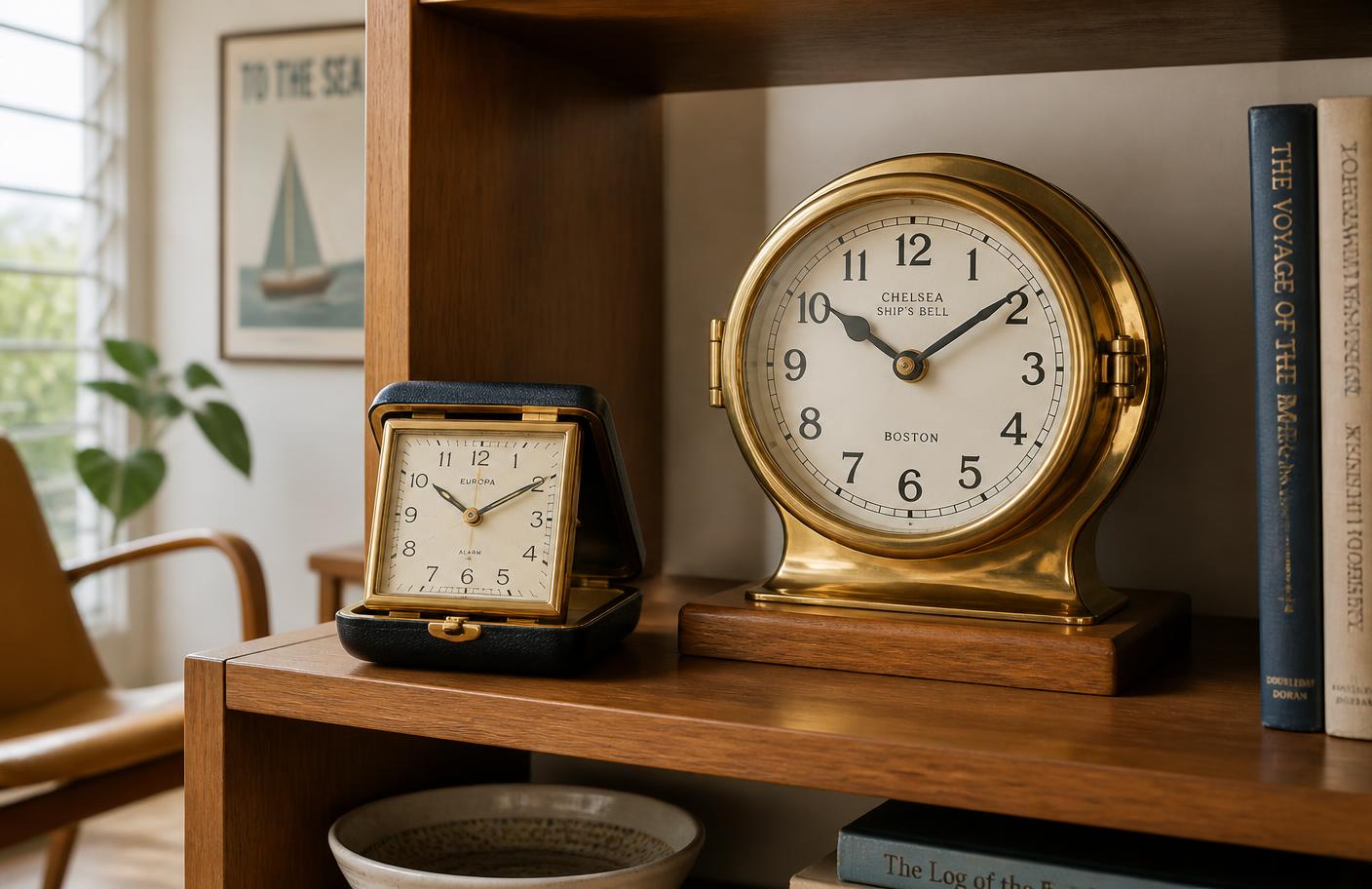
Some of the most interesting luminous dials in any estate were never on a wrist at all. Aircraft instrument gauges, ship's clocks, compasses, tank and submarine dials, brass desk clocks — all genuine pieces of the same story, usually cheaper than watches because fewer people collect them.
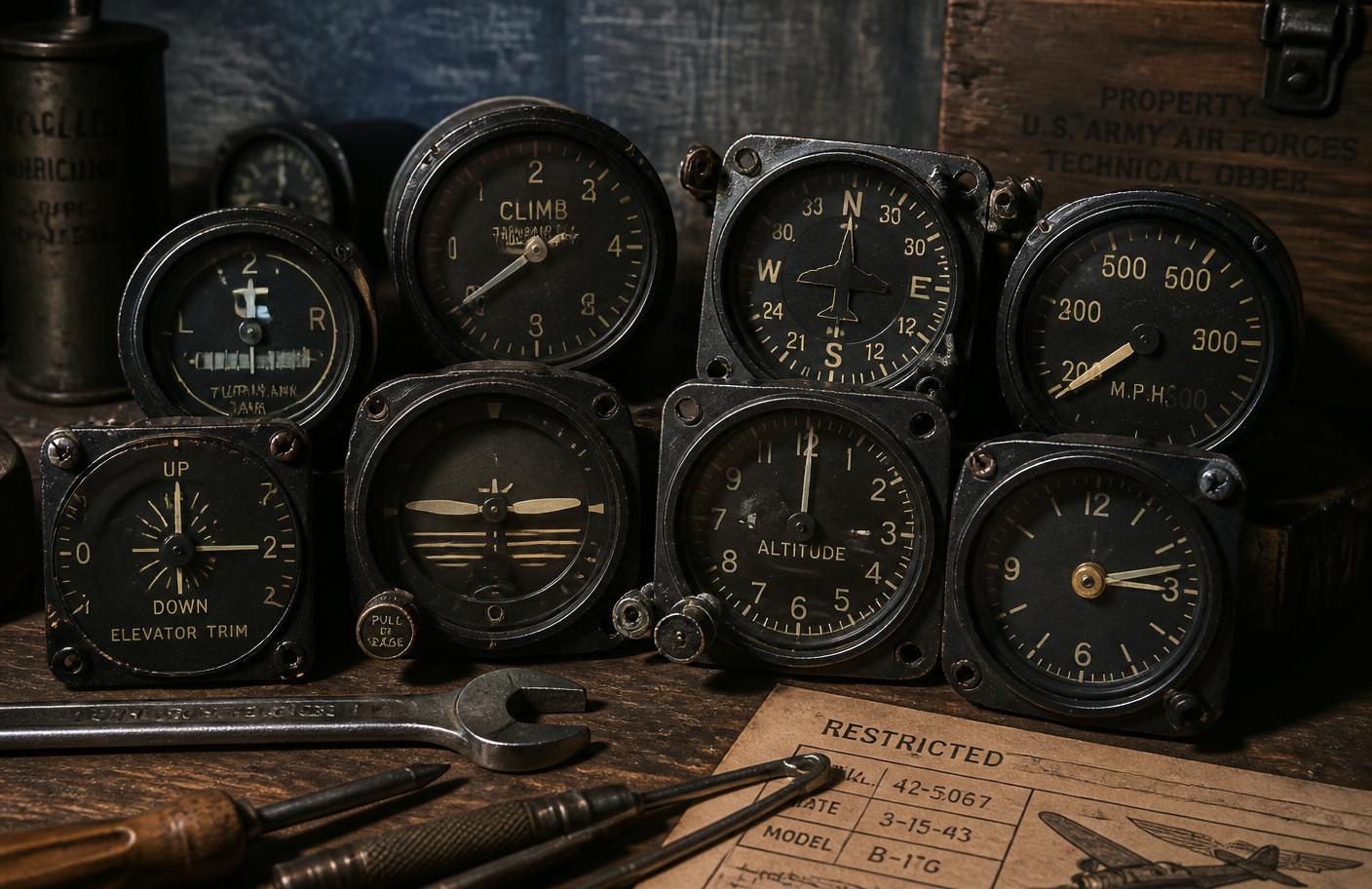
Here's how to hunt them with EstateSaleFinder:
- Identify anything instantly. Photograph the dial and case back and run it through the Ai Appraiser for an ID and a market range before you decide.
- Let the finds come to you. Set wishlist alerts for the words that matter — "radium," "luminous," "military watch," your brand of choice — and get notified the moment a match appears in a sale near you. Our wishlist alert playbook shows how collectors set theirs up.
- Selling instead? Use those exact words in your listing and your luminous pieces will match buyers already searching for them, or move them into The Collective for a longer-running market. Sellers can list a sale free; families can compare estate sale companies near you.
- New to this? Start with what to expect at your first estate sale and the estate sale glossary.
Questions & answers
Frequently asked questions
Are radium dial watches dangerous to own?
Generally no, when they're intact. The EPA states that antiques containing radioactive material are usually not a health risk in good condition. The hazard is the paint itself becoming dust — so don't open, sand, repair or repaint a luminous dial, wash your hands after handling loose parts, and store a collection somewhere ventilated rather than airtight.
Is it legal to buy and sell radium watches and clocks?
Yes. Intact antique timepieces and instruments containing radium are legal to own, buy, sell and inherit in the United States. NRC and state regulations focus on manufacturing, licensed sources and disposal — not on the vintage watch in your drawer. Shipping carriers have their own rules, so declare it accurately if you mail one.
Why doesn't my radium watch glow anymore?
Because the phosphor died, not the radium. The zinc-sulfide crystal that turns radiation into visible light degrades within a few decades of constant bombardment. Radium-226's half-life is about 1,600 years, so the dial is still radioactive — it just can't light up anymore.
How can I tell radium from tritium lume?
Age and a detector. Radium was used until roughly the 1960s; tritium replaced it and is often marked on the dial as "T SWISS T," "T<25" or "H3." Radium reads strongly on a hand-held Geiger counter held near the dial; tritium barely registers. Neither glows today without an ultraviolet charge.
How much is a radium dial watch worth?
Most are $20–$150 at estate sales, driven by brand, model and condition rather than the radium. Named mid-century brands with original dials run $150–$600 and up, and genuine military-issue examples with markings and provenance can reach four figures. Original, unrestored radium lume adds a real premium on collectible references.
Should I clean or relume an old luminous dial?
No. Cleaning or reluming destroys the originality collectors pay for and releases radioactive dust. Leave the dial alone, photograph it as-is, and let a specialist handle any restoration decision after the piece is valued.
What do I do with a radium clock that's cracked or flaking?
Seal it in a plastic bag, keep it away from living space and children, and contact your state radiation control program through the CRCPD directory for disposal guidance. Don't vacuum flakes, don't wash the paint down a drain and don't put it in the household trash.
The bottom line
The next time you're at an estate sale and spot a clock with hands that still hold a faint, ancient glow — or one that stopped glowing fifty years ago — you'll know what you're really looking at. A triumph of science. A cautionary tale. A landmark of labor history. And the direct result of a handful of dying young women who refused to be told they were imagining it.
That's not a bad thing to carry home for $25.
Coming next in "The Glowing Cabinet"
part two is the salad bowl that glows — uranium glass, why the government stopped making it mid-war, and how to test it with a five-dollar flashlight.
Keep reading:
Historical details here follow the U.S. National Archives' records of the radium dial painters, NIST, the Missouri Law Review's litigation history, Smithsonian and Britannica. Safety guidance follows the EPA, the NRC and the Health Physics Society. Value ranges reflect 2026 market observation, not appraisals — confirm against recent completed sales for your exact item. This post shares history and general handling guidance, not medical advice; when in doubt about any radioactive antique, contact your state radiation control program.
Keep exploring
Ready to start your own treasure hunt?
Discover estate sales near you and find incredible deals.
Explore Sales Near Me
About the author
Andy
Founder, EstateSaleFinder.net
Hi, I'm Andy — a retired commercial photographer turned developer with a five-year (and counting) obsession with estate sales. I started EstateSaleFinder.net because I knew there had to be an easier, smarter way to find and list estate sales. Now I get to chase treasure and build the tool I always wished existed.