
Building rules · Homeowner guide
Can You Have an Estate Sale in an Apartment or Condo? Building Rules, Board Approval, Elevators and the Appointment-Day Plan That Works
November 17, 202612 min readSource-checked guide

Can you have an estate sale in a condo or apartment? Usually, with building approval. What the rules say, what to get in writing, and how pre-offers help.
Usually, yes, but only with the building's permission. Condo associations, apartment managers and 55+ communities either allow sales with notice, allow them with board approval and limits on hours, signs and parking, or ban public sales. Get the answer in writing, book the freight elevator, and sell big furniture ahead of time for pickup at booked times.
A house sale has a driveway, a front door and a street to park on. A unit on the ninth floor has a lobby, a front desk, one elevator for the movers, and neighbors who did not sign up for fifty strangers in their hallway.
That's why so many families give up on an estate sale the moment a building manager frowns, and call a cleanout crew instead. Often that's a costly mistake. Most buildings don't say "no." They say "yes, if." This guide covers what the rules usually say, how to ask so you get a yes, how a good estate sale company runs a sale inside a building, and what to do if the answer really is no.
It also explains the two tools that make building sales work: selling big pieces before the sale through pre-offers, and letting shoppers in by appointment instead of all at once. Both are built into EstateSaleFinder.
Can you have an estate sale in an apartment or condo?
Often, yes. It depends on the property's own rules, and those rules fall into three groups:
| What the building says | What it usually means | What to plan for |
|---|---|---|
| Yes, with notice | Tell the office the dates. A deposit and set hours are common. | Book the freight elevator. Cap how many shoppers are inside. |
| Yes, with board approval and limits | A written form, approved ahead of time, with rules on hours, signs, parking, deposits, and sometimes security or escorts. | Apply early. Sell large items ahead of time. Let shoppers in by appointment. |
| No public sales | No advertised sales that are open to anyone. Private or by-appointment sales may still be allowed, so ask. | A pre-offer-only sale with a private address, an online auction, or a buyout. |
Real rulebooks show how specific these rules get. One Connecticut condo application asks for the form "at least ten (10) working days prior to the opening date" with a refundable $150 deposit for each sale day, and requires the owner to hire an off-duty police officer or private security to manage traffic and parking (Eagles Chase Condominiums). A New Jersey association requires written permission at least two weeks ahead, a $250 deposit, and limits sales to two days, 9 a.m. to 4 p.m., Monday through Saturday (Spring Meadow).
High-rises add elevator rules. A St. Louis condo allows one sale or move per 24 hours, wants the request two weeks ahead with a count of large items, and says only small items should leave with buyers on the day of the sale, with larger items moved later (The Versailles). An Arlington, Virginia building caps freight elevator bookings at three hours and lists the door at 36 inches wide (River Place North).
None of this is a ban. It's a plan, written by the building, that you have to follow.
Pick the building's answer
What did your building say?
Board approval with conditions
A form goes to the board or manager ahead of time. Approval usually comes with hours, a deposit, sign rules, parking rules and sometimes security or escorts.
How to run it on EstateSaleFinder: Pre-offers first, then appointment days with a small cap per time slot.
- 1Apply early: buildings we checked ask for 10 working days to two weeks.
- 2Sell big furniture before the sale through pre-offers, so it leaves at a booked time.
- 3Let shoppers in by appointment, a few at a time, so you can escort them and keep the lobby calm.
Where does the rule live?
Before anyone calls an estate sale company, find the document that actually decides it.
- Condominium: the declaration, bylaws and the rules and regulations. Sale rules are often under "garage sales," "estate sales," "moves" or "use of common elements."
- Rented apartment: the lease and any community rules attached to it. The property manager decides.
- HOA or gated community: the covenants (CC&Rs) and the rules. Gate access and street parking are the usual sticking points.
- 55+ or senior living community: the residency contract and the community's policies. Many have a set process for estate sales or a list of approved companies, because residents move out often.
If you can't find it, ask the manager: "Is there a written policy for estate sales or move-out sales?" The answer tells you which of the three groups you're in.
Do you need HOA or condo board approval for an estate sale?
If the rules require it, yes. Approval usually needs to be in writing, and the board doesn't have to bend the rules for you. One association's rulebook reminds owners that the board "is obliged to enforce the condominium documents" (Spring Meadow rules). Asking for forgiveness afterward can mean fines and a sale shut down halfway through Saturday.
The way to get a yes is to answer the board's worries before they raise them. They're worried about strangers wandering the halls, a blocked elevator, cars in residents' spaces, damaged walls and propped-open security doors. A request that already says "big furniture leaves Thursday between 10 and 1 by the loading dock, and shoppers come in by appointment, four per half hour, met at the desk" is much easier to approve than "we're having a sale Saturday."
The approval checklist: what to get in writing
Use this before you sign with a company or set dates. Copy the email at the bottom and send it to the manager.
Get it in writing
The approval checklist
0 of 8 confirmed
A starting point, not legal advice. Your condo papers, lease or community contract set the real rules.
Two things on that list catch families out most often:
- The insurance certificate. Many buildings want a certificate of insurance from any vendor working in the building, sometimes naming the association. Ask the company early. Our guide to estate sale company insurance explains what to ask for.
- The freight elevator. It's often shared with move-ins, deliveries and contractors, and booked in blocks of a few hours. If the sale and the furniture pickups don't fit those blocks, the sale doesn't work.
How an estate sale works in a condo building
A building sale isn't a house sale moved upstairs. The companies that do these well change three things.
1. Sell the big pieces before the sale
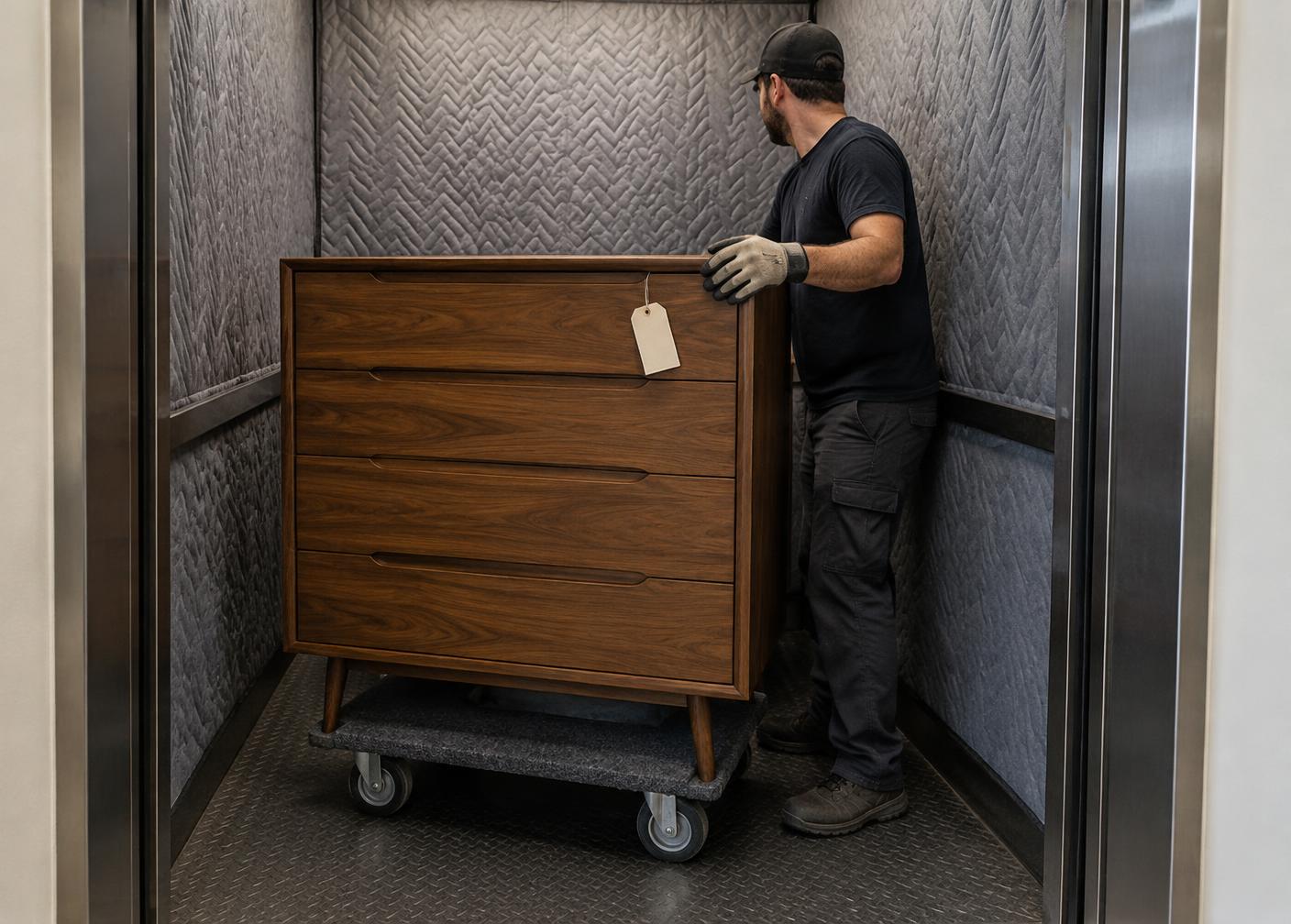
The hardest part of a high-rise sale isn't selling the sofa. It's getting the sofa down 14 floors at a time the building allows. So good companies sell large furniture before the sale and schedule each pickup.
On EstateSaleFinder, that's what pre-offers are for. Here's how they work:
- The company posts photos of the items and turns on early offers for all items, only for items with printed tags, or for items it picks by hand.
- Signed-in buyers make an offer on an item before the sale. They see the asking price and offer that or something different.
- The company accepts, counters or declines. Nothing is sold until it says yes.
- An accepted buyer gets an invoice. Only after the buyer pays do they see the pickup address and get to choose a pickup time. Unpaid buyers are never sent the address or the pickup details.
That last rule matters in a building. A paid buyer is a committed buyer, and their pickup time can be put inside the freight elevator block you already booked.
2. Let shoppers in by appointment
The second change is to stop the crowd from forming. Instead of one rush at 8 a.m., shoppers book a time.
With appointments turned on, a sale on EstateSaleFinder offers time slots with a maximum number of bookings per slot (from 1 to 20) and a maximum party size. Shoppers pick a time. The company sees everyone in Who's Coming, confirms requests, calls people if needed, and marks them as came or no-show.
Appointments and paid pickups share one arrival limit per time slot. If two paid buyers are already picking up at 9:00, that slot only has room for two shoppers if the limit is four. The company can still add someone by hand. For a building with one elevator and one front desk, that shared limit is what keeps the lobby calm.
The building-friendly sale
Pre-offers first, then appointment days
- 1
Before the sale
Photos go up. Signed-in buyers make offers on the items the company opened to pre-offers.
- 2
Company decides
The company accepts, counters or declines. Nothing is sold until it says yes.
- 3
Buyer pays
Only after paying does the buyer see the pickup address and choose a pickup time.
- 4
Booked days
Paid buyers pick up, and shoppers come in by appointment, a few per time slot.
Example arrival schedule, Friday (limit: 4 arrivals per half hour)
Pickups and shopper appointments share one limit, so the elevator and lobby never get more than you planned.
9:00
Full
9:30
Full
10:00
Full
10:30
Full
11:00
2 open
11:30
Full
Paid pickupShopper appointmentOpen
Companies: set this up in your sale's offer and appointment settings. See the tools for estate sale companies.
3. Keep the address private until it's needed
Many buildings don't want a public sale address on the internet. On EstateSaleFinder a company can hide the address and choose when it's shared. For appointment sales, booked shoppers get the address when the company confirms the booking, the day before, the morning of, or 15 minutes before their time, in a company-branded email with map links and a calendar button. A sale can also be set to "Never, private sale." Then the listing shows only the city and ZIP, paid buyers find the address in their pickup details, and booked shoppers see it in My Appointments.
Inside the unit
- Measure the elevator and the doors first. Note the freight elevator's door width and depth, and measure the largest pieces. Sell anything that won't fit as "buyer removes with their own movers, at a booked time."
- Protect the hallway. Floor film or runners from the elevator to the door, and corner guards on tight turns.
- One way in, one way out. Set a check-in desk by the door with the appointment list.
- Escort shoppers if the building asks. Some buildings require it. A staff member at the elevator and one at the door is usually enough when arrivals are capped.
- Small things leave in hand. Glassware, art, books and jewelry go out with shoppers. Bigger things leave at the booked pickup time.

How do buyers get furniture out of a high-rise?
At a booked time, through the freight elevator or loading dock if the building has one, with their own help. The buyer brings people and a truck, checks in with the desk, and the building pads the elevator for the move. Write the rules into the pickup instructions: the loading dock entrance, how long they can park, and that building staff won't help carry. One Hawaii building, for example, says no employee is allowed to help carry items during moves and deliveries (Keola Lai).
What if the building says no to an estate sale?
Ask one more question first: "Is a private sale by appointment allowed?" Some buildings ban advertised, open-to-the-public sales but allow invited or booked buyers. If they do, a pre-offer-only sale with a private address can work.
If the answer is a clear no, families still have good options:
- Online auction. Buyers bid online and come to collect at a set time. See estate sale vs. online auction.
- Buyout. A company or dealer buys the contents for one price and clears the unit. It's quicker, but you'll usually get less. See estate sale vs. buyout.
- Move the contents to a sale somewhere else. Some companies hold combined sales at their own location.
- Consign or donate the rest. After the good pieces sell, the rest can be donated or hauled away.
Rented apartments after a death
When the person who died rented the apartment, the clock is often shorter than with a condo. Call the landlord or manager early. Ask how much time the estate has, whether rent is owed until the unit is empty, and whether a short sale or private appointments are allowed before move-out. Get the answers in writing. Rules differ by state and by lease, so ask an attorney if there's a dispute. For what to do first, see our guide on what to do after a death.
55+ and senior living communities
These communities handle move-outs all the time. Many have a policy, a short list of approved companies and set hours. Ask the community office, the marketing office or the resident services office for it before you call anyone. If a parent is moving into assisted living rather than after a death, a senior move manager can plan what to keep, and an estate sale company can sell the rest.
For estate sale companies: pricing a building job
Condo and apartment jobs can pay well, but they take more time.
- Price in the elevator time. Every pickup window, every escort, and every hour waiting for the freight elevator is staff time.
- Ask about insurance and the certificate up front, before the contract.
- Use pre-offers to sell the furniture in advance. You avoid carry-outs during the sale, and paid pickups fill the freight elevator block you already booked.
- Turn on appointments with a small cap per slot. Paid pickups and appointments count against the same limit, so you never book more people than the building can handle.
- Book teammates for the escort and door jobs ahead of time, and include the building's check-in rules in their day plan.
- Bring the approval letter on sale day. The desk staff may not know about it.
Our hidden logistics of a walkthrough covers how to spot this extra work at the first visit, and the realtor's guide to estate sales helps when the unit is about to be listed.
A sample one-week plan
| When | What happens |
|---|---|
| Two to three weeks out | Find the rule. Send the approval email. Ask companies about building sales. |
| 10 to 14 days out | Approval in writing. Book freight elevator blocks. Company photographs and prices. |
| 7 days out | Pre-offers open on large furniture and the best pieces. |
| 2 to 5 days out | Accepted buyers pay and book pickups inside the elevator blocks. |
| Sale days | Shoppers come by appointment, a few per half hour. Paid pickups at their booked times. |
| Day after | Final pickups, then donation or haul-away of what's left. |
If you're preparing a unit for a company, our checklist for preparing a home applies here too, with one addition: tell the company what floor the unit is on and what the building told you, on the first call.
Questions & answers
Frequently asked questions
Can my condo association stop an estate sale?
Yes, if the condo documents give it that power. Most associations regulate sales rather than ban them, with written approval, deposits, hours and parking rules. Ask for the written policy and follow it.
Do I need HOA approval for an estate sale?
If the HOA rules require it, yes. Many require a written request one to two weeks ahead. Ask the manager, and get the approval in writing before you advertise.
How do buyers get furniture out of a high-rise?
At a booked time, through the freight elevator or loading dock, with their own help. Selling large pieces ahead of time through pre-offers lets each pickup be scheduled inside the building's moving hours.
Do estate sale companies do condo sales?
Many do, and some specialize in them. Ask whether they've worked in your kind of building, whether they can provide an insurance certificate, and how they handle elevators, escorts and pickups. Find estate sale companies near you.
What if the building bans public sales?
Ask whether a private, by-appointment sale is allowed. If not, use pre-offers with booked pickups, an online auction, or a buyout.
How fast do you have to empty an apartment after someone dies?
It depends on the lease, the landlord and state law. Call the landlord right away, ask for the deadline in writing, and ask whether rent keeps running until the unit is empty.
Building rules quoted from published association documents, checked November 2026. Every building is different. Your condo papers, lease or community contract decide. This is general information, not legal advice.
Keep exploring
Ask companies about building sales
Tell local estate sale companies the floor, the building's rules and the elevator hours on the first call, so they can plan pre-offers and appointment times.
Find an Estate Sale Company
About the author
Andy
Founder, EstateSaleFinder.net
Hi, I'm Andy — a retired commercial photographer turned developer with a five-year (and counting) obsession with estate sales. I started EstateSaleFinder.net because I knew there had to be an easier, smarter way to find and list estate sales. Now I get to chase treasure and build the tool I always wished existed.