

Estate Sale Before or After Listing the House? A 6-Week Coordination Plan for Families and Realtors
Usually the estate sale comes first. Here's the standard order, a sample six-week plan, what changes if the house is already listed or under contract, staging holds, fixtures vs personal property, and a free agent coordination sheet.
In most cases, hold the estate sale before you list the house. The usual order is: family takes keepsakes, estate sale, cleanout, cleaning and repairs, listing photos, then the listing goes live. That gives buyers a clean, empty or lightly staged home. If the house is already listed or under contract, a sale is still possible, but plan it around showings and the closing date.
Quick summary
- Default answer: estate sale first, listing second.
- Listing vs closing are different deadlines. "Before listing" means before photos and showings. "Before closing" means before the buyer gets the keys.
- Six weeks is a realistic sample plan from first calls to a live listing, but it flexes with the house and the company's calendar.
- Hold back staging pieces: tag a few neutral pieces "not for sale" so the agent can stage. 83% of buyers' agents told the National Association of Realtors that staging makes it easier for buyers to picture the home as theirs (NAR).
- Fixtures usually stay with the house. Settle the list with the agent before the sale.
- Free download: Agent + Estate Sale Coordination Sheet (PDF).
Estate sale before or after selling the house?
Before listing is the usual choice. Most estate sale companies need the home full of contents to run a sale, and most listing agents want listing photos of a cleared, clean or staged home. Doing the sale first lets both happen in the right order.
After listing can work when the market is hot, the house needs to go live fast, or the sellers live far away. The tradeoff is that early showings happen in a full house, and the sale has to be scheduled around showings.
After closing usually doesn't work. Once the buyer owns the house, the contents should be gone unless the purchase contract says otherwise. If you're already under contract, the sale needs to finish before the closing or the agreed move-out date.
The usual sequence
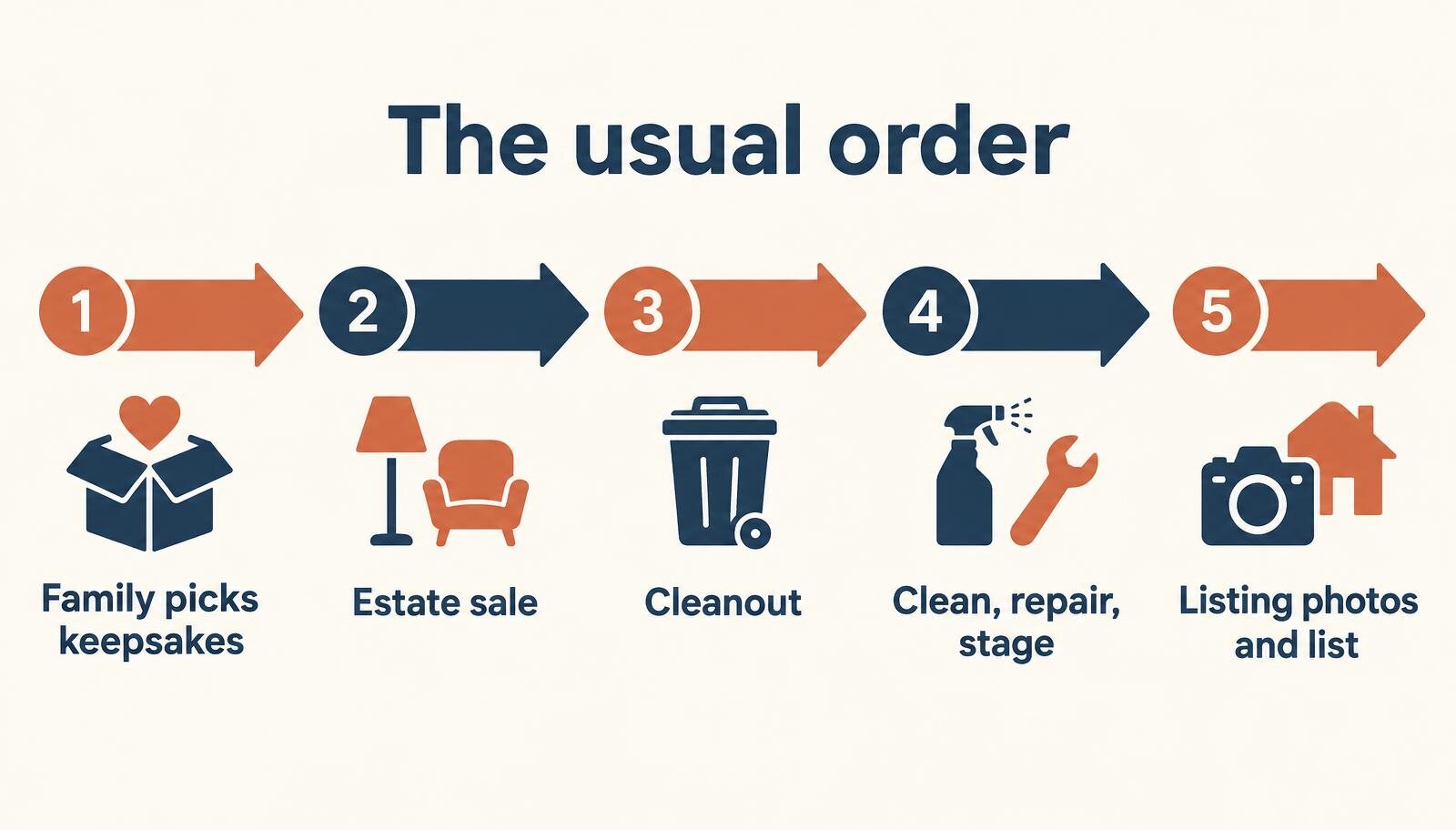
- Family picks keepsakes. Anything a relative wants comes out before the company stages. Photos and papers come out too; see what to do with old family photos.
- Estate sale. The company stages, prices and runs the sale, often two or three days.
- Cleanout. Leftovers go to donation, buyers, consignment or a hauler. Some companies offer this; ask.
- Clean, repair and stage. Paint touch-ups, carpet cleaning, minor repairs, and light staging with any pieces you held back.
- Listing photos, then list. The agent shoots the home and the listing goes live.
A sample six-week coordination plan
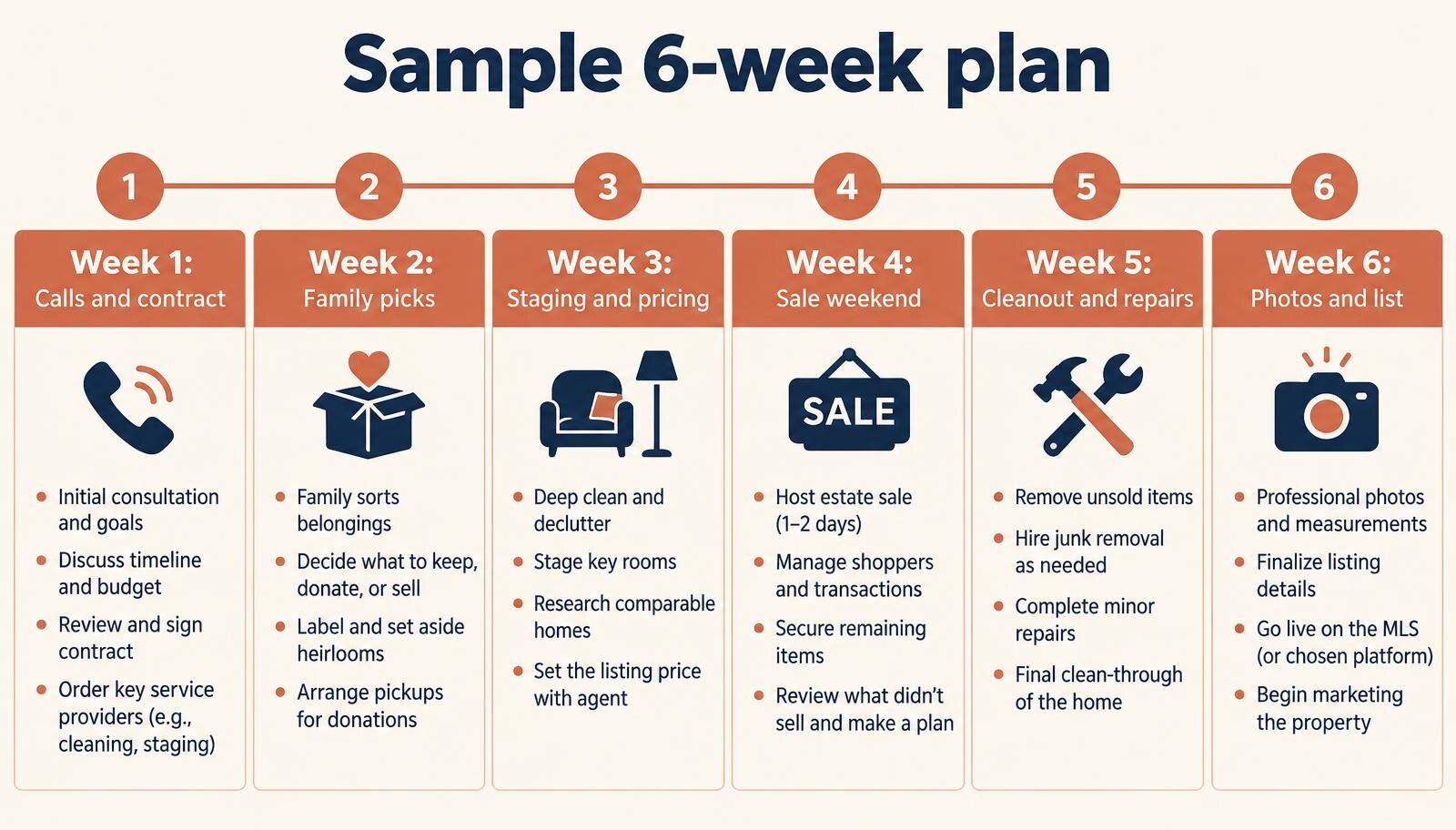
This is an example, not a rule. Popular companies book weeks or months ahead, and a packed house can take longer to set up. Our guide to how long an estate sale takes covers setup time in more detail.
| Week | Family / executor | Estate sale company | Listing agent |
|---|---|---|---|
| 1 | Confirm who has authority to sell; call 2–3 companies | Walkthrough and contract | First walkthrough; note what stays for staging |
| 2 | Family picks keepsakes; remove photos, papers and valuables | Confirms sale dates | Pulls comparable sales; plans repairs |
| 3 | Answers questions about items | Stages and prices | Sends staging list and fixtures list |
| 4 | Stays away on sale days (usually best) | Runs the sale | No showings during sale days |
| 5 | Approves cleanout and donation plan | Cleanout, if offered | Cleaning, repairs, light staging |
| 6 | Signs listing paperwork | Final settlement and payout | Listing photos; listing goes live |
Exceptions: already listed or under contract
The house is already listed
- Pause or limit showings during setup and sale days. The sale company needs the house closed to visitors while it prices. - Ask the agent whether to mark the listing temporarily unavailable or simply block showing times. - Shoot new photos after the cleanout if the original photos showed a full house.
The house is under contract
- Read the purchase contract for the closing date, possession date, and any items that convey with the house. - Tell the sale company the deadline on the first call. Some can run a faster sale; some can't. - Ask the agent whether the buyer needs to be told about a sale on the property, and whether the buyer has access for inspections or appraisal on those days.
When the timing is too tight for a full sale, compare a buyout or cleanout or an online auction.
One coordination call
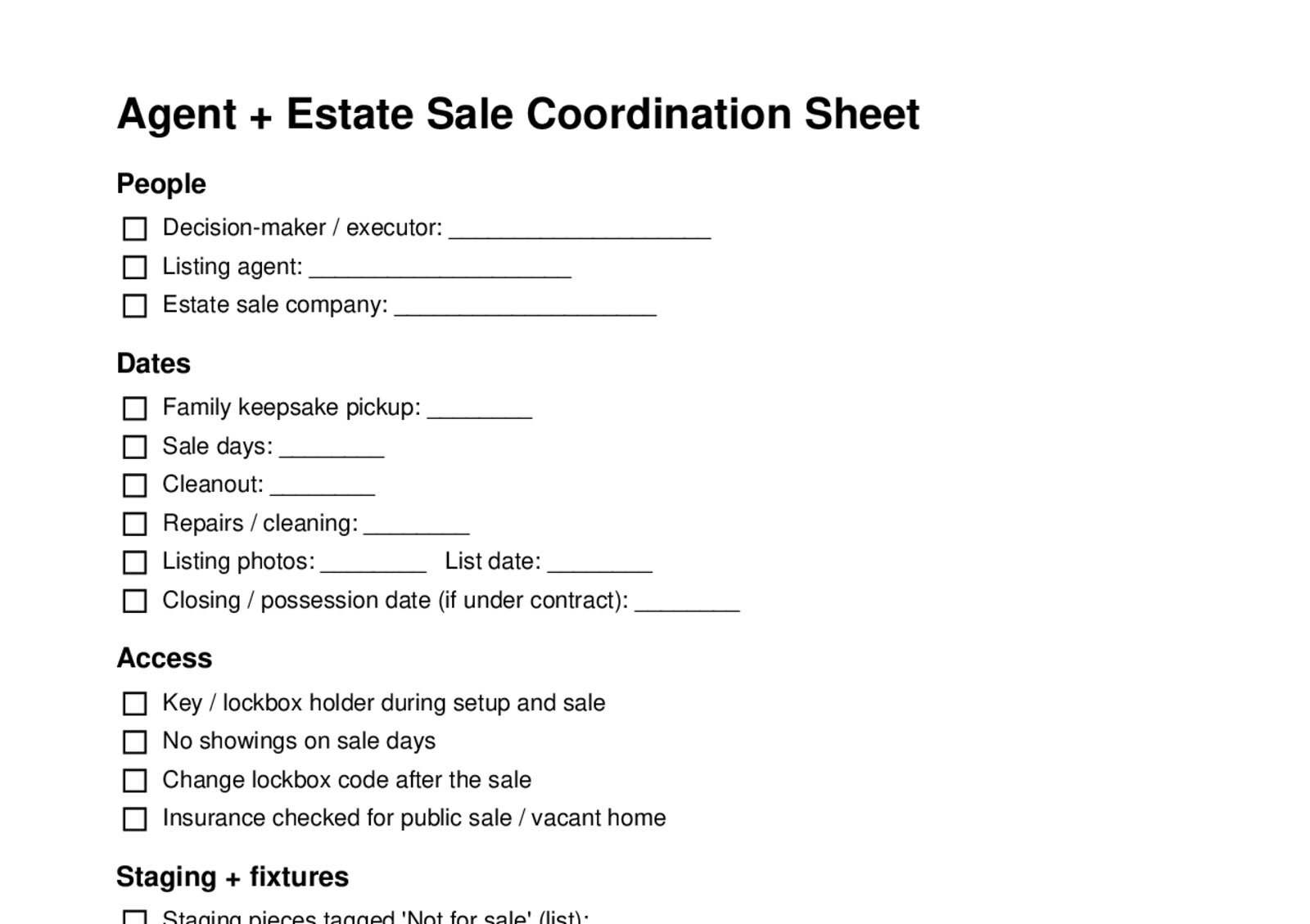
Set up one 20-minute call or meeting with the agent, the sale company and the decision-maker. Cover:
- Dates: sale days, cleanout day, listing photo day, target list date, and any closing date.
- Access: who has keys or lockbox codes, and when.
- Staging list: which pieces stay unsold.
- Fixtures list: what stays with the house.
- Damage and cleanup: who handles minor wear from shoppers, such as scuffed floors or a full trash bin.
- Signs and parking: check local rules. Some cities restrict signs in the public right-of-way.
Download the Agent + Estate Sale Coordination Sheet (PDF) to fill in together.
Should furniture stay for staging?

Often, yes, for a few pieces. Staging makes a difference: in NAR's 2025 Profile of Home Staging, 83% of buyers' agents said staging made it easier for a buyer to picture the home as their future home, and 29% of agents reported a 1% to 10% increase in the dollar value offered on staged homes (NAR press release). The living room mattered most to buyers (37%), then the primary bedroom (34%) and the kitchen (23%) (NAR 2025 report, PDF).
How to do it:
- Ask the agent which rooms to stage, and which pieces suit the house. Neutral, clean, mid-sized furniture works best.
- Tag those pieces "Not for sale – staging" before the company prices.
- Decide now what happens to them after closing: sell later, donate, or let the family keep them.
Our guide to selling a house with furniture still in it covers when leaving furniture helps and when it hurts.
Fixtures vs personal property
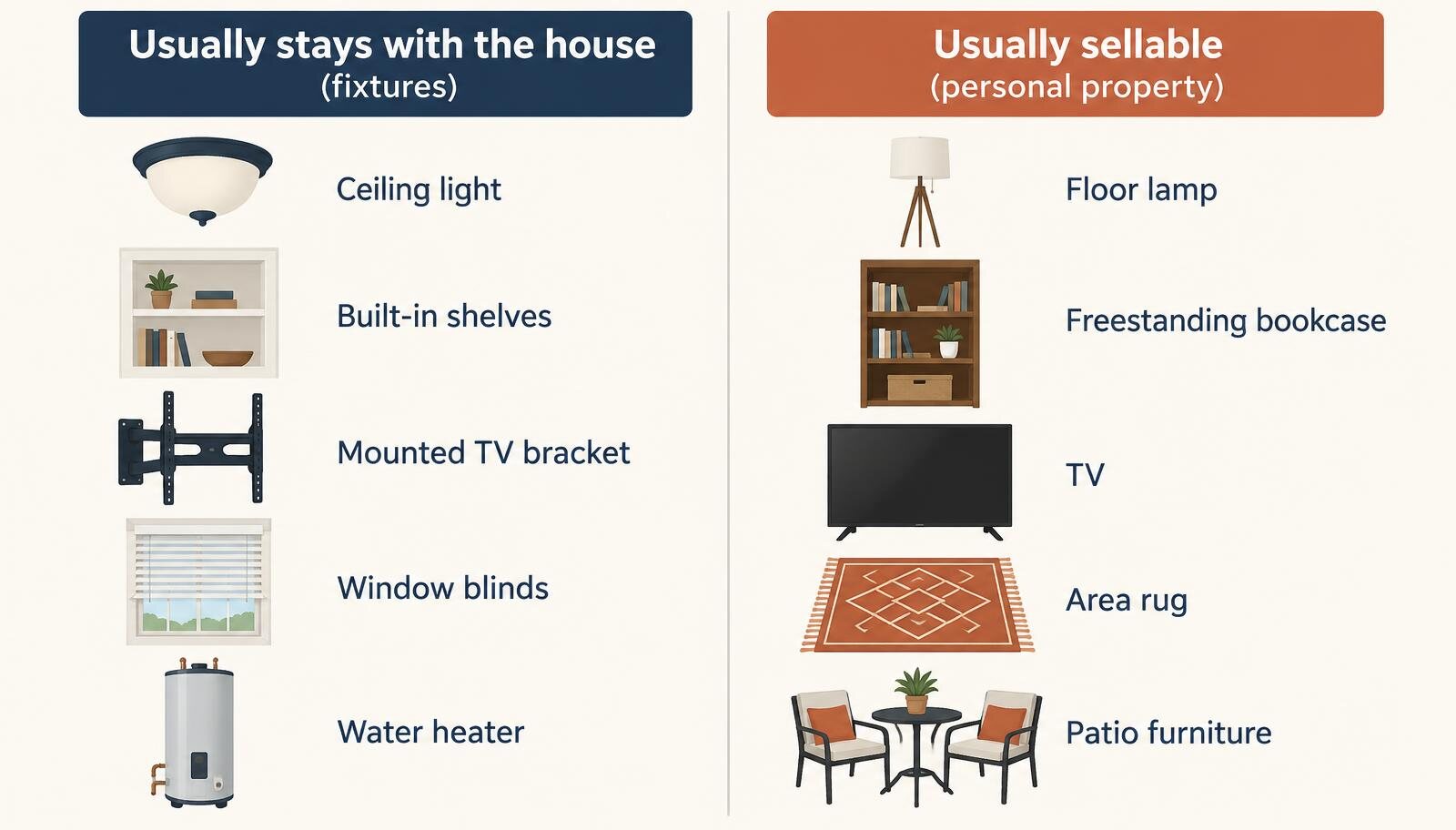
A fixture is something attached to the property, like a built-in, that's generally treated as part of the real estate (Cornell Law School, Legal Information Institute). Fixtures usually transfer with the house unless the contract excludes them. Personal property, like furniture and rugs, is what an estate sale sells.
Gray areas cause the most trouble: chandeliers, mounted TVs, window treatments, garage shelving, sheds, appliances and wall-mounted mirrors. Make a written list with the agent before the sale so a shopper doesn't carry off something the buyer expects to get.
Access and showing arrangements
- One key holder during setup and sale days, usually the sale company.
- Change or log lockbox codes after the sale if many people had access.
- Insurance: ask the homeowner's insurer about coverage for a vacant home and for a public sale. Our best time of year for an estate sale guide covers vacant-home risks.
- No showings on sale days. It's confusing for buyers and shoppers alike.
How soon after the sale can listing photos happen?
It depends on the cleanout and repairs. If the sale company offers a cleanout and the house needs only cleaning, photos can sometimes happen within a week of the last sale day. If you need painting, flooring or a big haul-away, plan longer. Ask both the company and the agent for their realistic dates on the coordination call.
Who can authorize the sale after a death?
Usually the executor or court-appointed administrator of the estate, once they have legal authority from the probate court. Rules vary by state, and some estates pass through a trust instead. Our guide to having an estate sale during probate explains the basics. Ask an estate attorney if heirs disagree.
"Before you call the junk hauler" script
Agents and families often reach for a junk hauler first. A hauler charges you to take things away; an estate sale company may pay you for them. Before you book a hauler, try this:
Hi, I'm helping sell a home at [general area, no address yet]. The house is still furnished, and we'd like it cleared and ready for listing photos by [date]. Can you walk through and tell me whether it's a good fit for an estate sale, a buyout, or a cleanout? I'd also like to know your commission, your cleanout options, and your next open sale dates.
Our estate sale company cost guide explains commissions, and the estate sale contract checklist lists what to get in writing.
For realtors
If you're a listing agent, a reliable estate sale company is a referral partner that gets your listings to market faster and in better shape. Our realtor's guide to estate sales covers how to build that relationship. You can browse estate sale companies near you on EstateSaleFinder.net.
FAQ
Should you have an estate sale before or after listing the house?
Usually before. Sell the contents, clean out and repair, then take listing photos and list. That gives buyers a clean home and avoids showings during the sale.
Can you hold an estate sale while the house is listed?
Yes, but pause or block showings during setup and sale days, and reshoot listing photos after the cleanout if needed.
Can you have an estate sale when the house is under contract?
Often, if it finishes before closing or the agreed possession date. Check the purchase contract for fixtures and access rules, and tell the sale company your deadline right away.
Should furniture stay for staging?
A few neutral pieces often should. Ask the agent which rooms matter, tag those pieces not for sale, and decide what happens to them after closing.
How soon after an estate sale can listing photos be taken?
It depends on the cleanout and repairs. A house that only needs cleaning can sometimes be photographed within about a week; bigger cleanouts and repairs take longer.
Who can authorize an estate sale after a death?
Usually the executor or court-appointed administrator once they have legal authority. Rules vary by state, and some estates use a trust.
Sources
Sources checked November 7, 2026. The six-week plan is an example; timing varies by company, market and house.
Keep exploring
Ready to start your own treasure hunt?
Discover estate sales near you and find incredible deals.
Explore Sales Near Me
About the author
Andy
Founder, EstateSaleFinder.net
Hi, I'm Andy — a retired commercial photographer turned developer with a five-year (and counting) obsession with estate sales. I started EstateSaleFinder.net because I knew there had to be an easier, smarter way to find and list estate sales. Now I get to chase treasure and build the tool I always wished existed.