
What to Do With a Loved One's Clothes After They Die: Keep, Sell, Donate, or Recycle (and What's Actually Worth Money)
No deadline, a pockets-and-linings check, a four-pile keep/sell/donate/recycle table, what in a closet is worth money, memory quilt ideas, where to donate, the IRS rule, and textile recycling.
There's no deadline for going through a loved one's clothes. Start by keeping a few pieces that hold memories, and check every pocket, lining and shoe box. Pull out anything that may be valuable, like vintage or designer pieces, furs, jewelry and watches. Clean, wearable clothes can go to an estate sale, a consignment shop or charity, and worn or stained items can go to textile recycling instead of the trash.
Quick summary
- No timeline is the right one. Some people sort a closet in a week, and some wait a year. Wait until you're ready, unless a house sale or lease forces a date.
- Check everything first. Cash, jewelry, keys, letters and papers often turn up in pockets, linings, purses and shoe boxes.
- Use four piles: keep, sell, donate and recycle (table below).
- Some clothes are worth money. Look for vintage labels, designer bags and shoes, furs, Western wear, military items, old band tees and gold or sterling cufflinks.
- The IRS only allows a deduction for clothes in "good used condition or better," valued at what thrift stores actually charge (IRS Publication 526).
- Recycle what can't be worn. In 2018, Americans landfilled 11.3 million tons of textiles, and only 13% of clothing and shoes was recycled (EPA).
- Our own data: of about 225,700 items listed on EstateSaleFinder, 343 mention furs, 207 are designer handbags from brands like Coach, Gucci and Louis Vuitton, and 65 are labeled vintage clothing (counted November 12, 2026).
How soon should you go through a loved one's clothes?
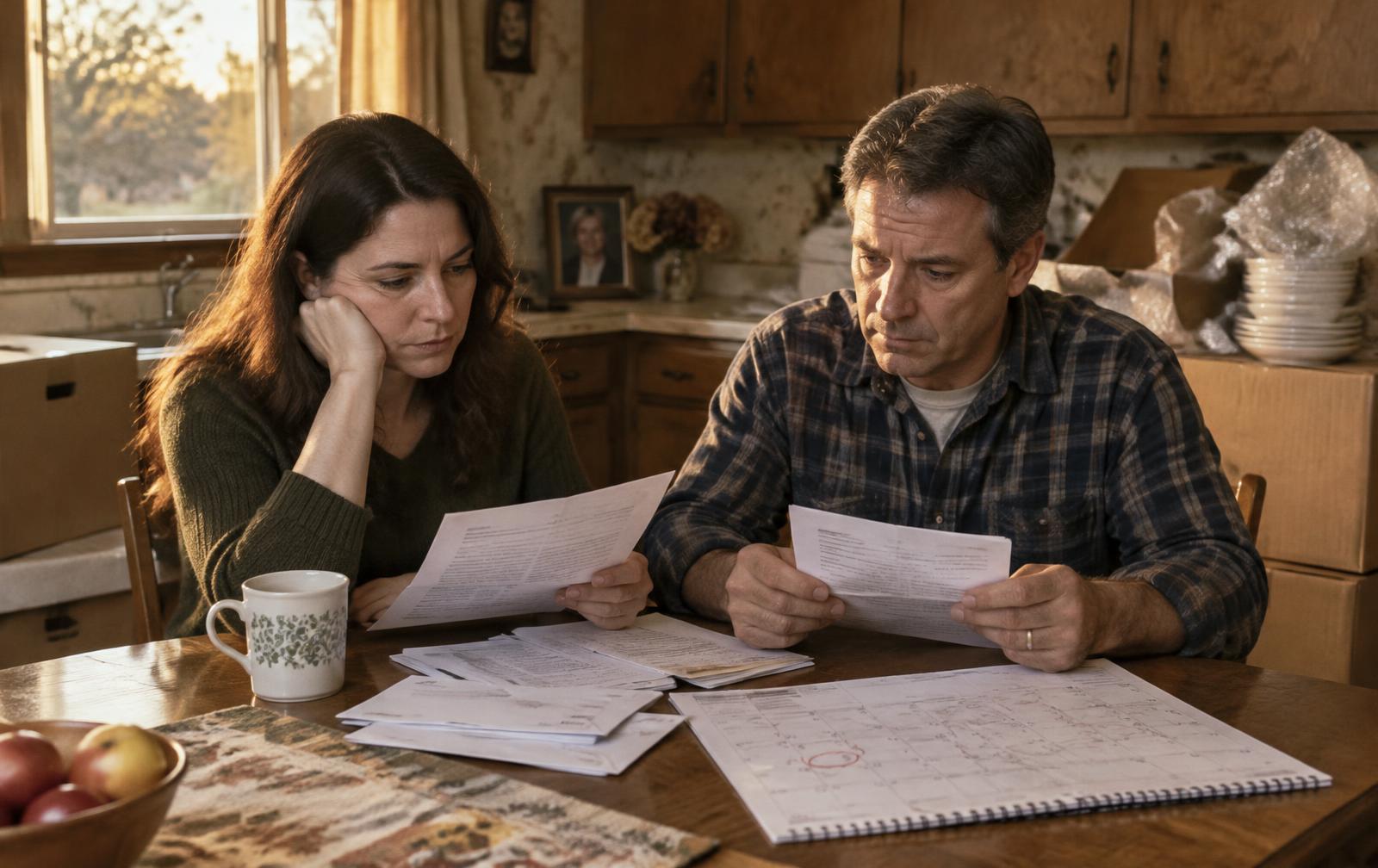
When you're ready. There's no rule. Many people on grief and decluttering forums describe the same path: keep a few things, give some to family, make something from a favorite shirt, and donate the rest, in their own time. Those are personal stories, not advice, but they show how common it is to wait.
Reasons to start sooner:
- the home is being sold, rented or cleared
- a spouse finds the closet painful to open every day
- clothes are needed by family or could help someone this winter
Reasons to wait:
- you're still making big decisions about the estate
- family members haven't had a chance to choose
- you feel rushed or pressured
What if siblings disagree?
Agree on the process before anyone starts. Let each person pick a few pieces in turns, and set aside anything of value until the executor decides. Our guide to dividing parents' belongings among siblings covers fair ways to take turns.
Is it OK to wear a dead person's clothes?
Yes. Many people find comfort in wearing a parent's sweater or a spouse's jacket. Wash or dry-clean it first.
Before you sort: check pockets, linings and boxes
Do this before anything goes in a bag, because donated bags rarely come back.
- Pockets: coats, pants, robes, vests and suits
- Purses and wallets: every zipper and inside pocket
- Linings and hems: older coats sometimes have hidden pockets
- Shoe boxes: people store jewelry, cash, letters and photos in them
- Drawers: cufflinks, tie clips, watches and rings
- Garment bags: check under the clothes and in the bottom of the bag
Set papers aside for the executor. Bank statements, deeds and keys matter more than any piece of clothing. If you're clearing the whole home, read cleaning out a parent's house after death.
The four-pile system: keep, sell, donate, recycle
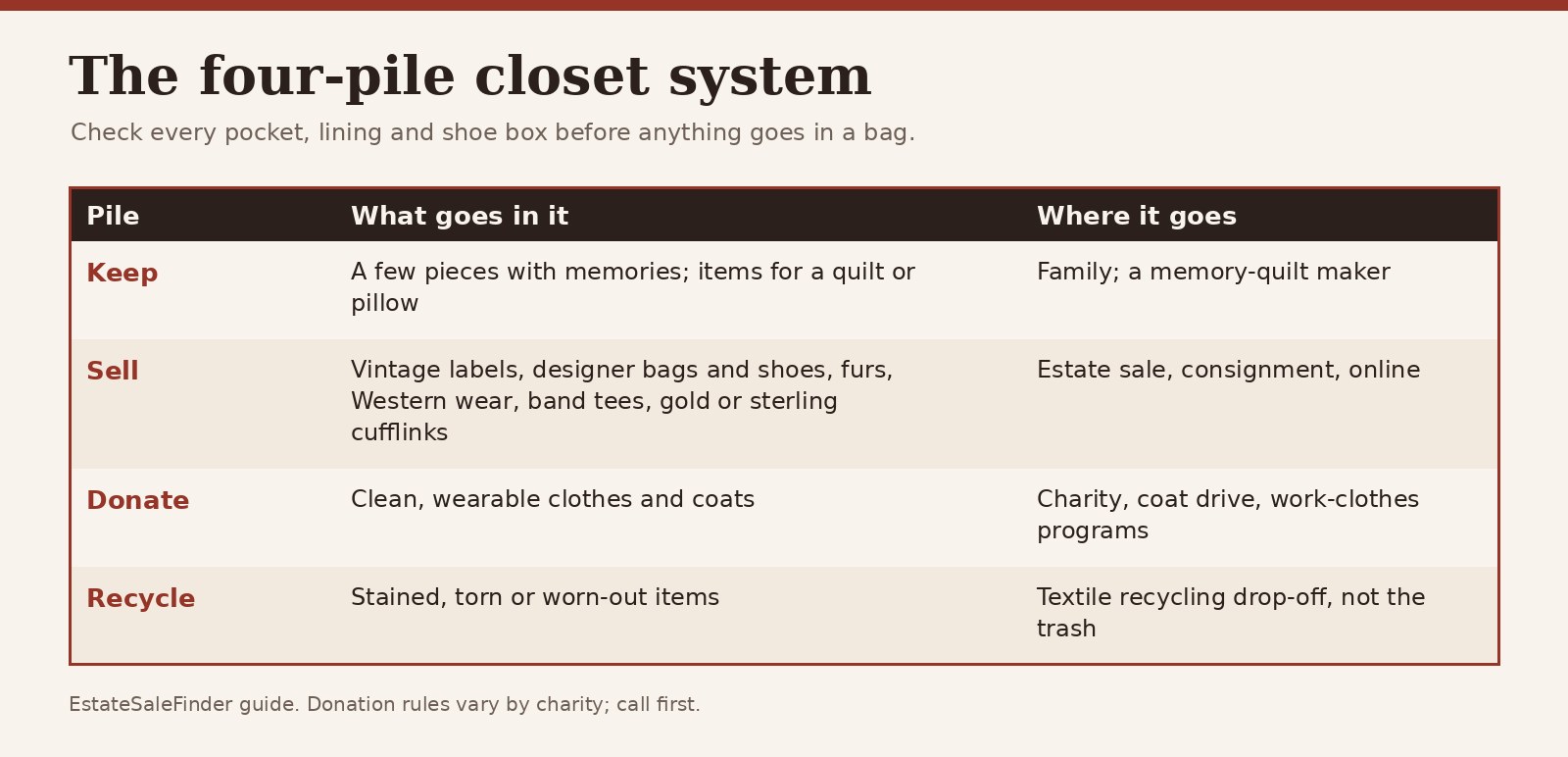
| Pile | What goes in it | Where it goes |
|---|---|---|
| Keep | A few pieces with strong memories; shirts for a quilt or pillow | Family; a memory-quilt maker |
| Sell | Vintage labels, designer bags and shoes, furs, Western wear, band tees, gold or sterling cufflinks | Estate sale, consignment shop, online |
| Donate | Clean, wearable clothes, shoes and coats | Charities, coat drives, work-clothing programs |
| Recycle | Stained, torn, stretched or worn-out items | Textile recycling drop-off |
Tip: use colored tape on boxes, one color per pile, and keep a fifth box for "not sure yet." Come back to it later.
What's actually worth money in a closet?
Most everyday clothes sell for a few dollars. These are the exceptions worth pulling out first:
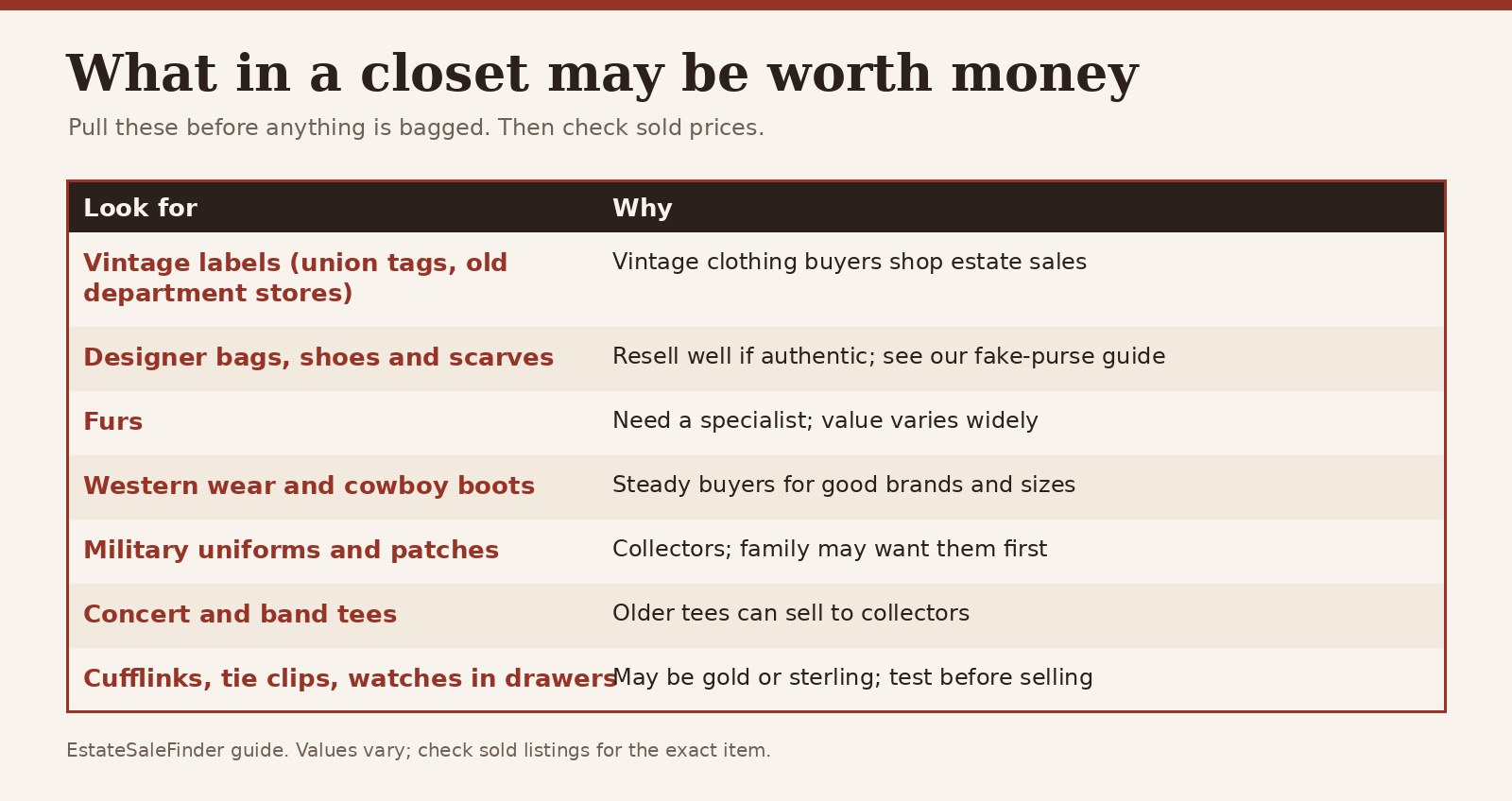
- Vintage labels. Old union tags, closed department stores and handmade or tailor labels can signal vintage. Our vintage fashion guide shows what shoppers look for.
- Designer bags, shoes and scarves. Check them before you price them. Our guide on how to tell if a purse is fake explains what each clue can and can't prove.
- Furs. Have a fur specialist look at them; value varies widely with type and condition.
- Western wear. Good cowboy boots, pearl-snap shirts and hats have steady buyers.
- Military uniforms, patches and medals. Family often wants these first. Collectors buy what the family doesn't keep.
- Concert and band tees. Older tees can sell to collectors.
- Jewelry and accessories. Cufflinks, tie clips and watches may be gold or sterling. See fake watches and jewelry and costume jewelry brands worth money.
To check a price, search sold listings for the exact brand and item. The Ai Appraiser can also identify an item from a photo and suggest a price range from real sold data. Treat it as a suggestion, not a final value.
Keepsake ideas: memory quilts, pillows and bears
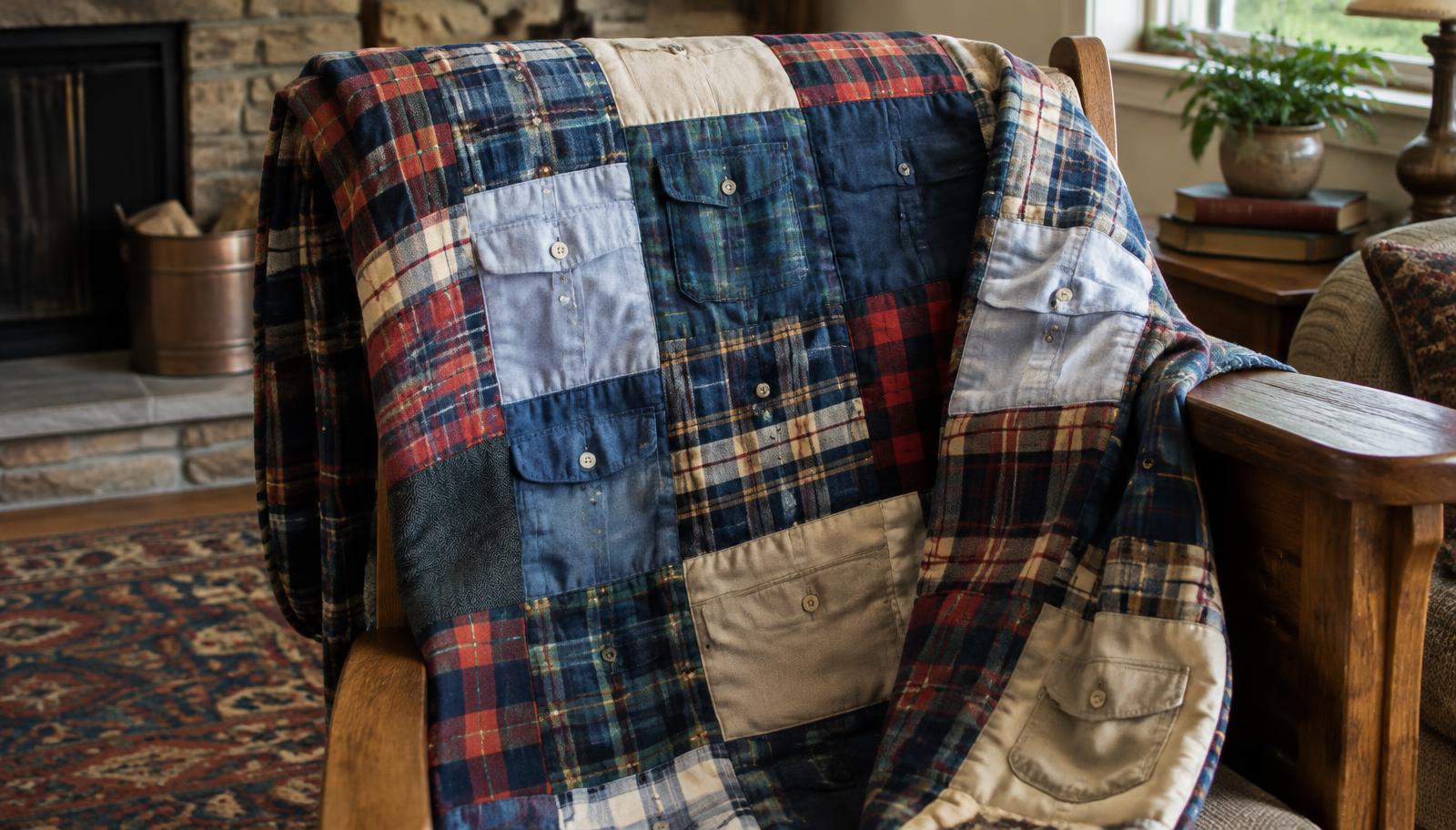
- Memory quilt. Cotton shirts, flannels and T-shirts work best. Many quilters ask for a set number of shirts, so ask before you donate the rest.
- Memory pillow or bear. One or two shirts are enough for a pillow or stuffed bear for each grandchild.
- Framed piece. A tie, a uniform patch or a favorite scarf can be framed.
- Keep one thing to wear. A sweater, a robe or a jacket.
If you've inherited an old family quilt as well, see are old quilts worth anything? before anyone cuts it up.
Can you sell clothes at an estate sale?
Yes. Clothes sell at estate sales, though most items sell for small amounts. They do best when they're clean, hung and easy to browse. Here's what estate sale companies usually do with clothes:
- Hang them on racks by type and size, so shoppers can find what fits.
- Price special pieces separately, like furs, designer bags, vintage dresses and Western wear.
- Run bag sales near the end. Many companies offer "fill a bag" pricing on the last day.
- Send leftovers to charity or to a buyer who takes what's left. Ask in the contract what happens to unsold items. See what happens to unsold items after an estate sale.
Vintage clothing resellers shop estate sales for exactly this, as our post on Depop, Poshmark and Vinted flippers explains. If a whole house needs clearing, hire an estate sale company to handle clothes with everything else, or compare options in estate sale or donate everything?
Where can I donate a loved one's clothes?
- Coat drives. One Warm Coat runs coat drives across the country. Search your zip code on its map to find one near you, and give only clean, wearable coats (One Warm Coat).
- Work clothing programs. Groups like Dress for Success help people dress for job interviews. Each local chapter sets its own rules, so check your chapter's page before you drop off.
- Thrift stores and charities. Call ahead to ask what they take.
- Shelters and churches. Many need coats, socks, shoes and men's clothes, especially in winter.
- Hospitals and nursing homes. Some take clean robes, sweatpants and slippers. Ask first.
Can I deduct donated clothes on my taxes?
Possibly. IRS Publication 526 says (IRS):
- You "can't take a deduction for clothing or household items you donate unless the clothing or household items are in good used condition or better."
- The value is what "buyers of used items actually pay in used clothing stores, such as consignment or thrift shops." The IRS example: a coat you paid $300 for, which sells used for $50, is worth $50.
- An item that isn't in good used condition can be deducted only if you claim more than $500 for it and include a qualified appraisal and Form 8283, Section B.
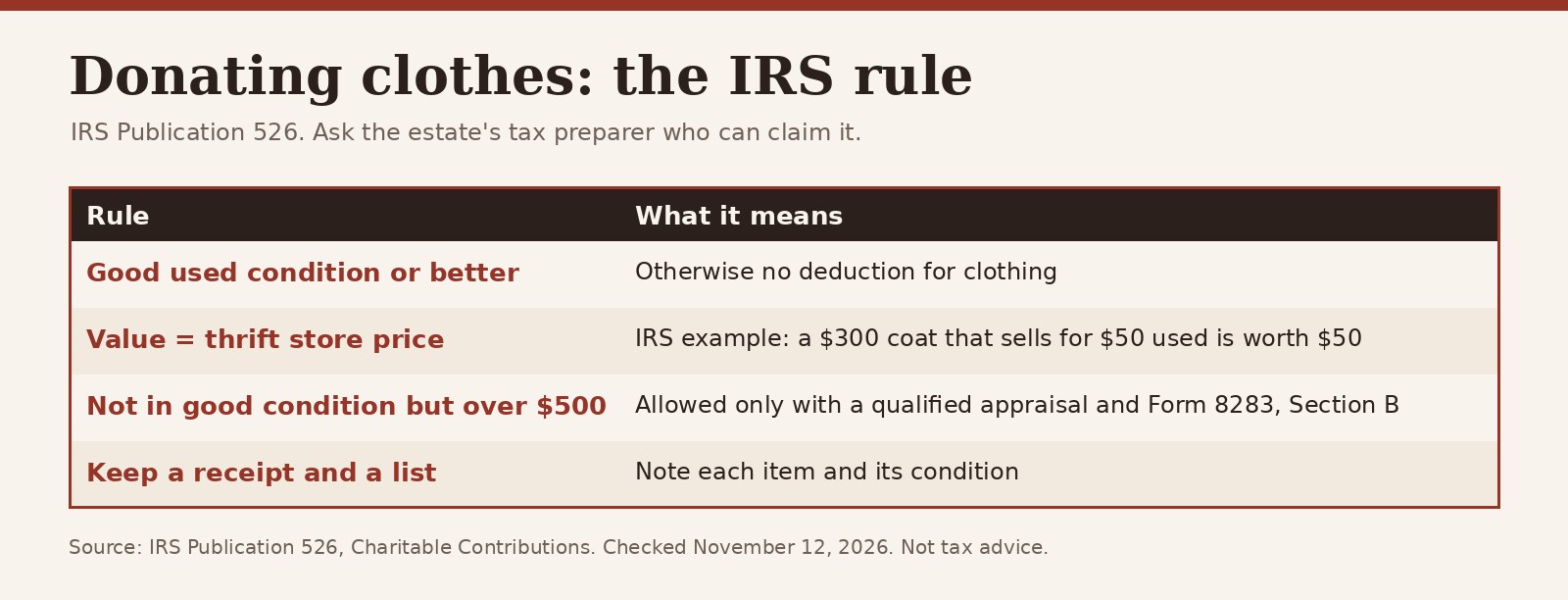
Whether the estate or an heir can claim the deduction depends on who owns the clothes when they're donated. Ask the estate's tax preparer. Get a receipt and keep a list of what you gave and its condition.
What do you do with clothes that can't be donated?
Recycle them. Many cities, thrift stores and retailers have textile drop-offs for stained, torn or worn-out clothes. Check your city or county's recycling page for locations.
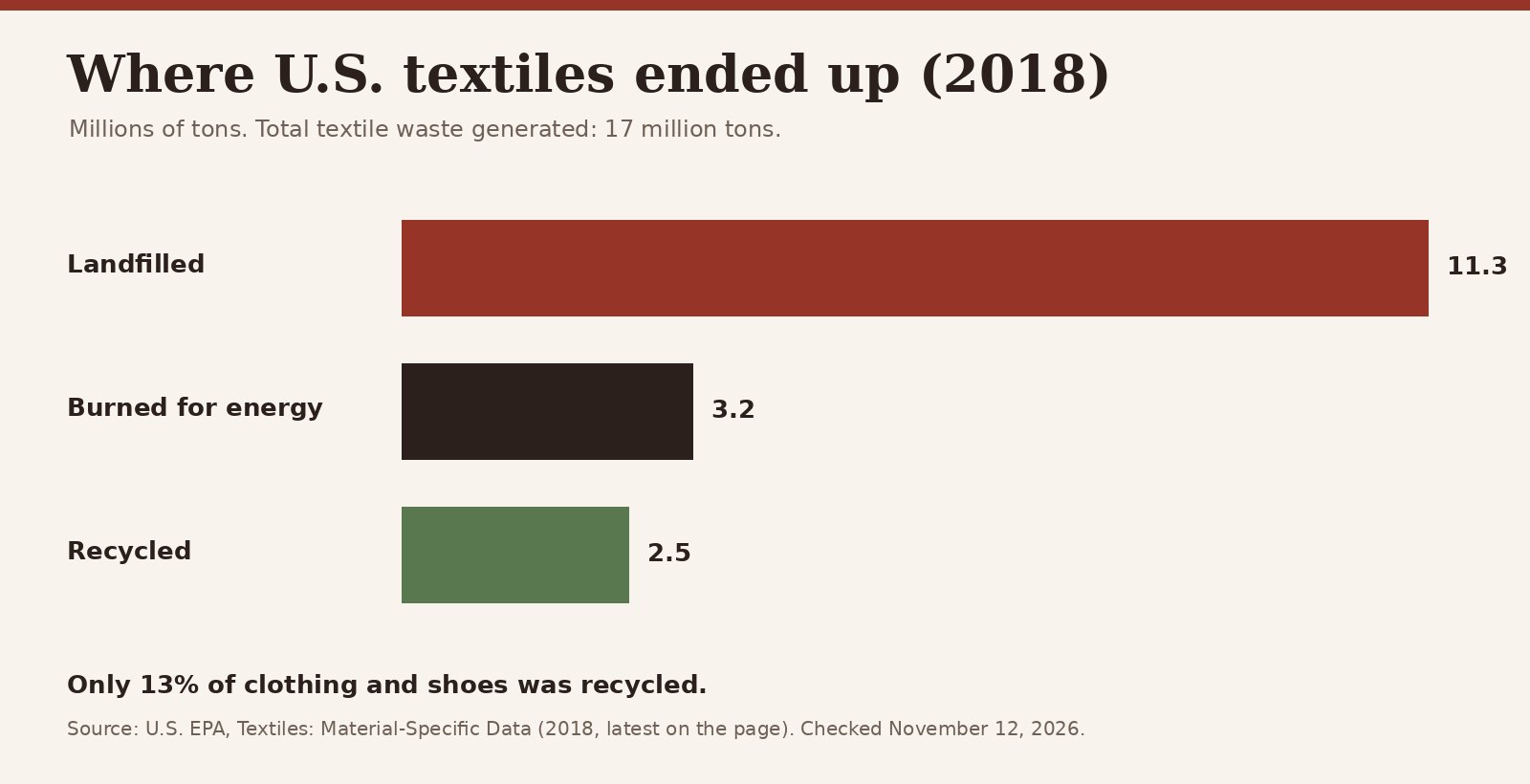
The EPA says Americans generated 17 million tons of textile waste in 2018, landfills received 11.3 million tons, and the recycling rate for clothing and footwear was 13% (EPA). That's the latest year on the EPA's page.
Special items
- Military uniforms. Offer them to family first. Local veterans' groups or historical societies may want them.
- Furs. A fur specialist can tell you what it is and whether it can be sold or restyled.
- Wedding dresses. Family may want it, or a seamstress can turn part of it into keepsakes. Vintage dresses in good condition can also sell.
- Shoes. Donate pairs that are clean and wearable; tie or band each pair together.
- Underwear and socks. New, unopened packs can go to shelters. Used items go to textile recycling.
A note for executors and realtors
Closets are often cleared last, but they fill up listing photos. Schedule the closets before the photographer comes, and leave time for family to choose first. Our realtor's guide to estate sales explains how to fit a sale into the listing timeline. If you're downsizing your own things ahead of time, Swedish death cleaning can make it easier for your family later.
FAQ
How soon should you go through a loved one's clothes?
There's no deadline. Wait until you're ready, unless a house sale or lease sets a date. Many people keep a few pieces and sort the rest over time.
Is it OK to wear a dead person's clothes?
Yes. Many people find comfort in it. Wash or dry-clean the item first.
What can you donate from their closet?
Clean, wearable clothes, shoes and coats. Check pockets first. Call the charity to ask what it accepts.
Where can I donate my late husband's clothes?
Coat drives such as One Warm Coat, work clothing programs, thrift stores, shelters and churches. Men's clothes and winter coats are often in demand.
Do clothes sell at estate sales?
Yes, mostly for small amounts. Vintage, designer, fur and Western items sell for more, and many companies run bag sales on the last day.
Can I deduct donated clothes on my taxes?
Only clothes in good used condition or better, at thrift store value. Ask the estate's tax preparer who can claim it.
What do you do with clothes that can't be donated?
Take stained, torn or worn-out clothes to a textile recycling drop-off instead of throwing them away.
Can you make a quilt from a loved one's clothes?
Yes. Cotton shirts, flannels and T-shirts make good memory quilts, pillows and bears. Ask a quilter how many shirts they need before donating the rest.
Related guides
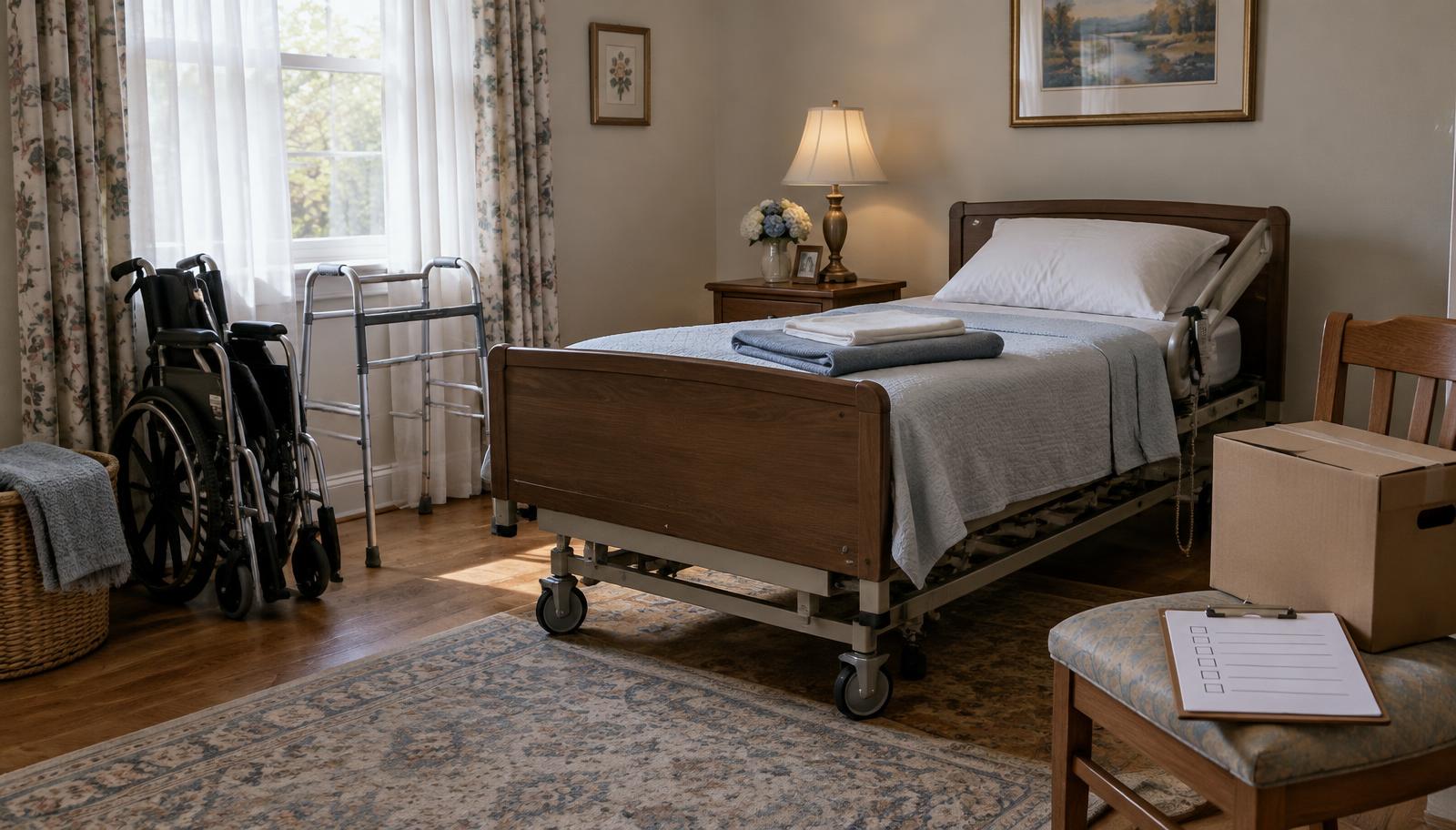
- What to do with medical equipment and medications after a death
- Vintage Fashion at Estate Sales
- Are Old Quilts Worth Anything?
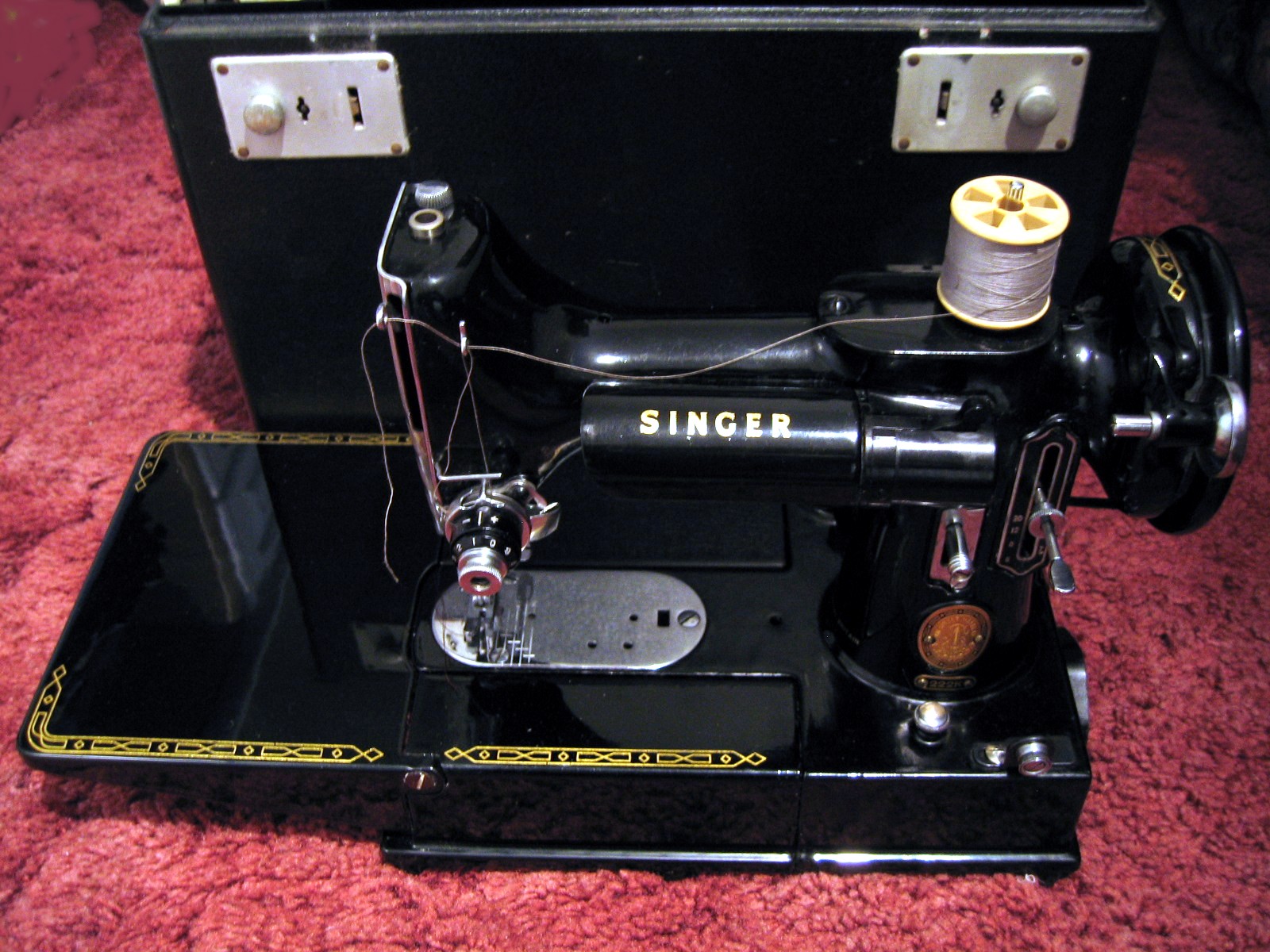
- Identify an inherited Singer sewing machine before pricing it
- What to Do With Old Family Photos
- Cleaning Out a Parent's House After Death
- What Not to Throw Away Before an Estate Sale
- Estate Sale or Donate Everything?
Sources
Sources checked November 12, 2026. Photos are Ai-generated illustrations; charts are EstateSaleFinder diagrams built from the sources above. EstateSaleFinder item counts are from our own listings on November 12, 2026. This guide is general information, not tax or legal advice.
Keep exploring
Ready to start your own treasure hunt?
Discover estate sales near you and find incredible deals.
Explore Sales Near Me
About the author
Andy
Founder, EstateSaleFinder.net
Hi, I'm Andy — a retired commercial photographer turned developer with a five-year (and counting) obsession with estate sales. I started EstateSaleFinder.net because I knew there had to be an easier, smarter way to find and list estate sales. Now I get to chase treasure and build the tool I always wished existed.